
Lamborghini Diablo SE30
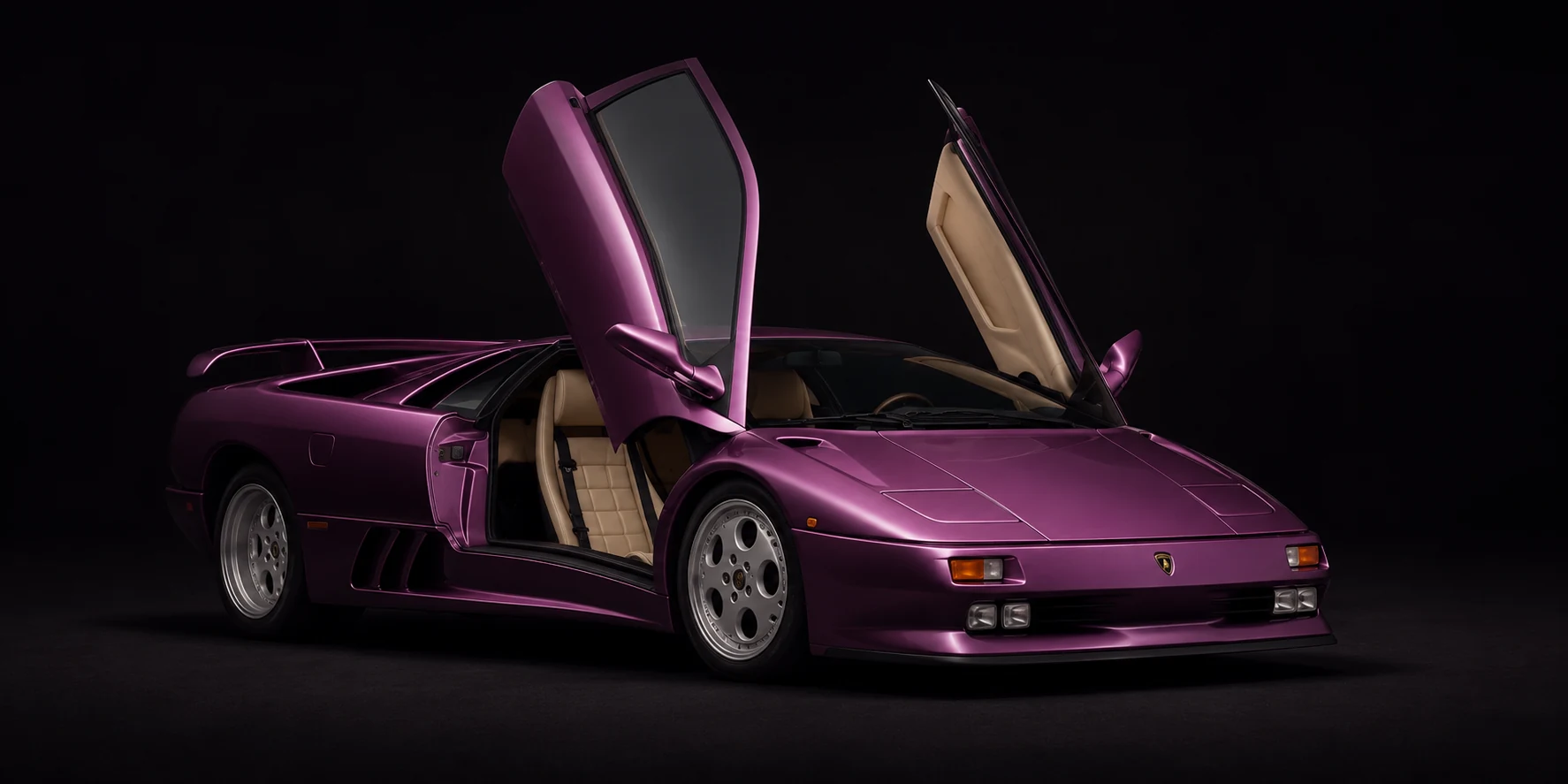
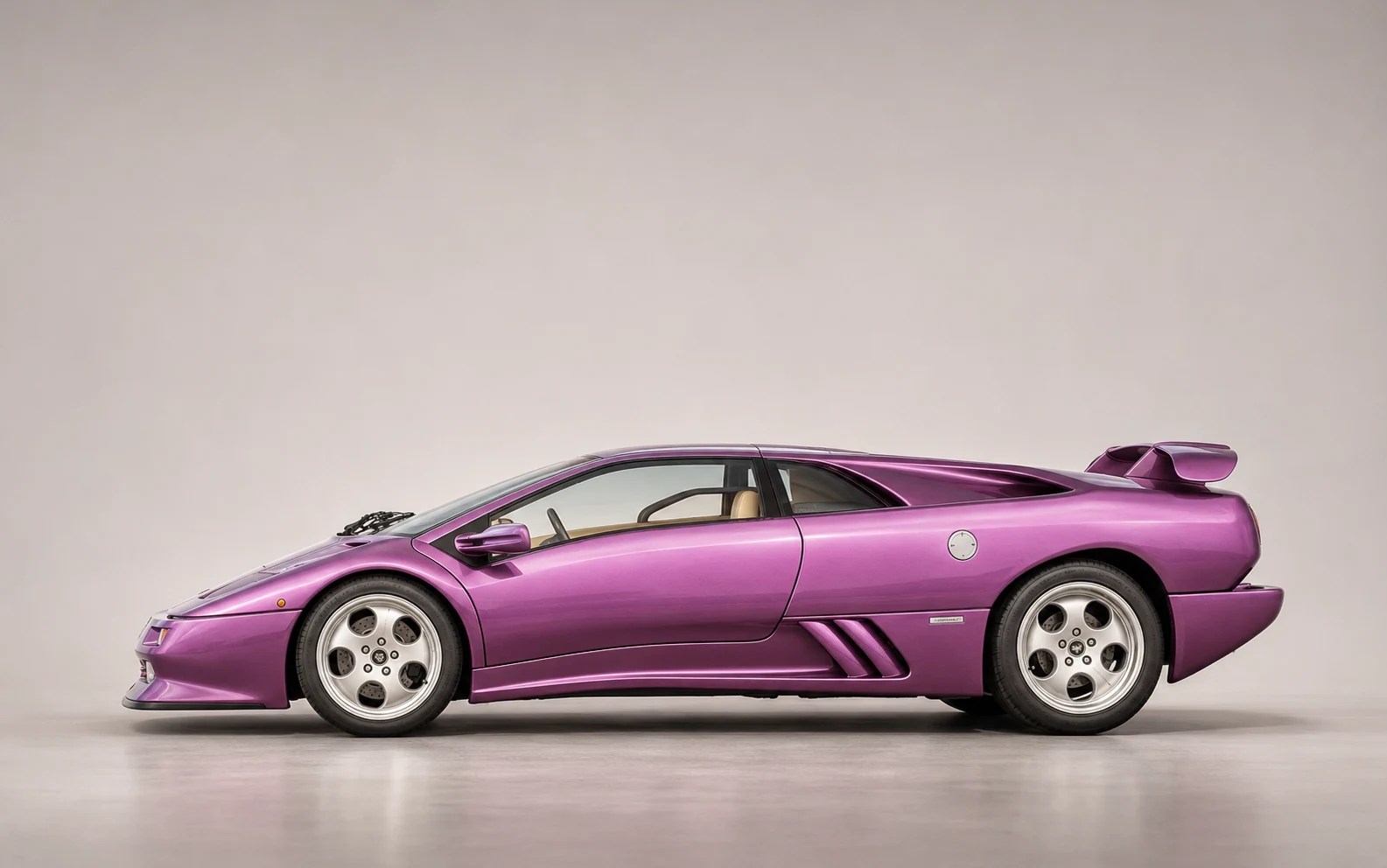
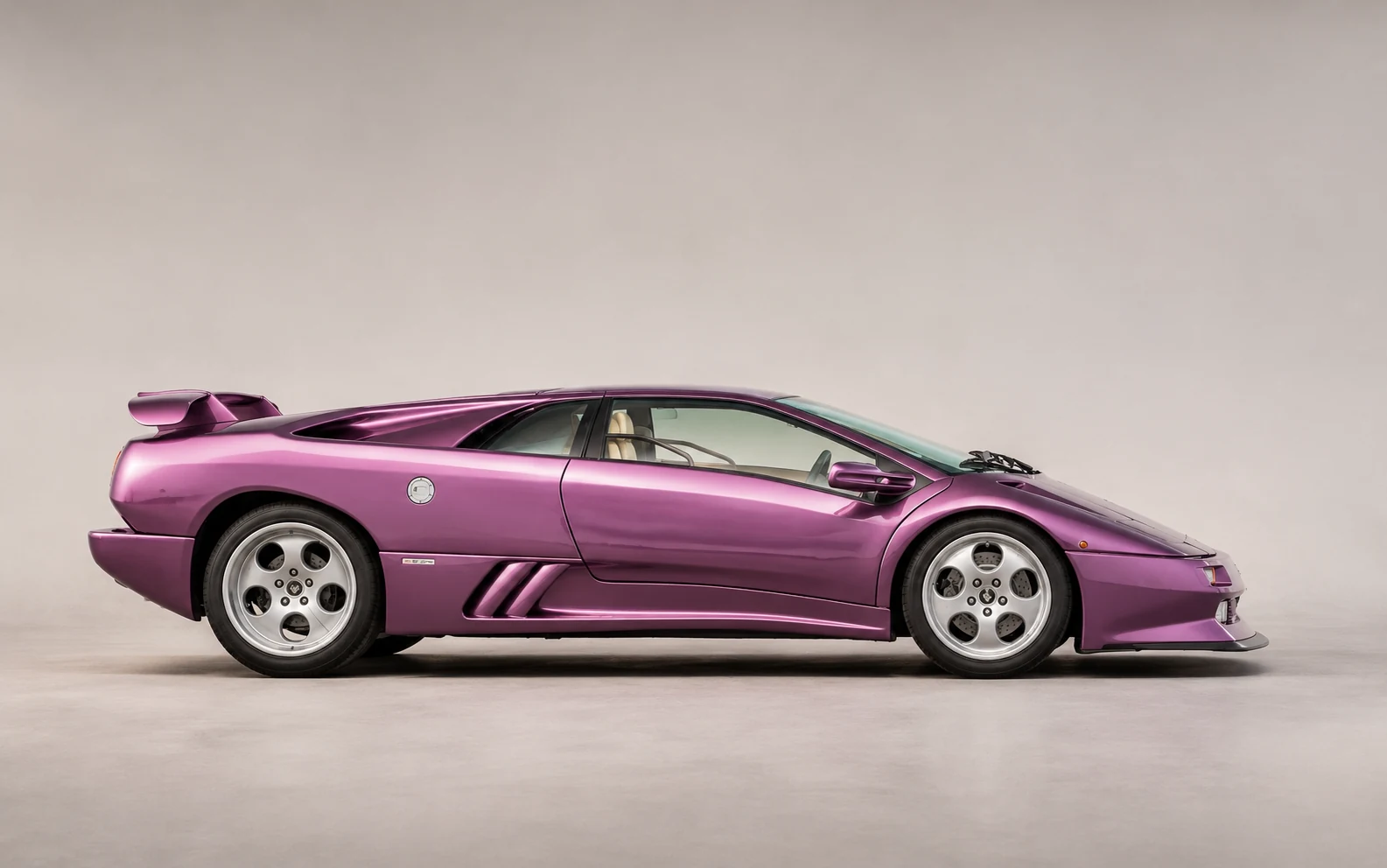
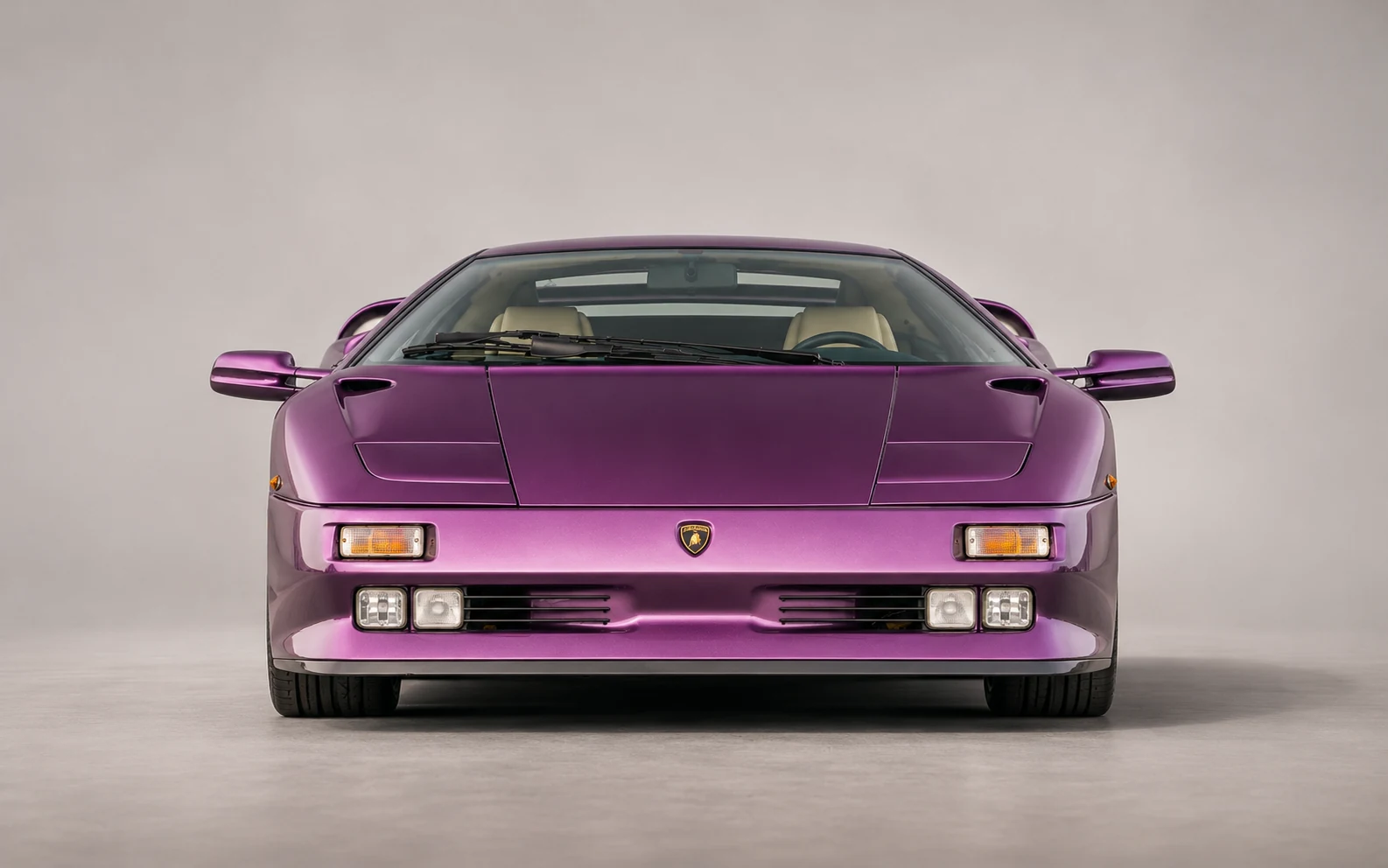
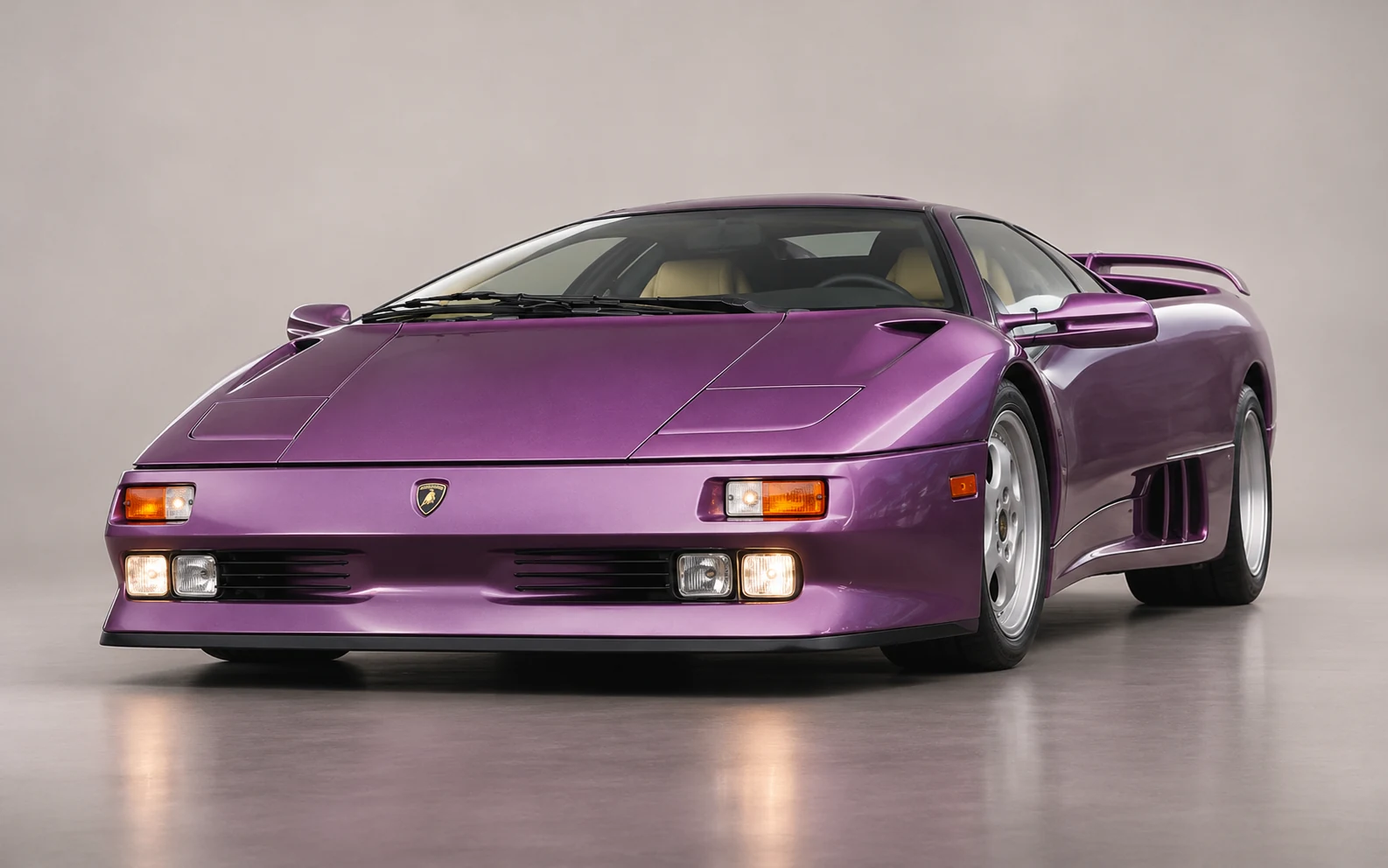
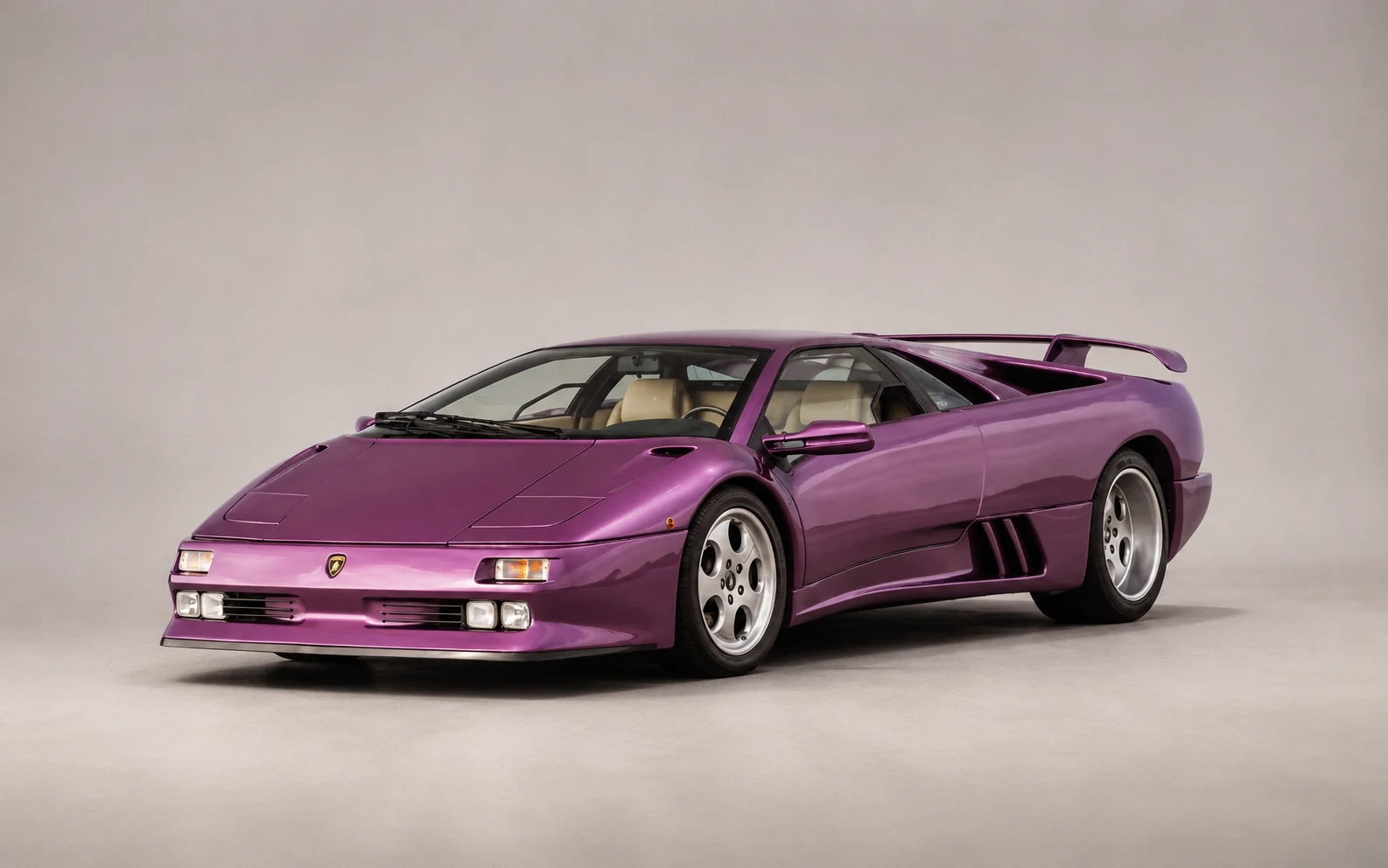
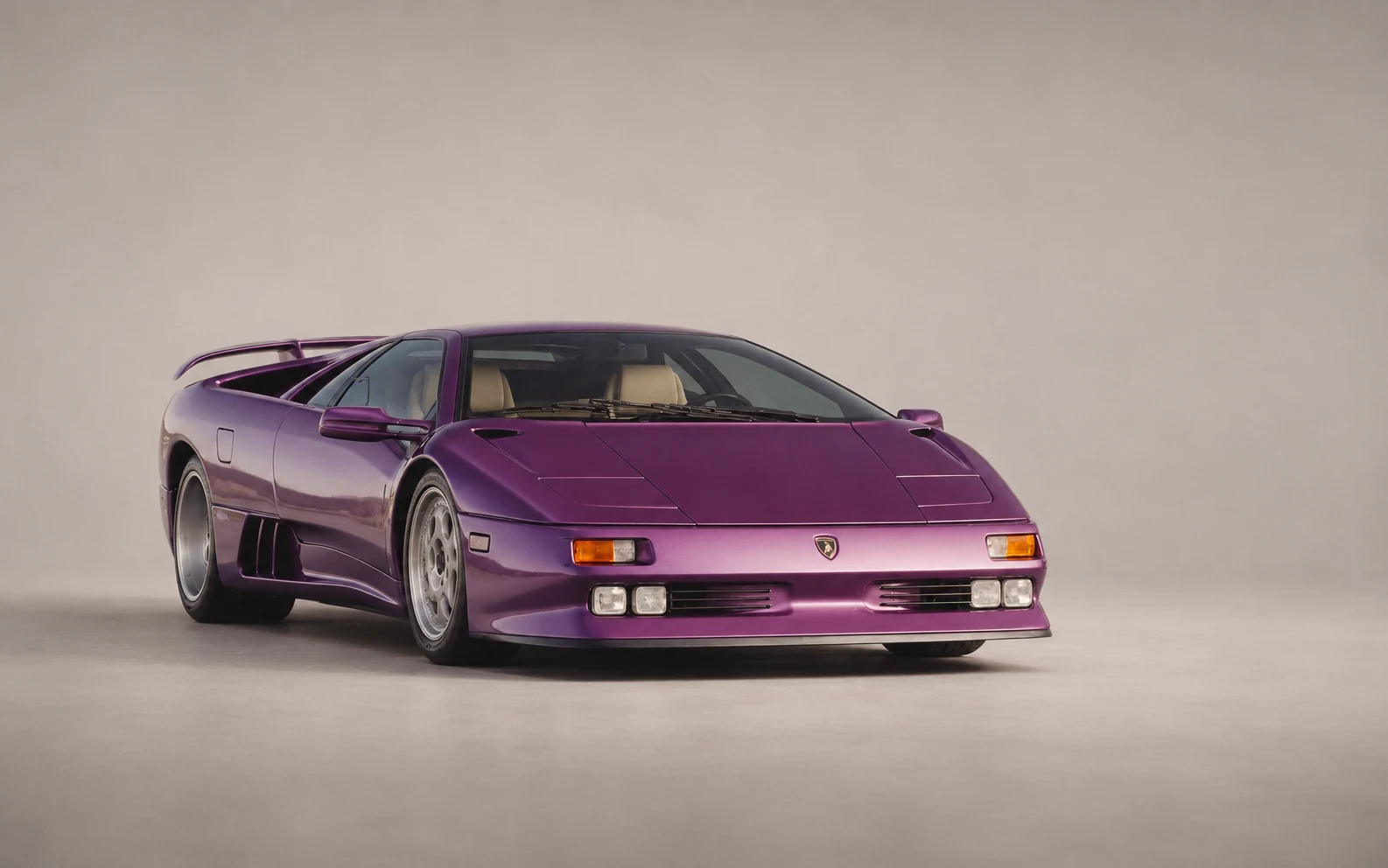
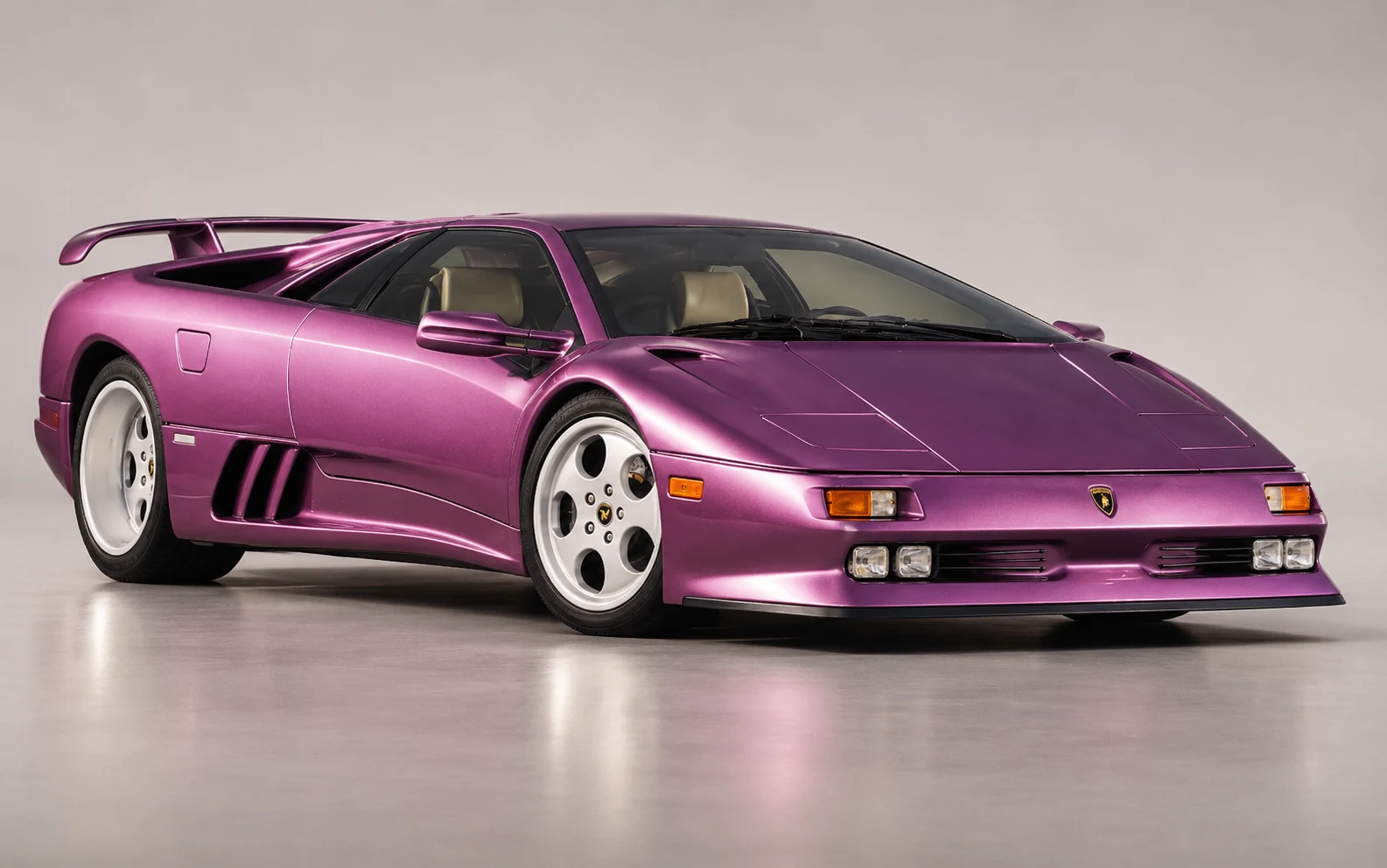
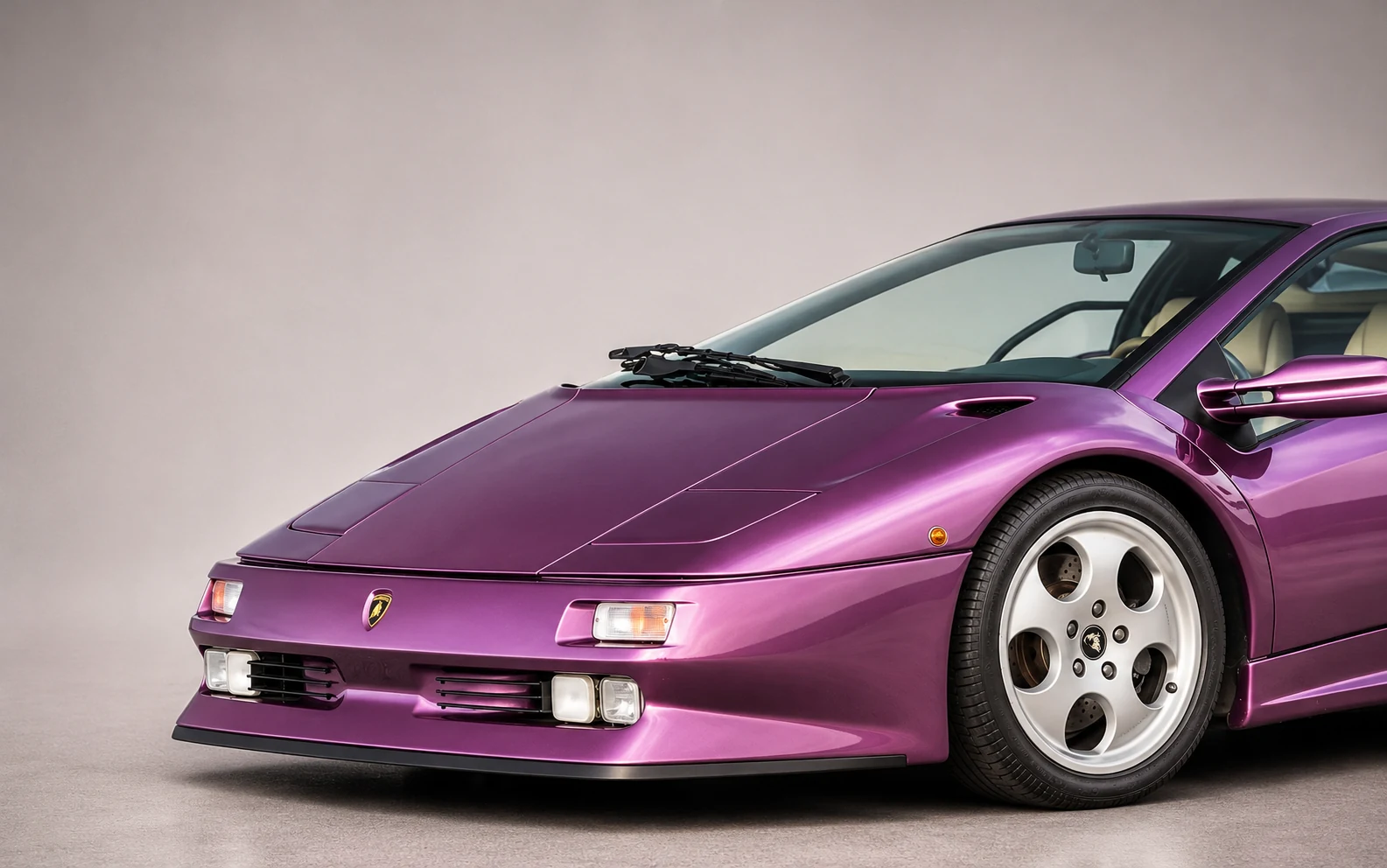
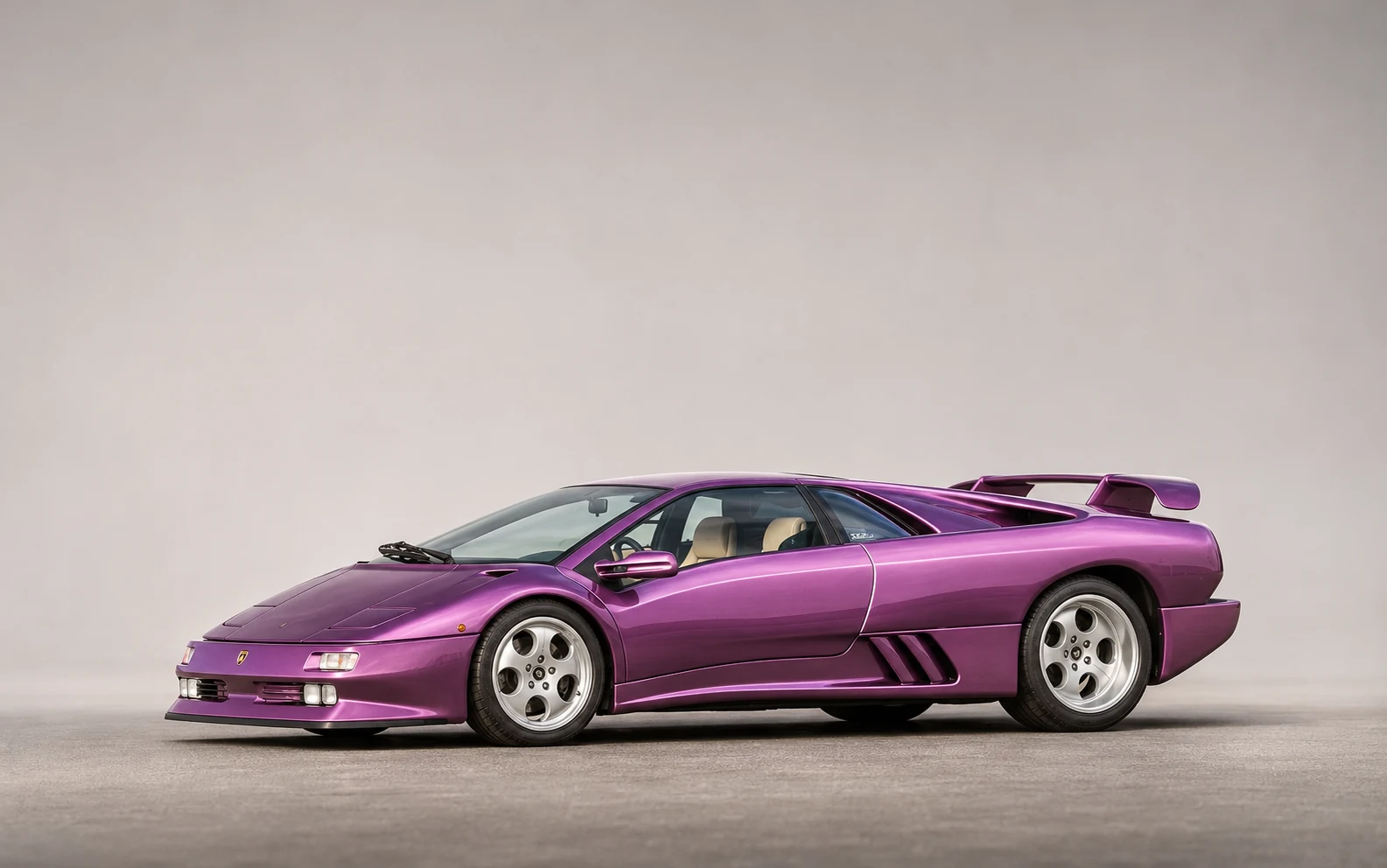
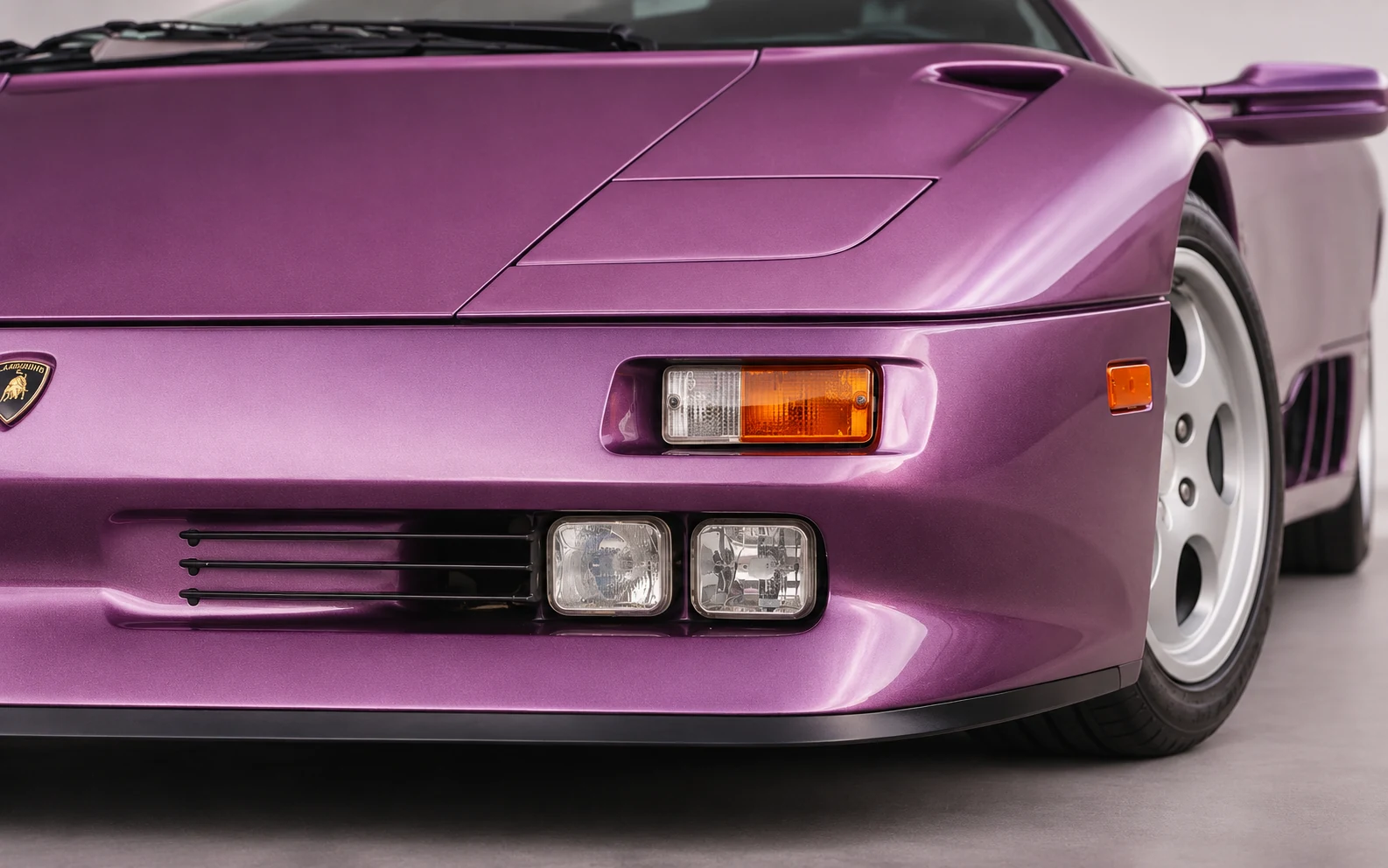
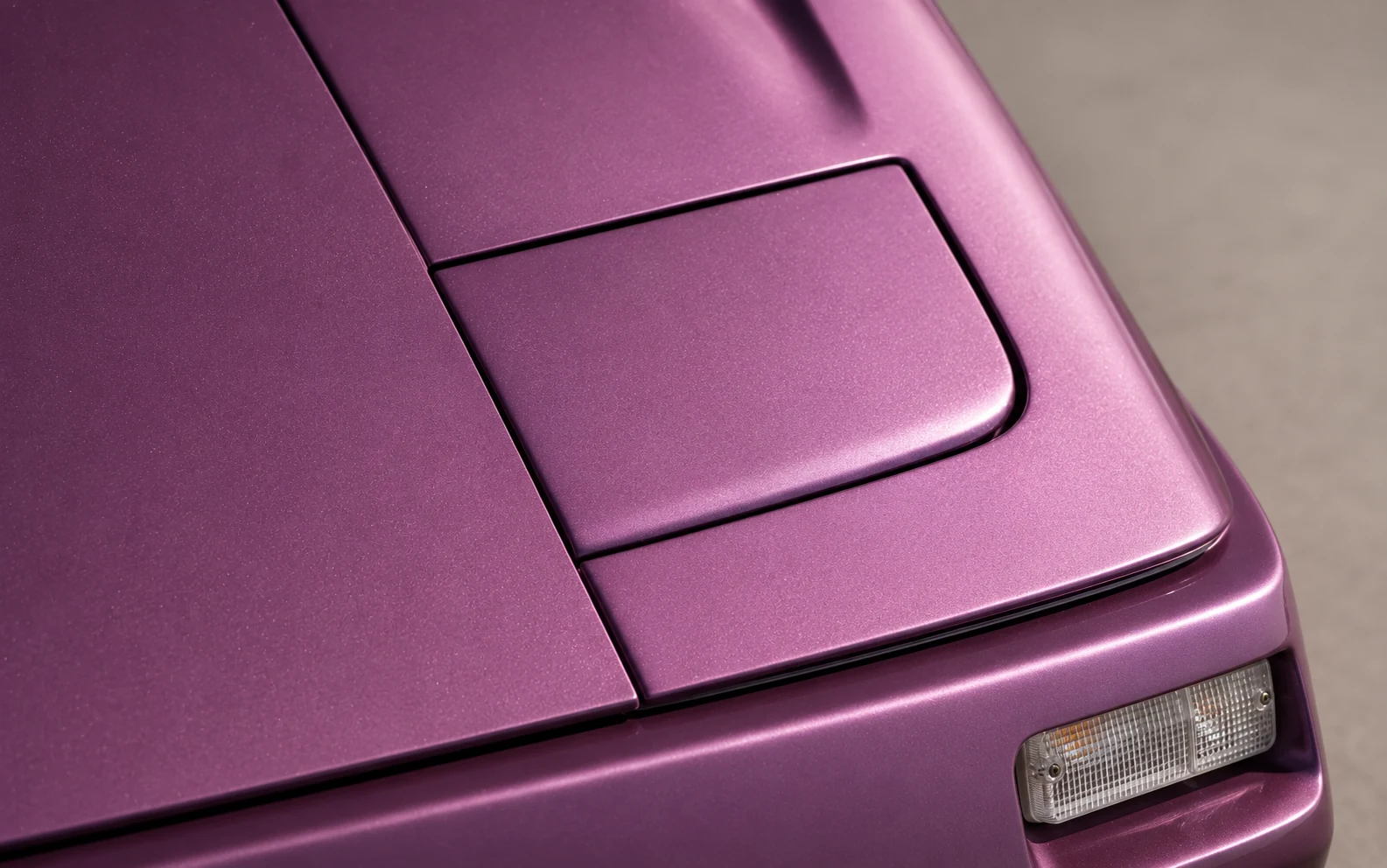
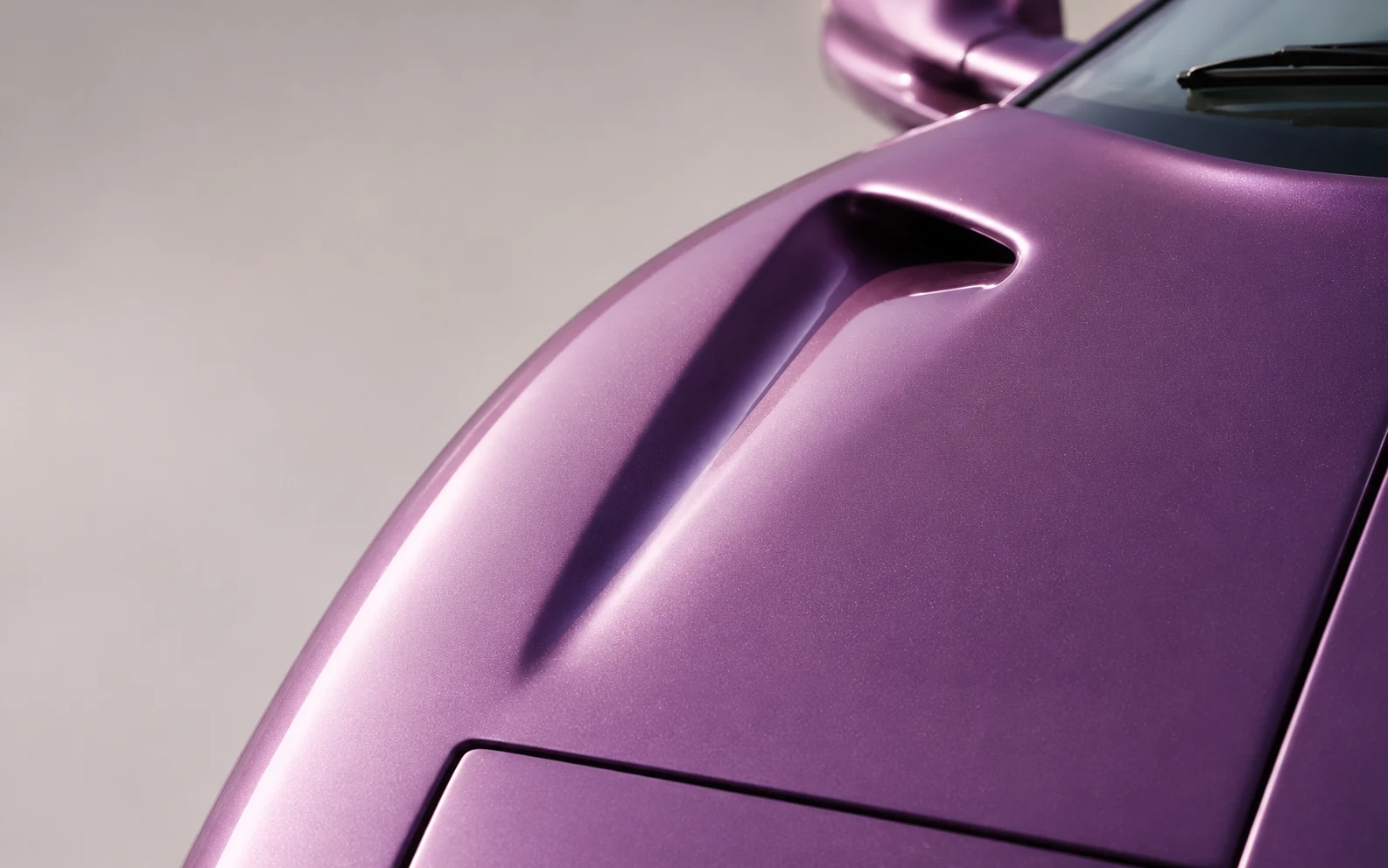
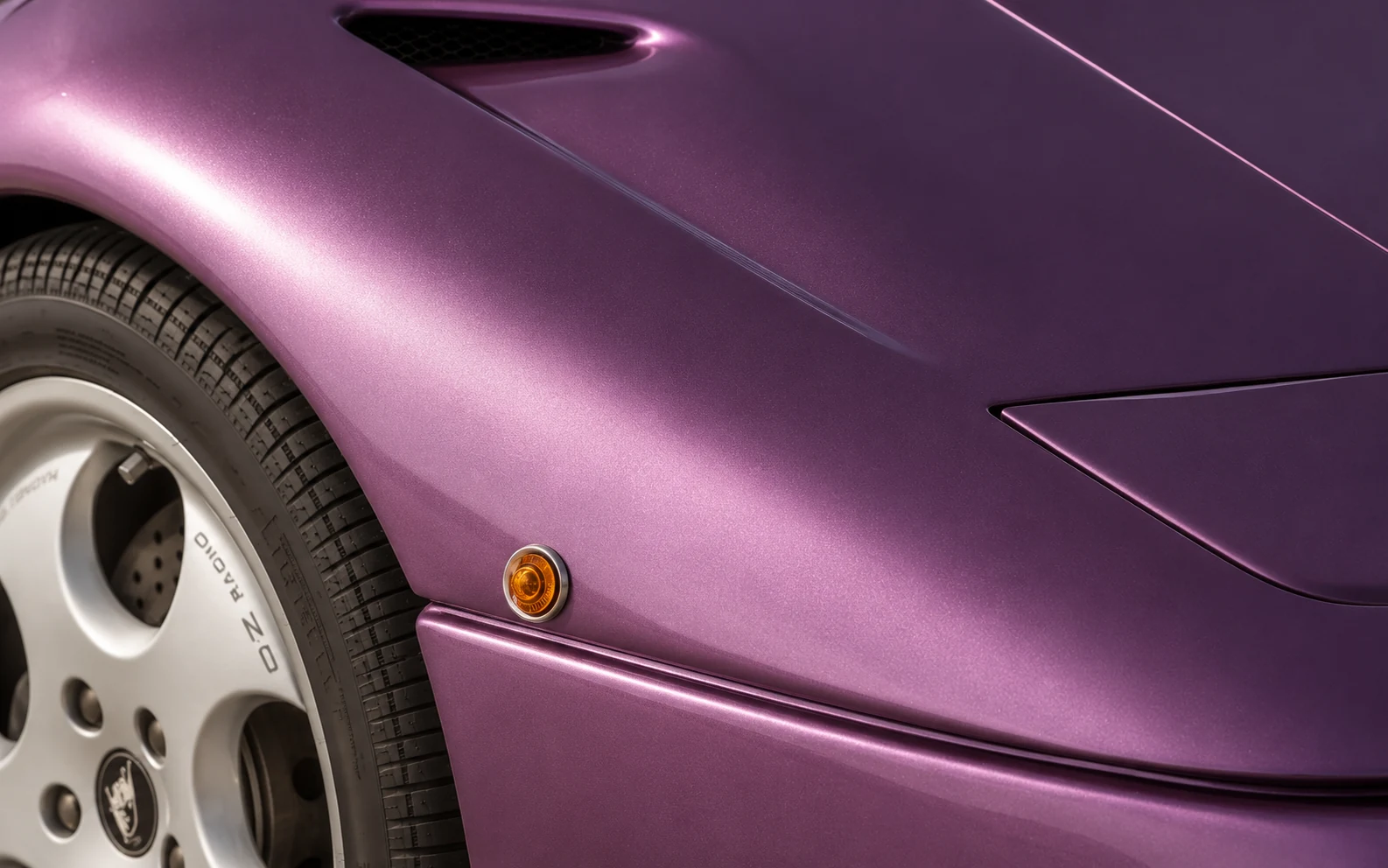
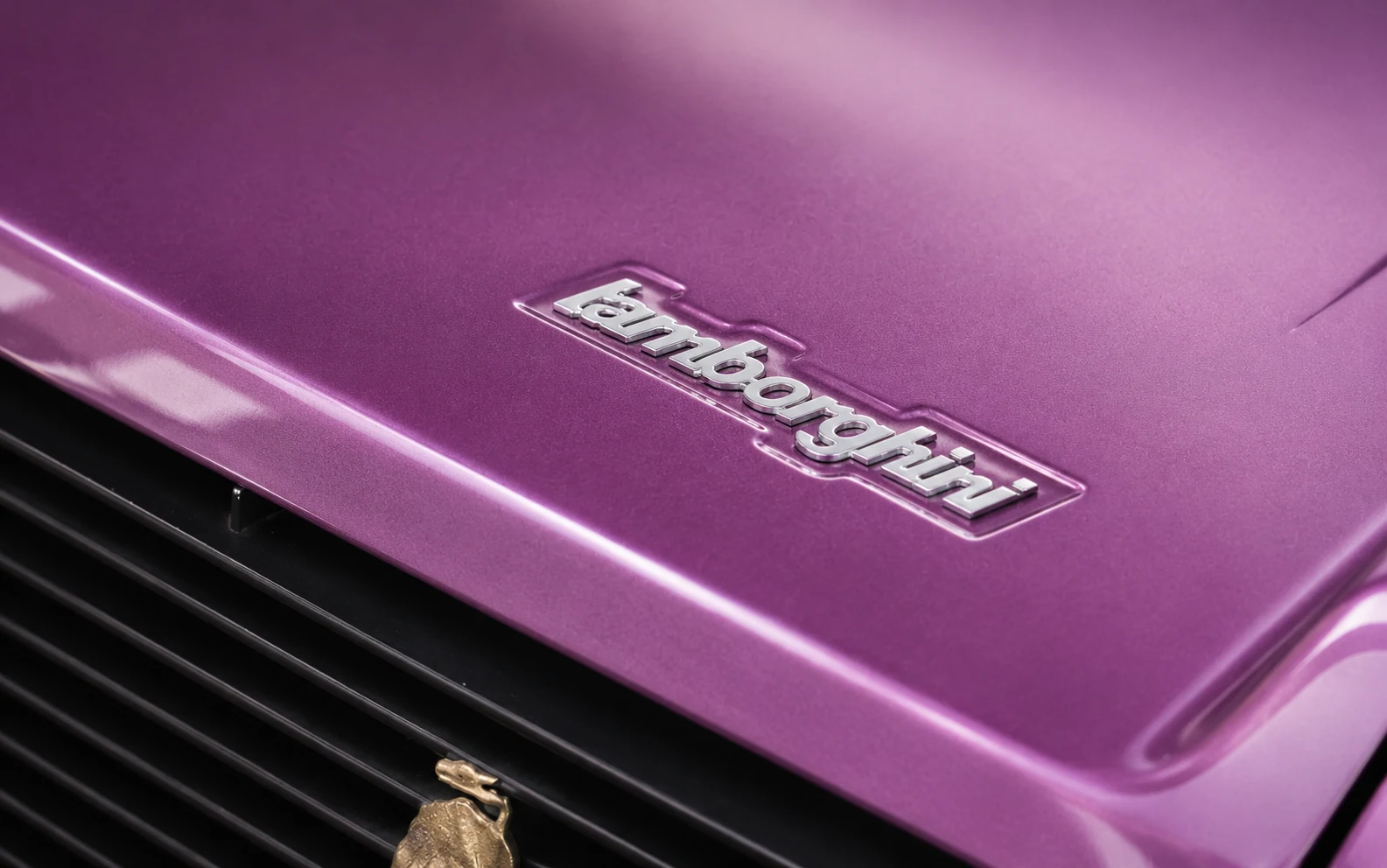
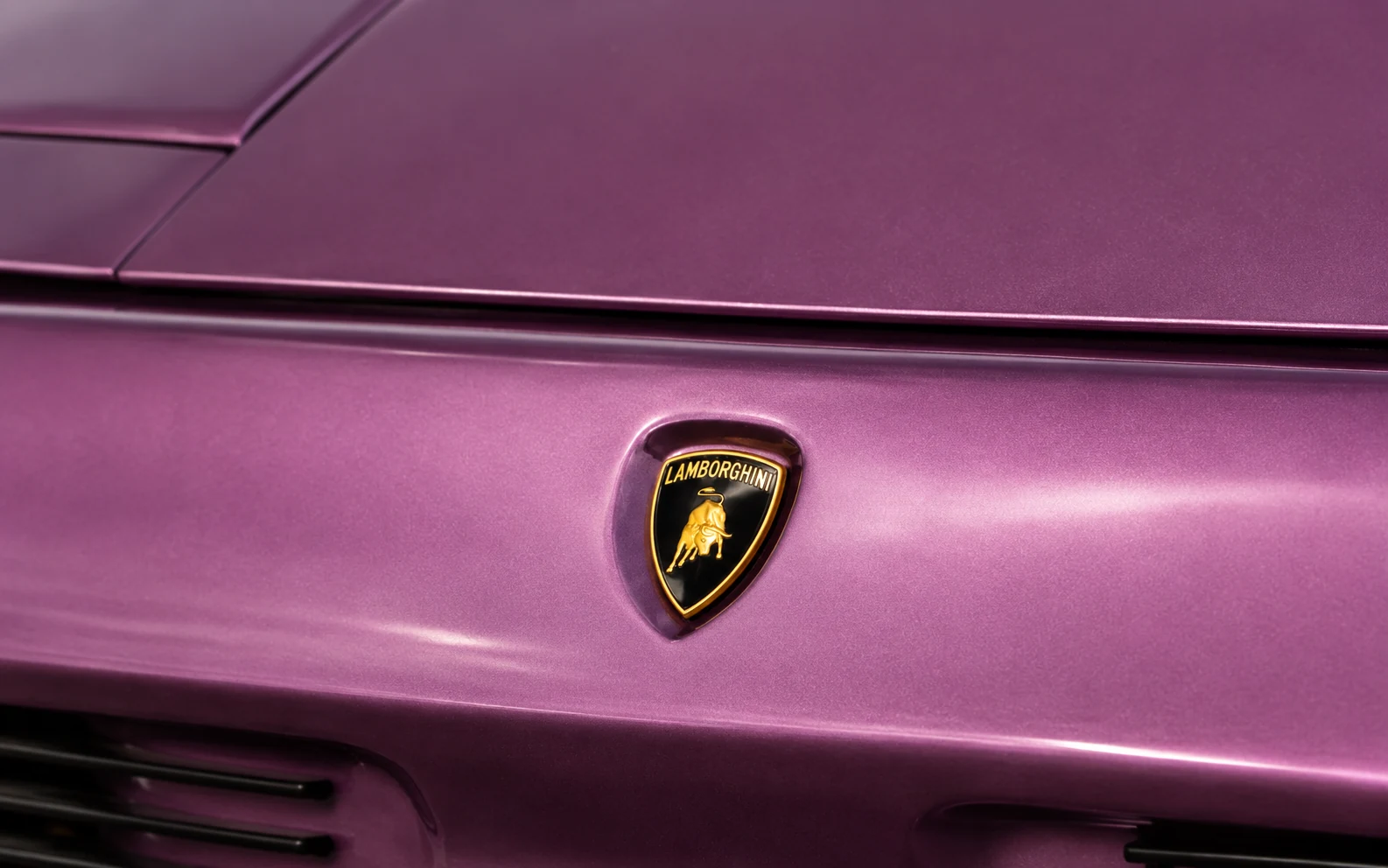
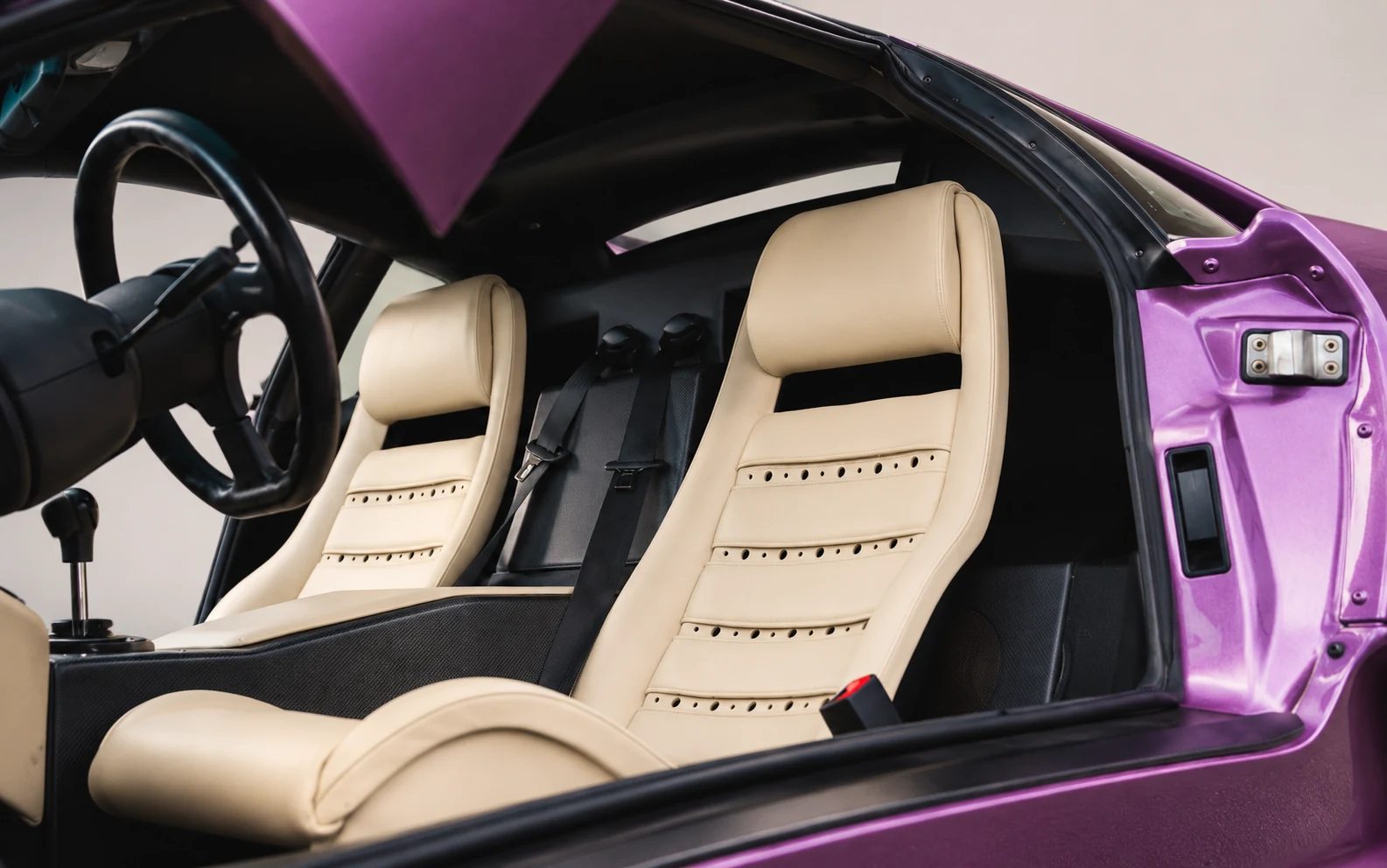
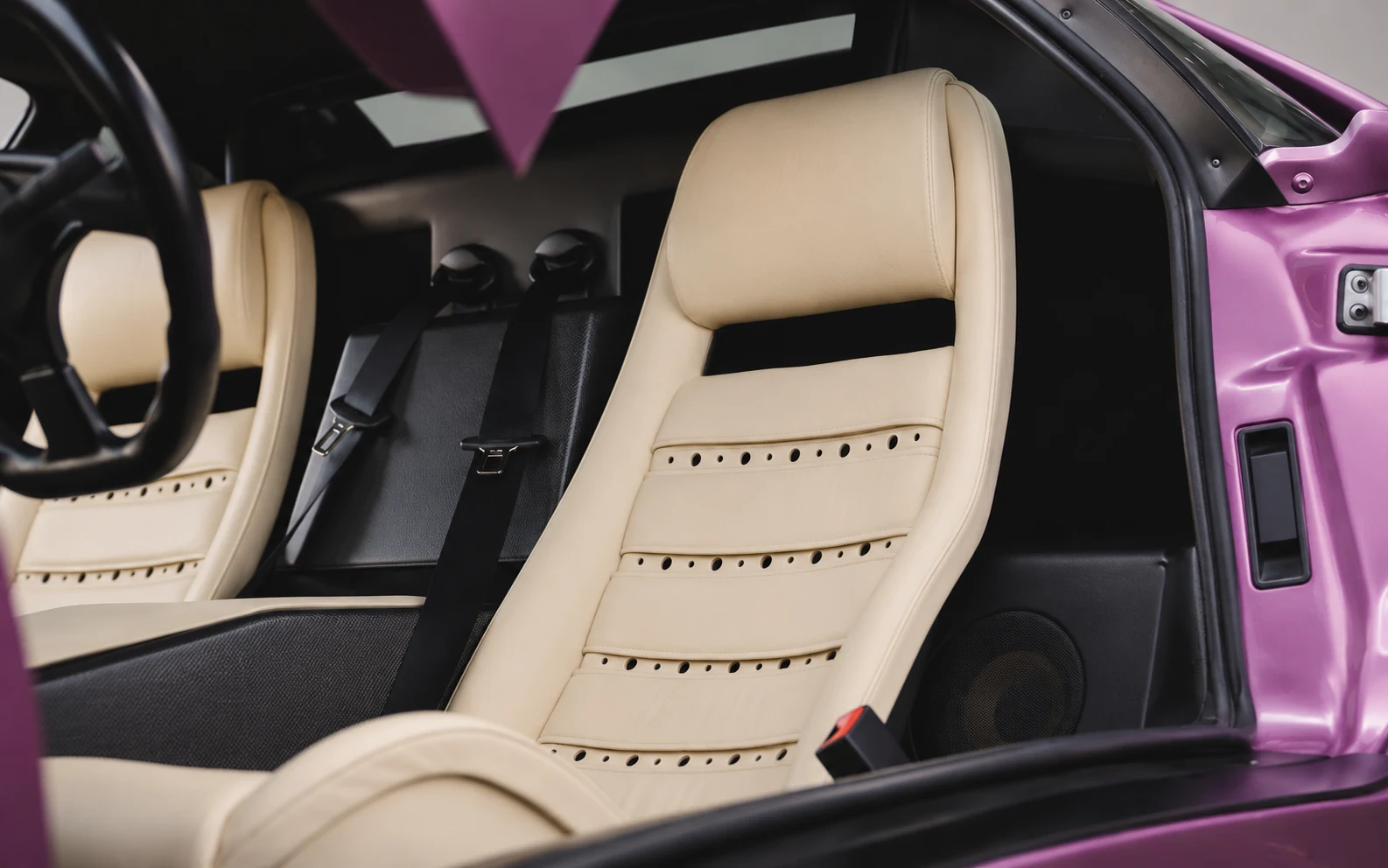
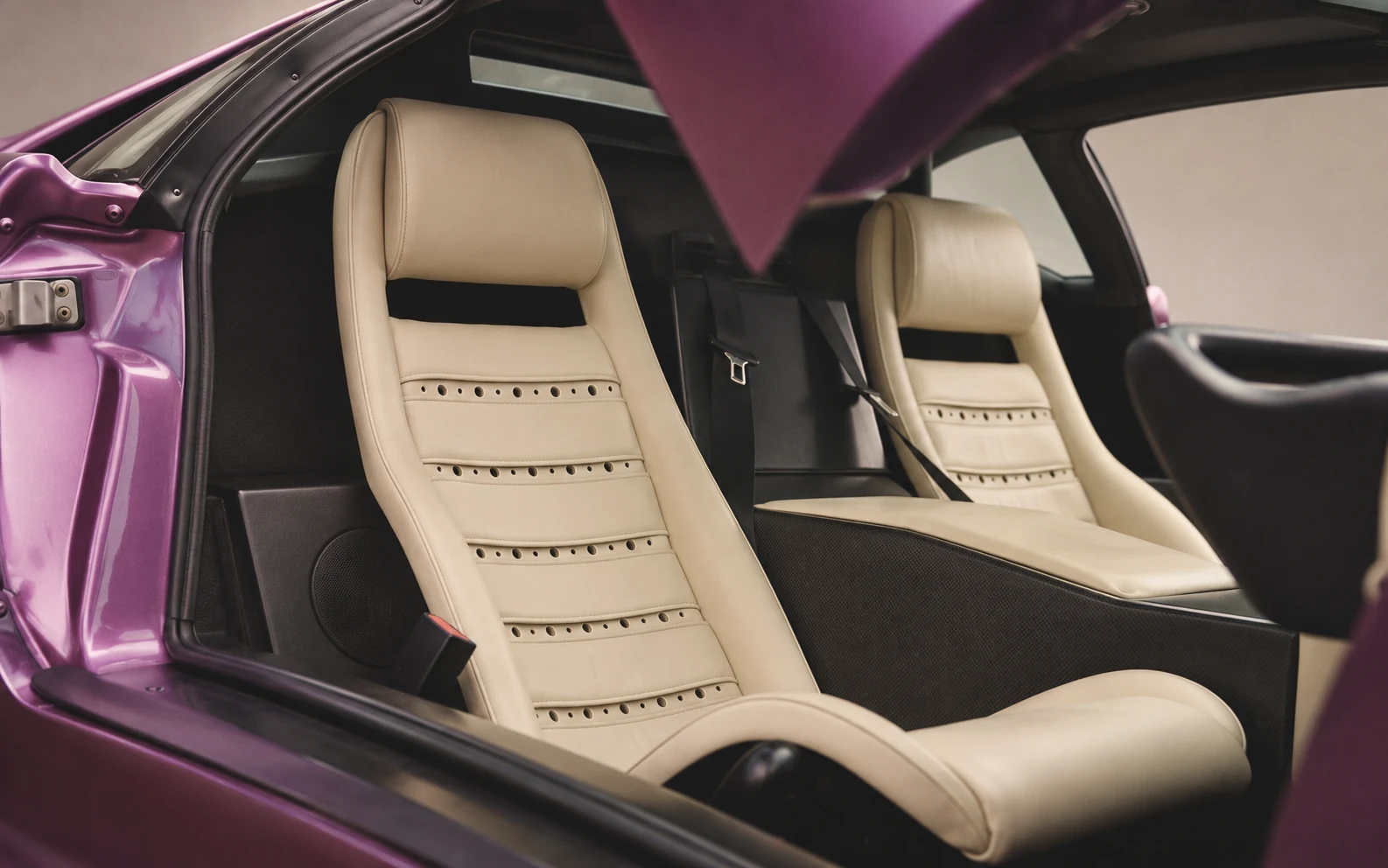
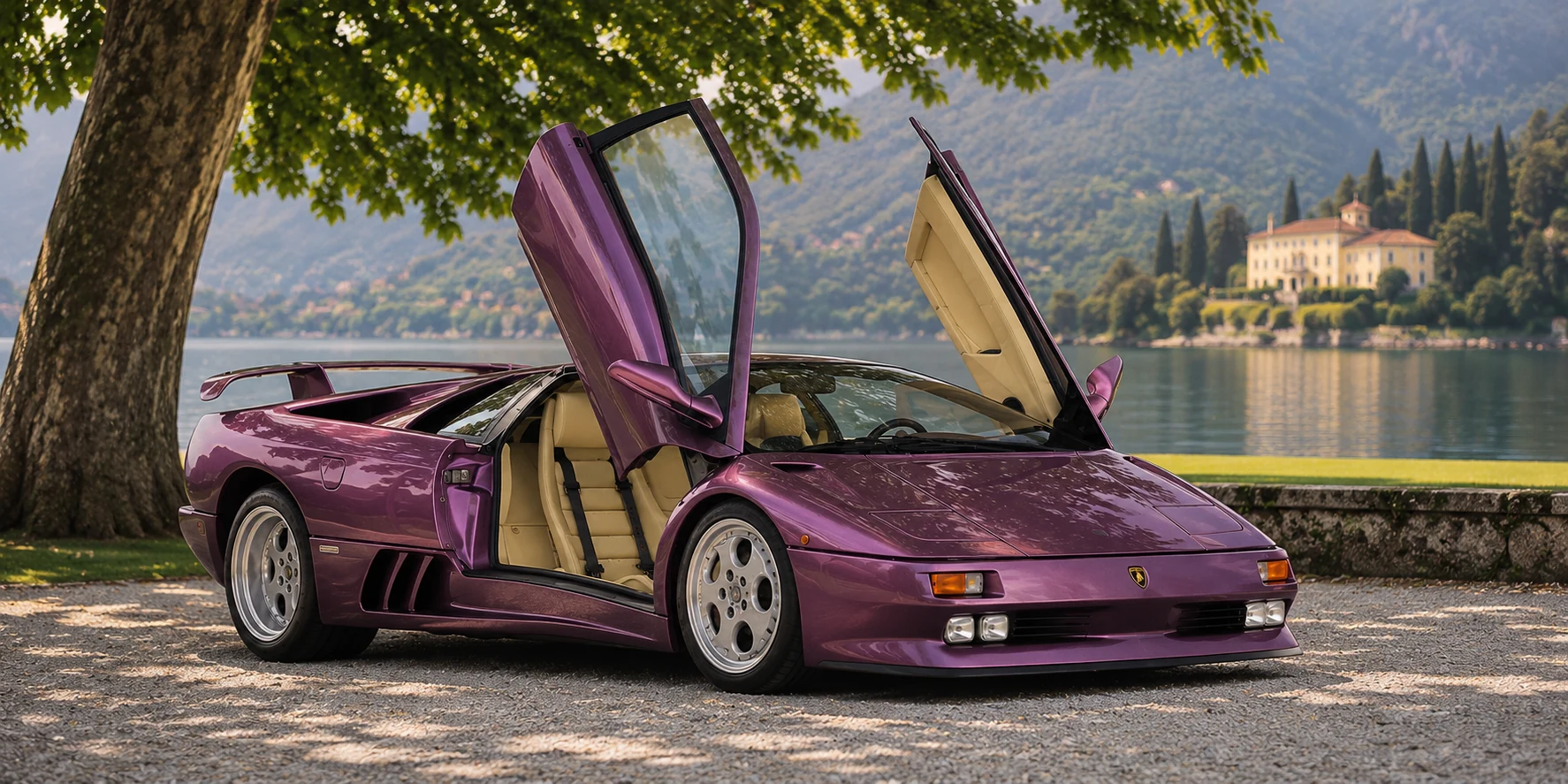
Lamborghini created Viola for the anniversary Diablo. This one went to the United States in it, over Crema leather, one of two finished that way.
An Anniversary With a Second Purpose
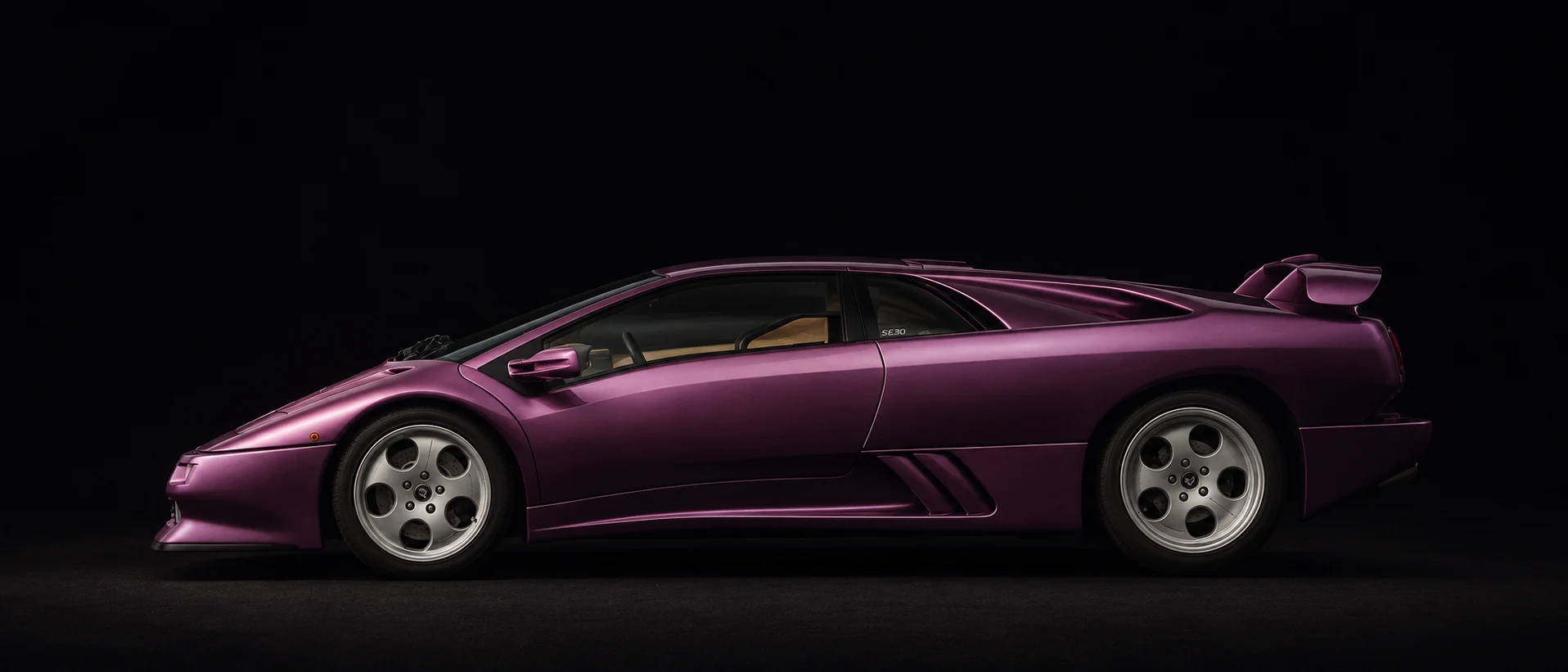
Lamborghini turned thirty in 1993, three years into Diablo production. The company marked the date with a lighter, more powerful version of the car and showed it to customers at Sant'Agata that September.
There was a second motive. GT racing was returning, and homologation rules had loosened far enough for a single road car to qualify a race version. The SE30 was planned as that road car, with a factory conversion kit, the Jota, held in reserve for competition.
The racing program was dropped before any SE30 took the start. The car built to make it possible went to customers as drawn.
Production began in June 1994 and closed in November 1995 at 150 cars.
Close to 300 pounds came out of the car. Most of what replaced it was carbon fiber.
Design
Softened in Detroit, Sharpened Again
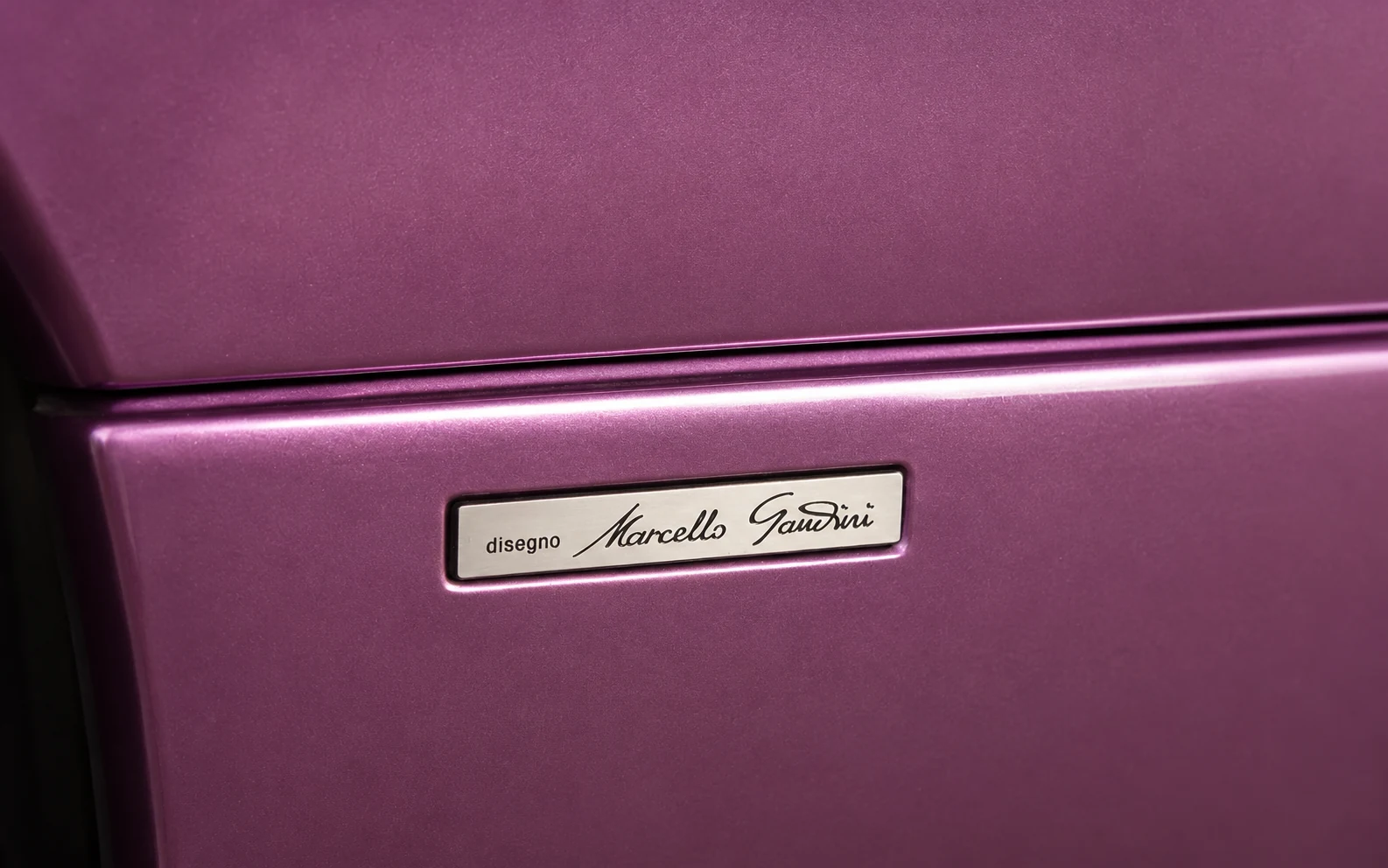
Marcello Gandini drew the Diablo, as he had drawn the Miura and the Countach. When Chrysler bought Lamborghini in 1987, its Detroit studio under Tom Gale was asked to soften his proposal, and the sharpest edges went. Gandini took his original drawing to Cizeta, where it became the V16T.
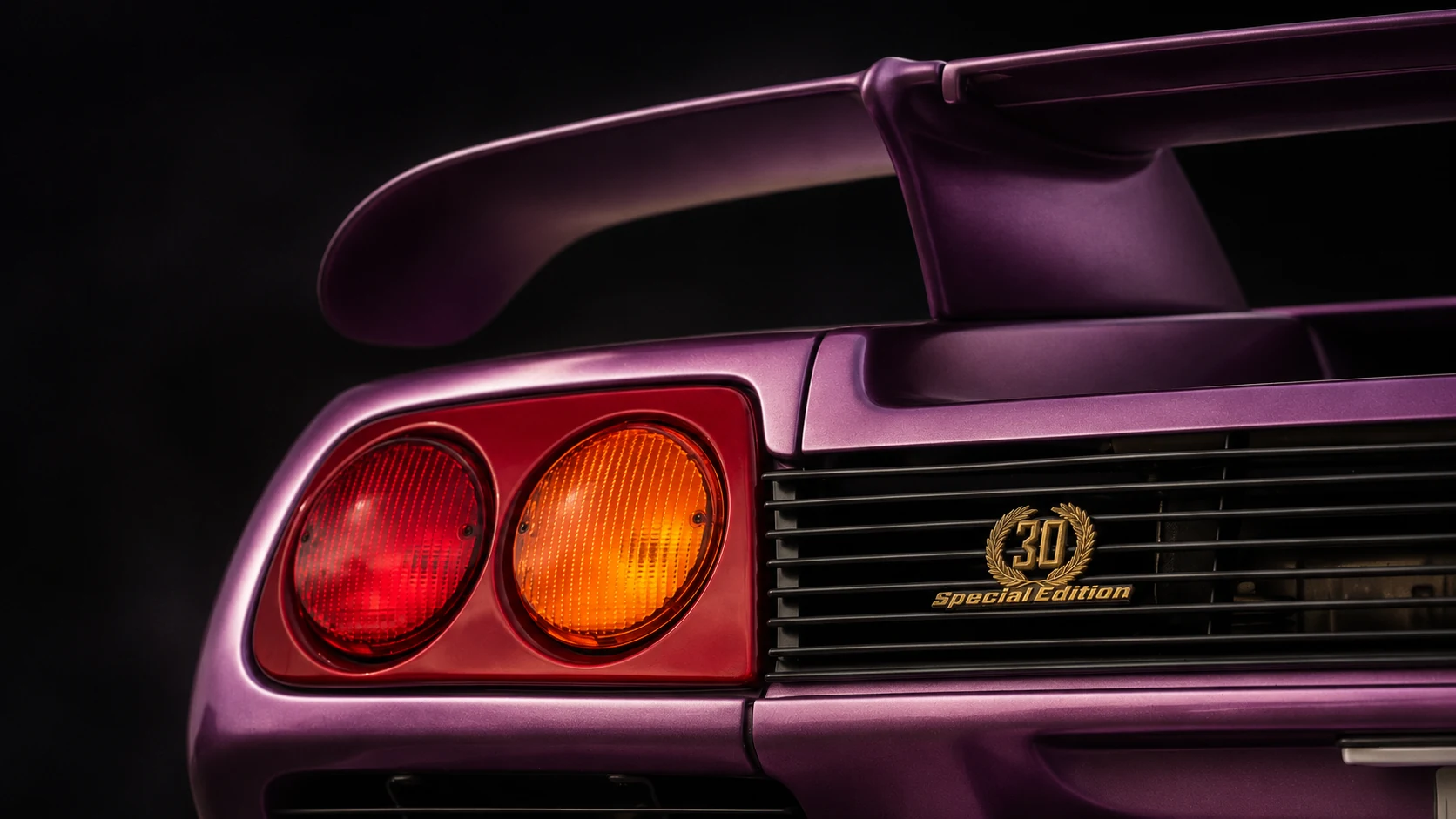
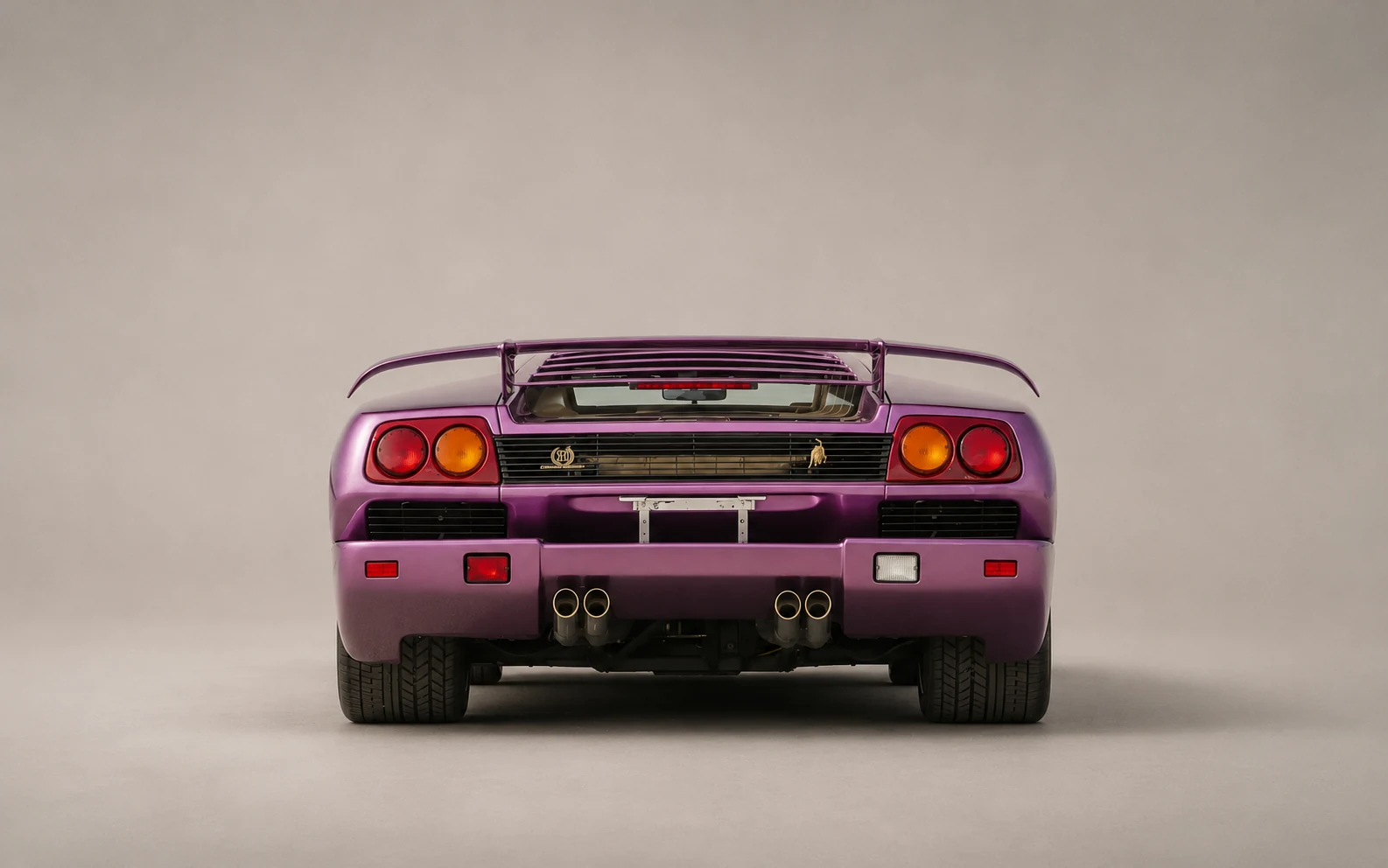
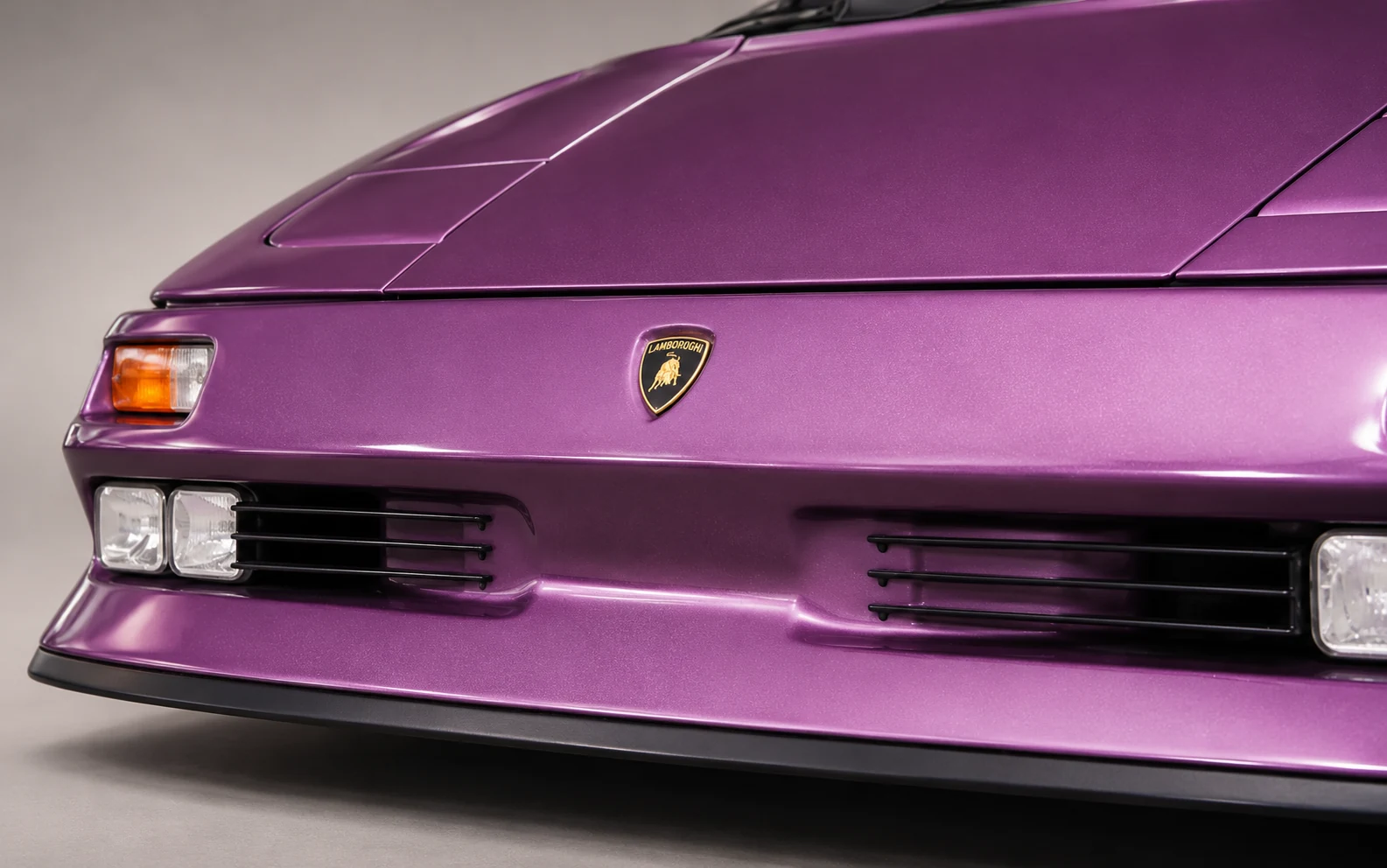
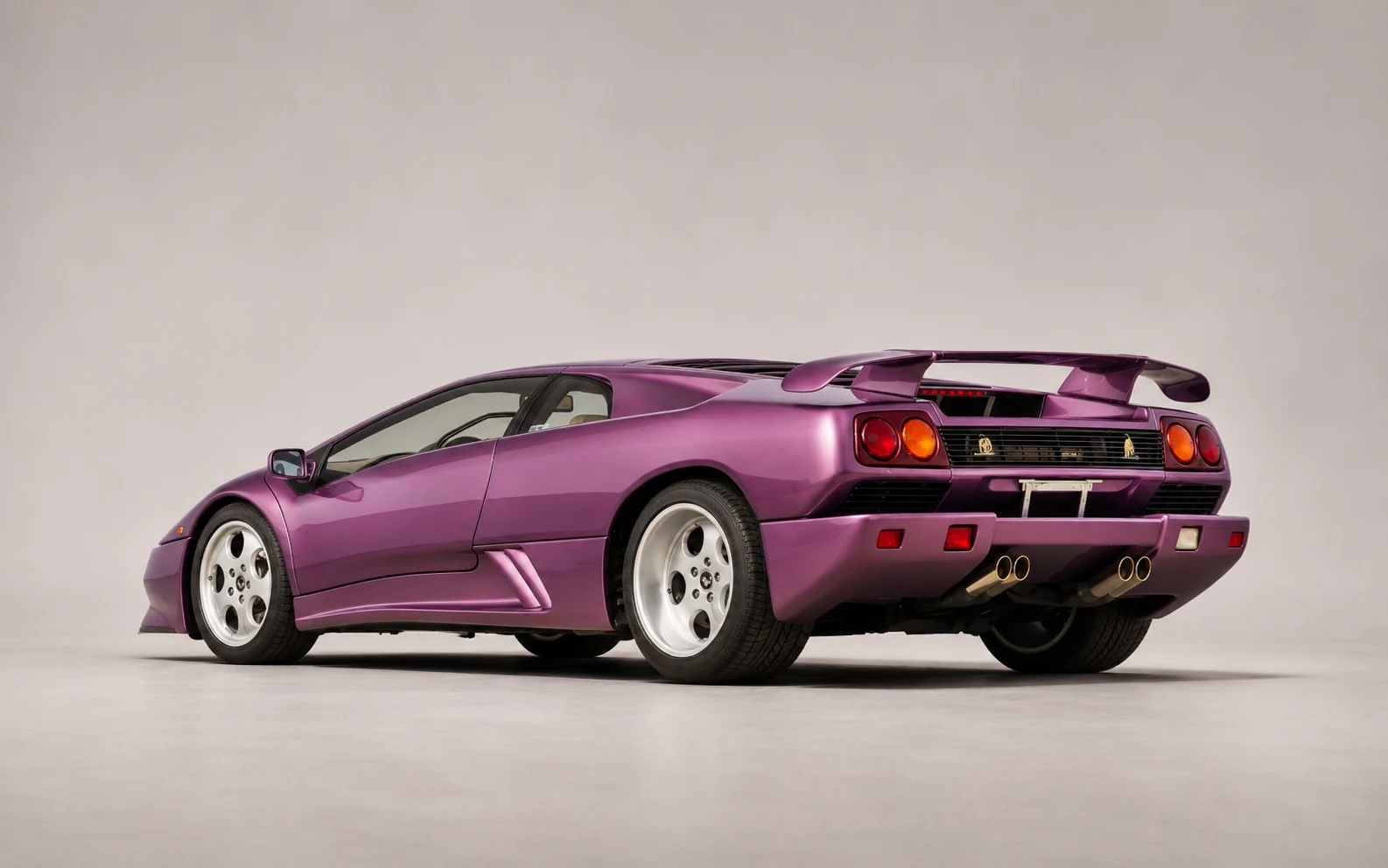
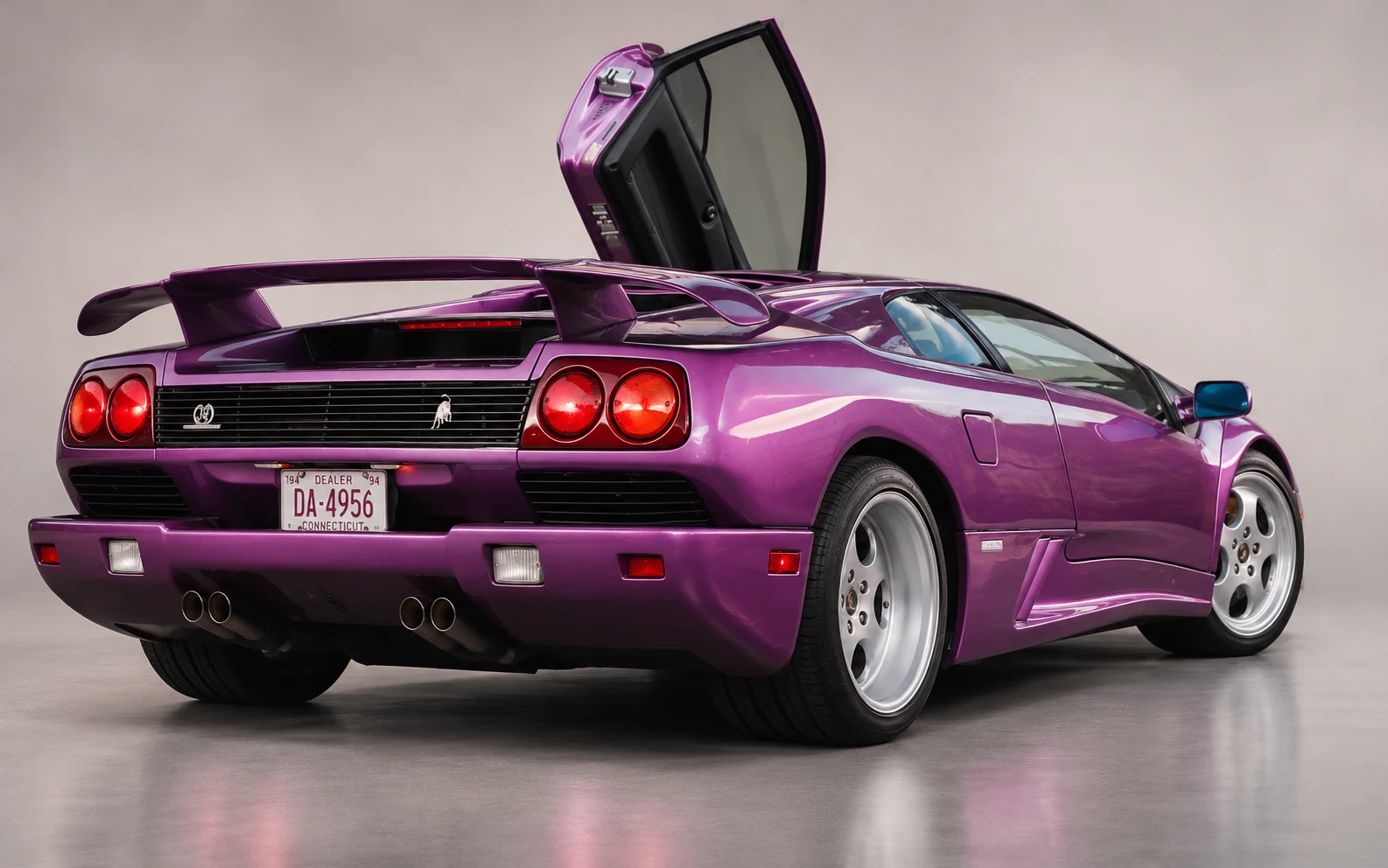
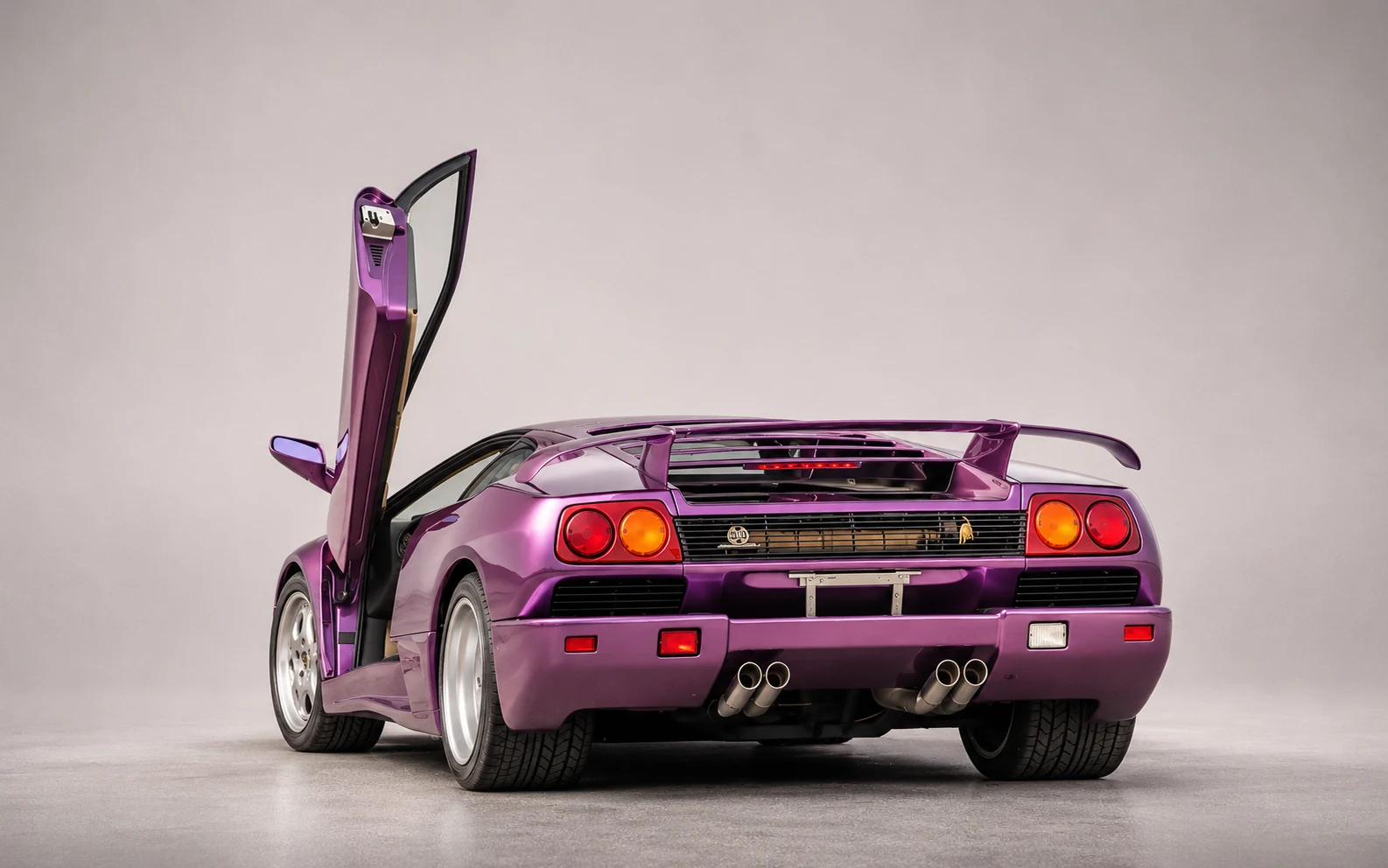
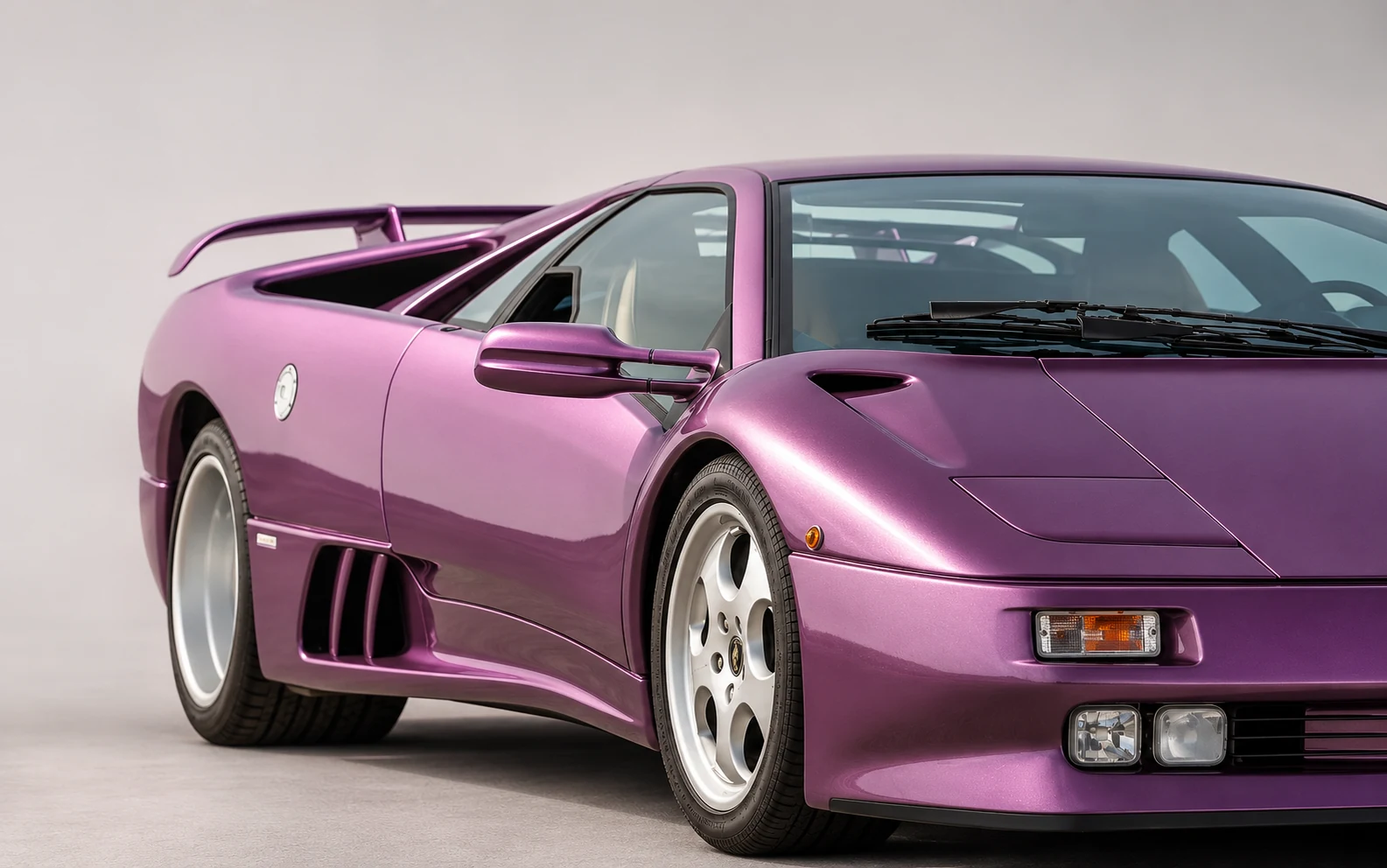
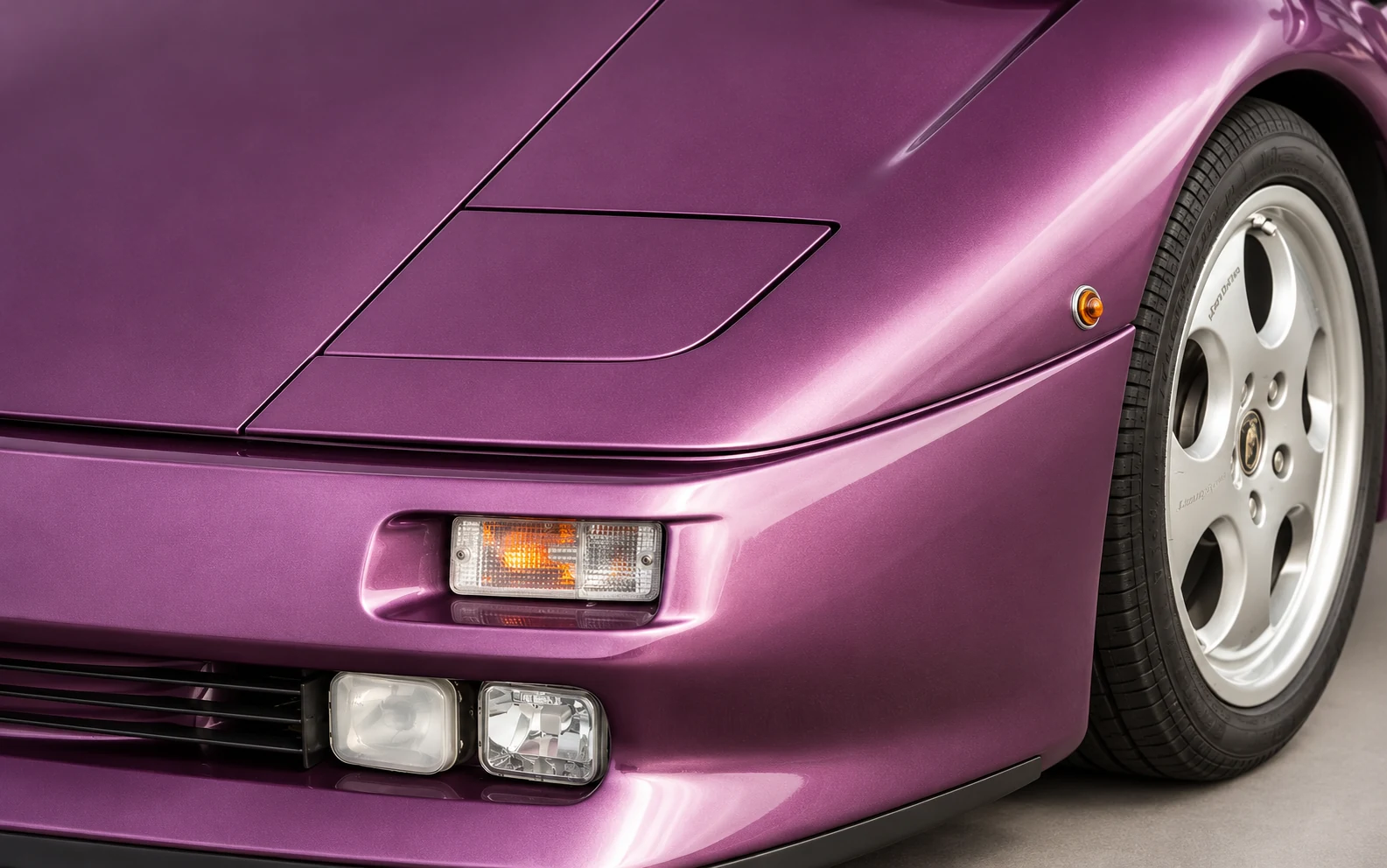
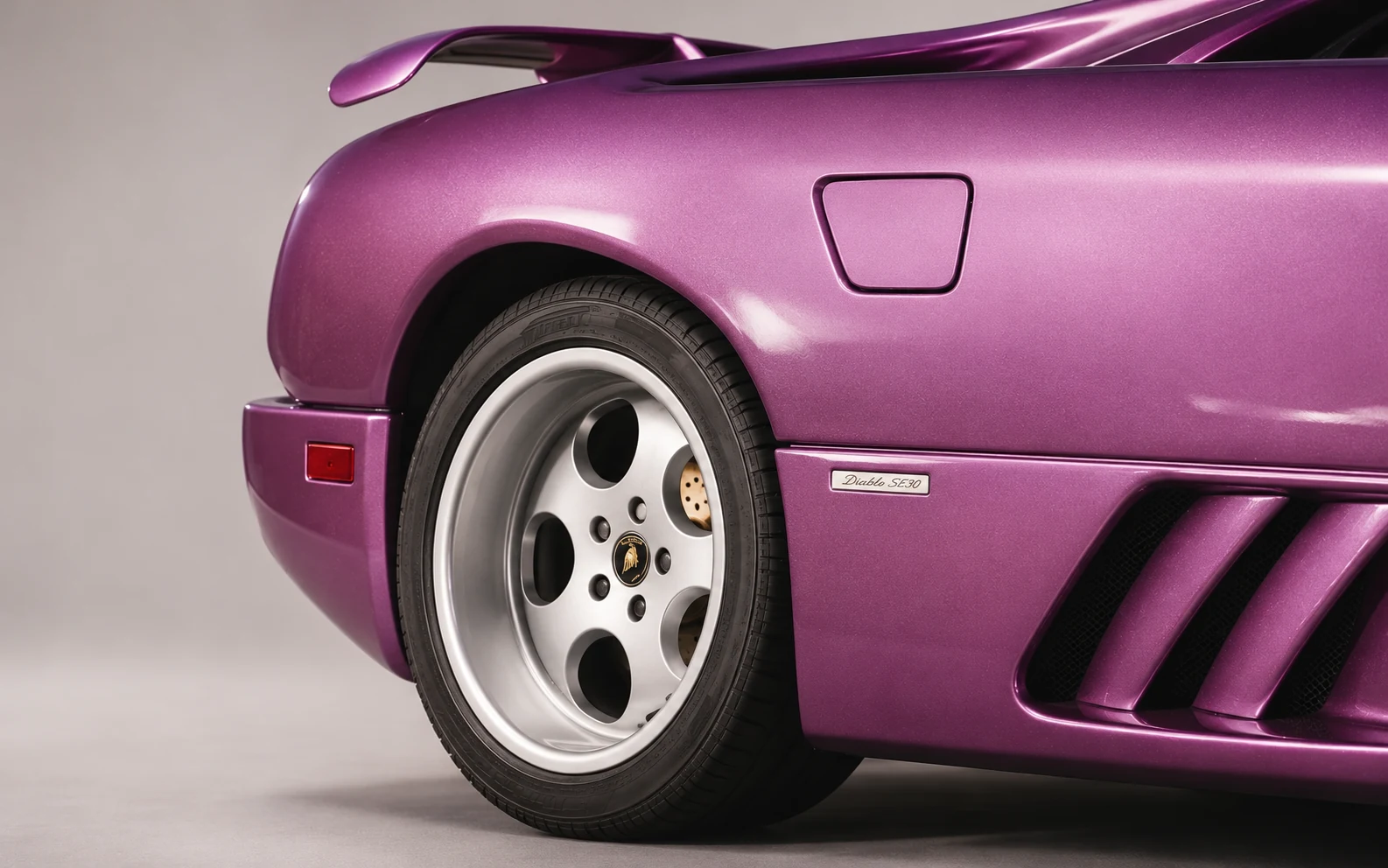
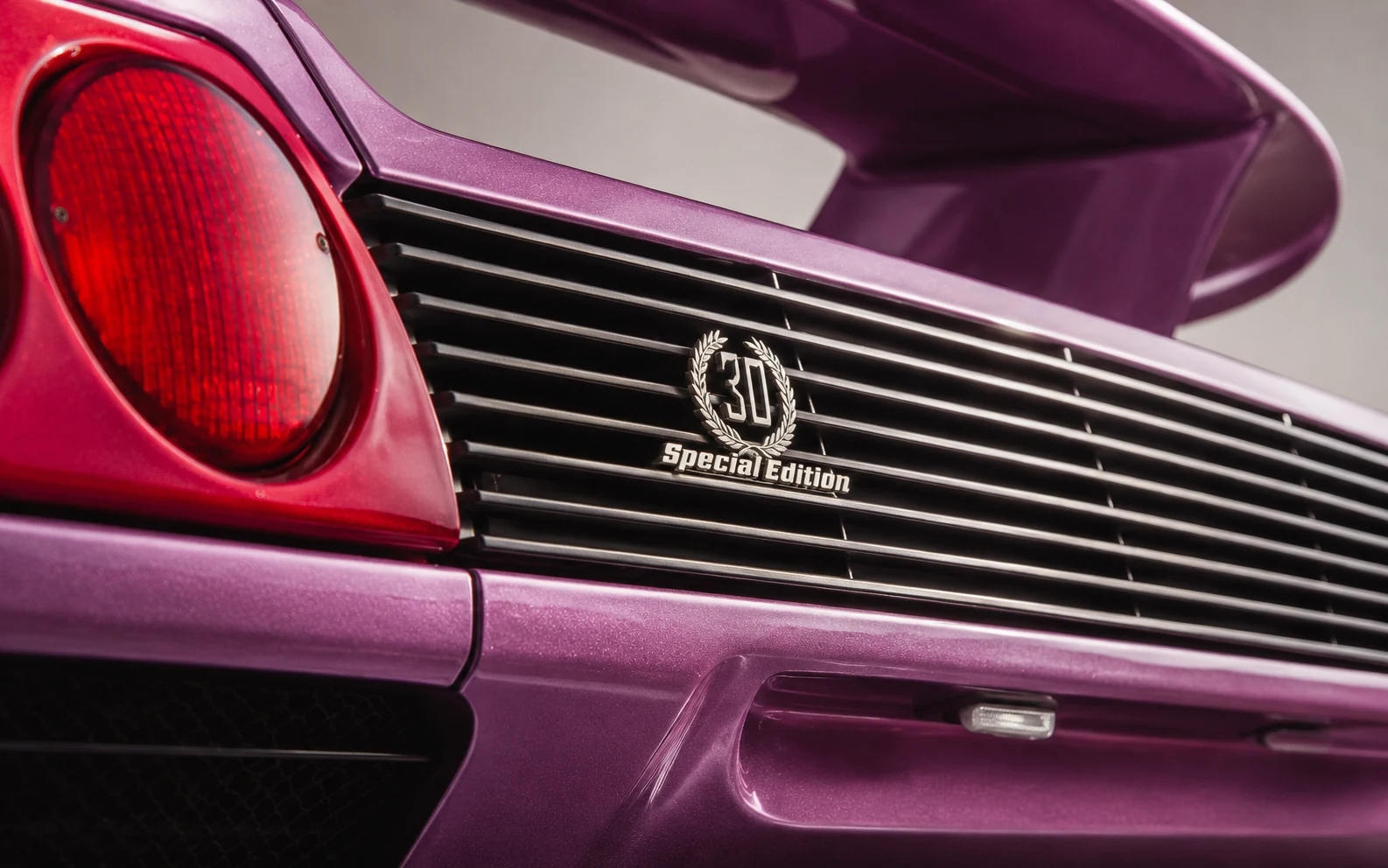
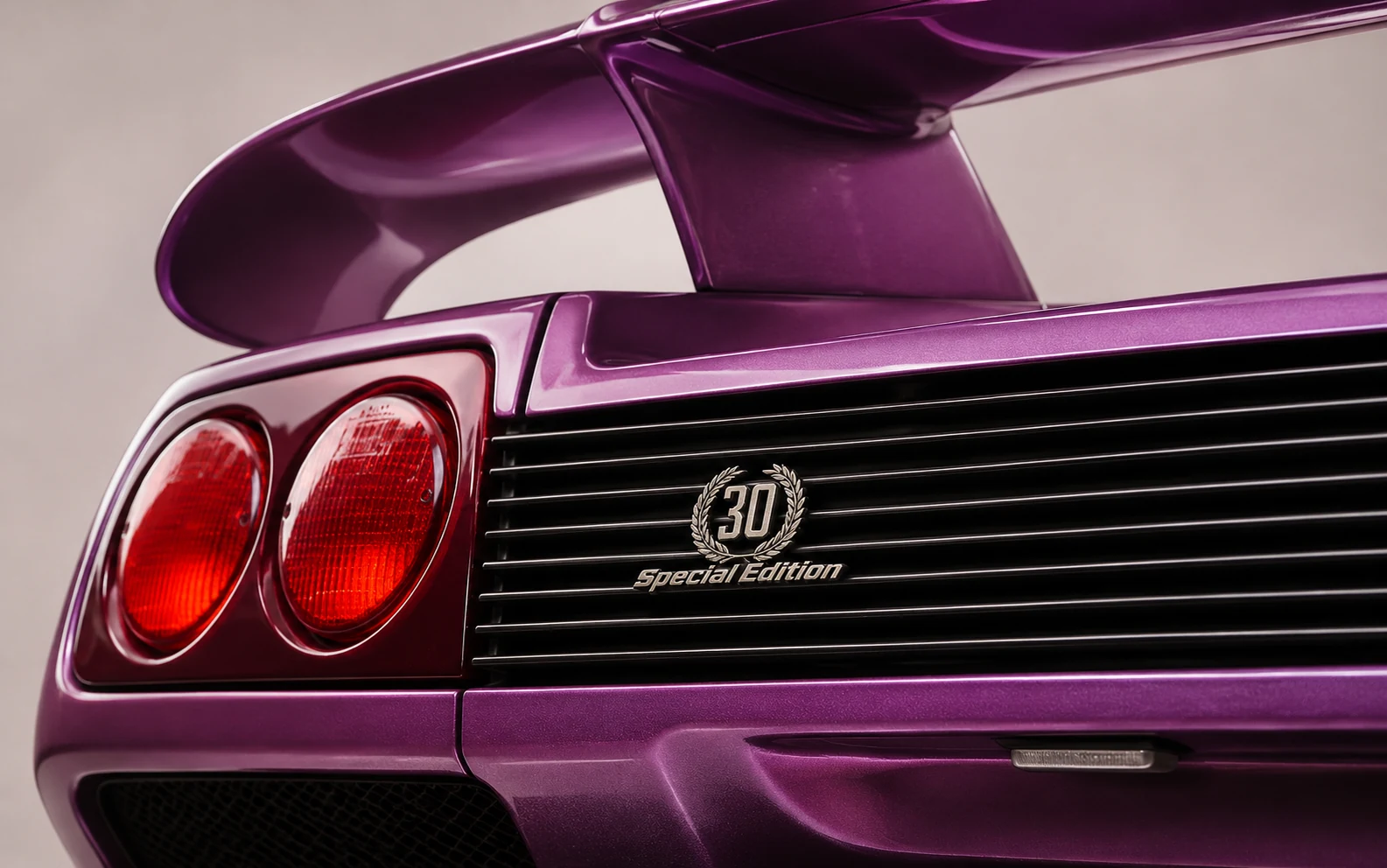
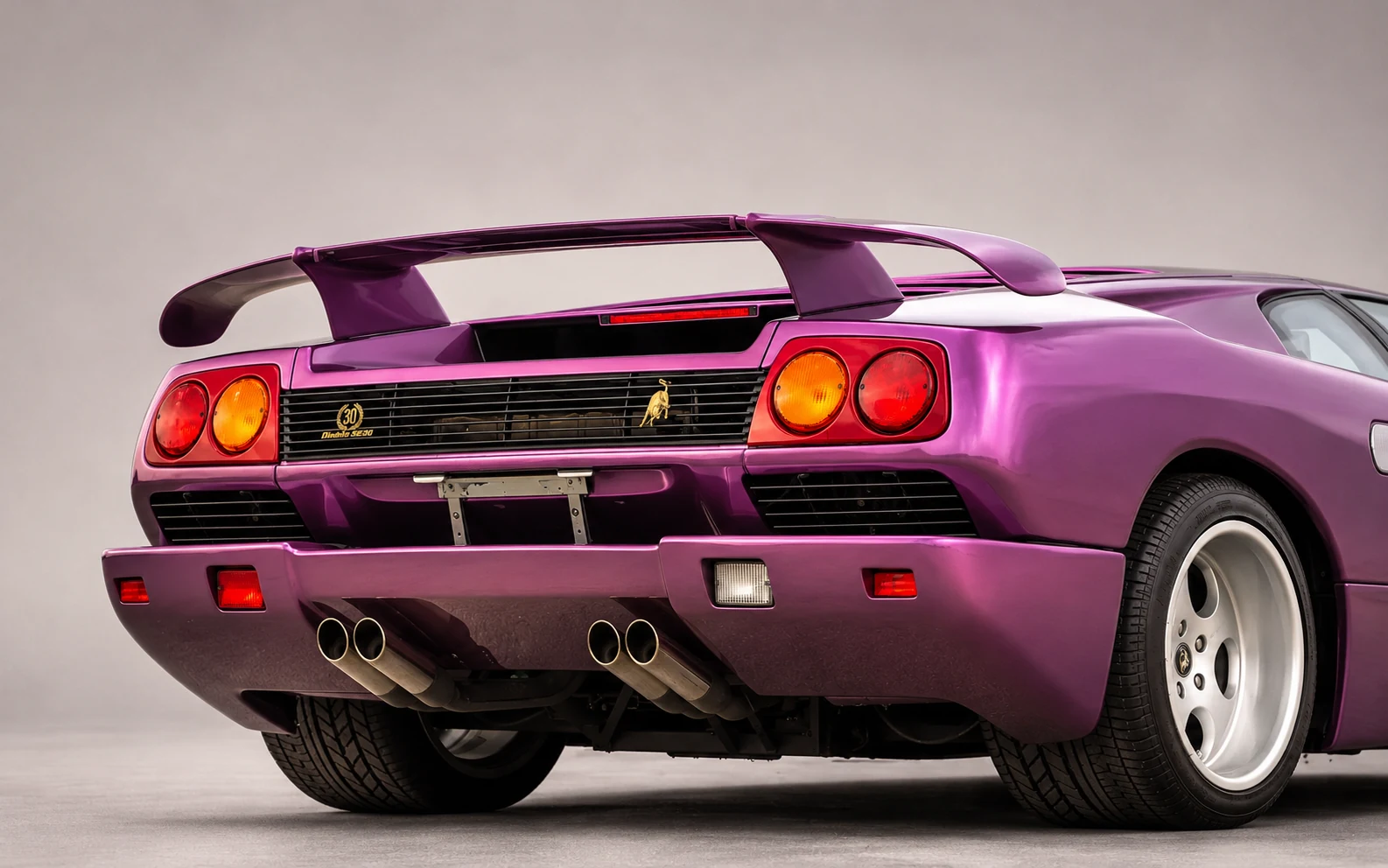
The SE30 put some of that edge back. A new front bumper moved the four rectangular lamps out to the corners, with slatted brake ducts set between them. The intakes ahead of the rear wheels traded their black horizontal slats for two vertical fins in body color. At the tail, the grille between the lights opened up, and the fog and reverse lamps moved down into the bumper.
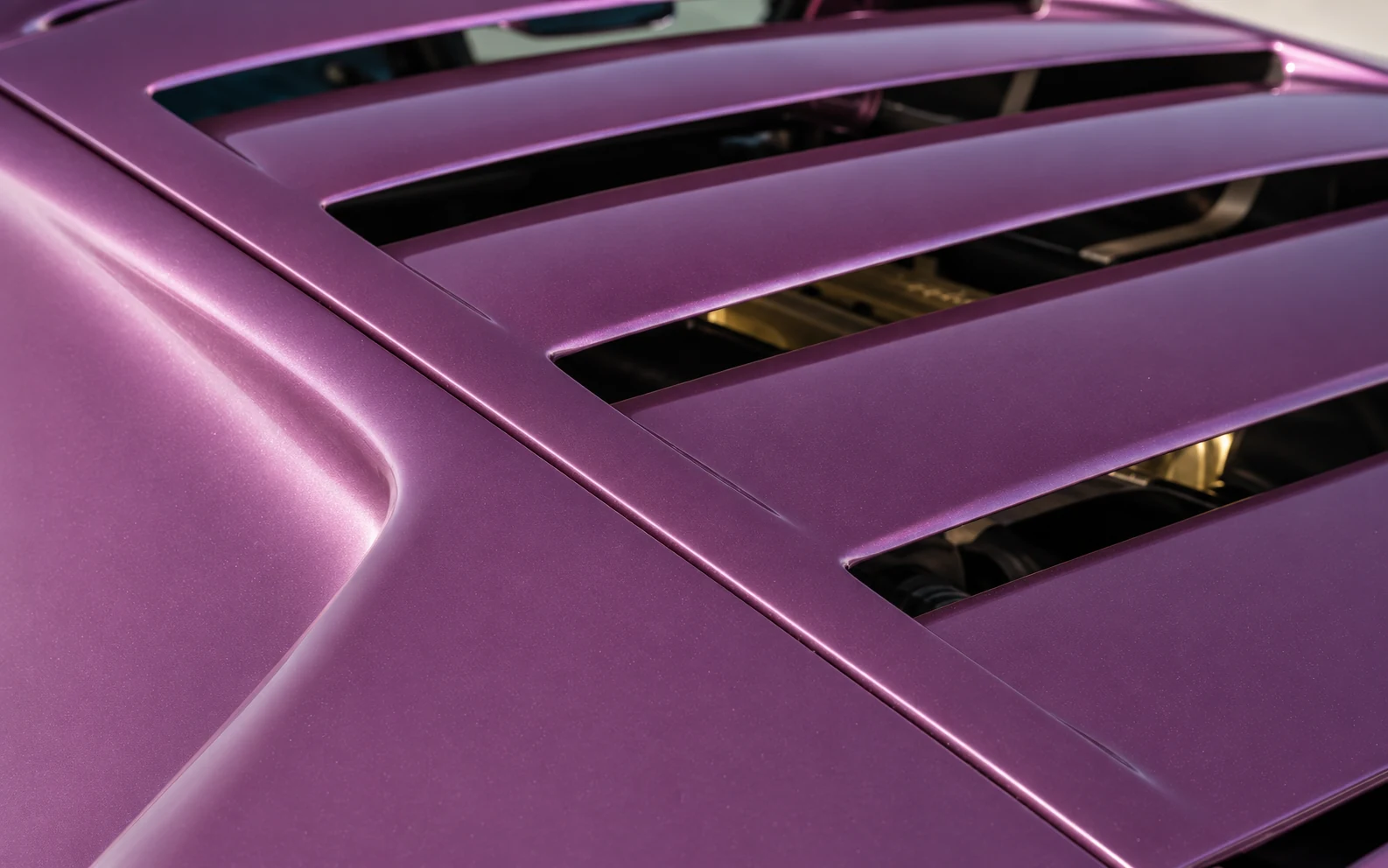
Over the engine sits the detail that identifies the car from any angle: a louvered carbon fiber cover in the manner of the Miura. The bumpers, sills and front lid are carbon fiber as well, and account for much of the weight saved.
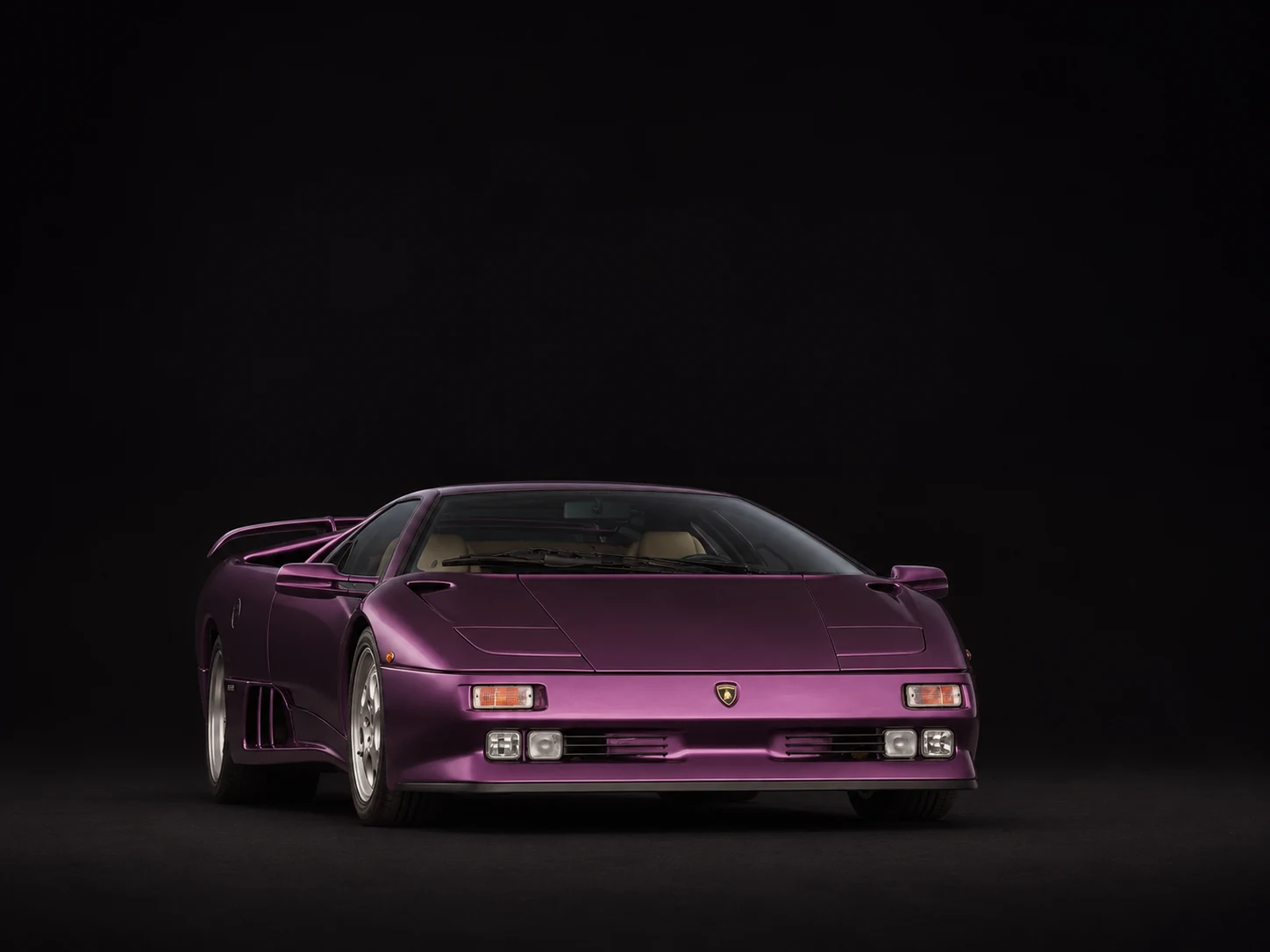
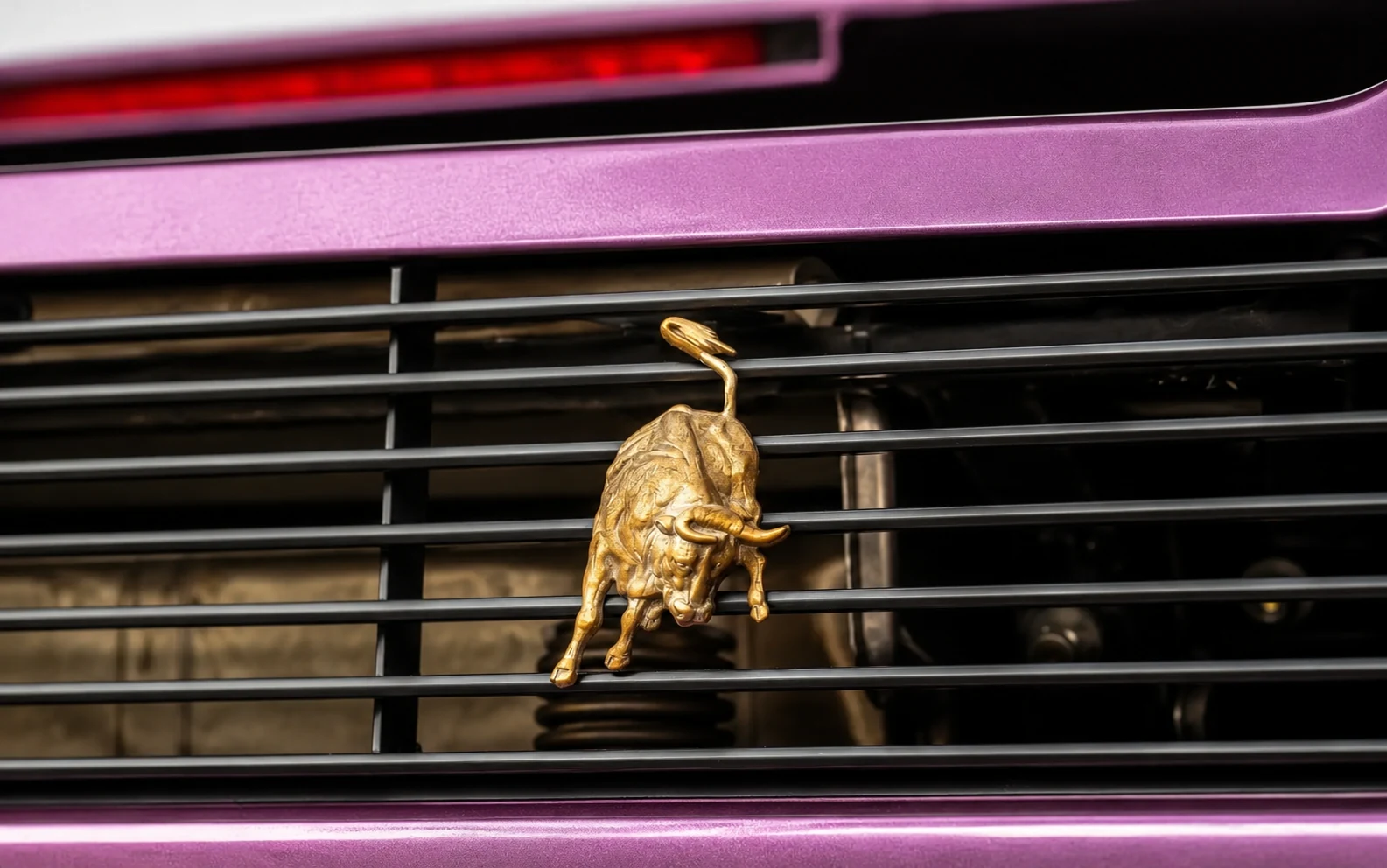
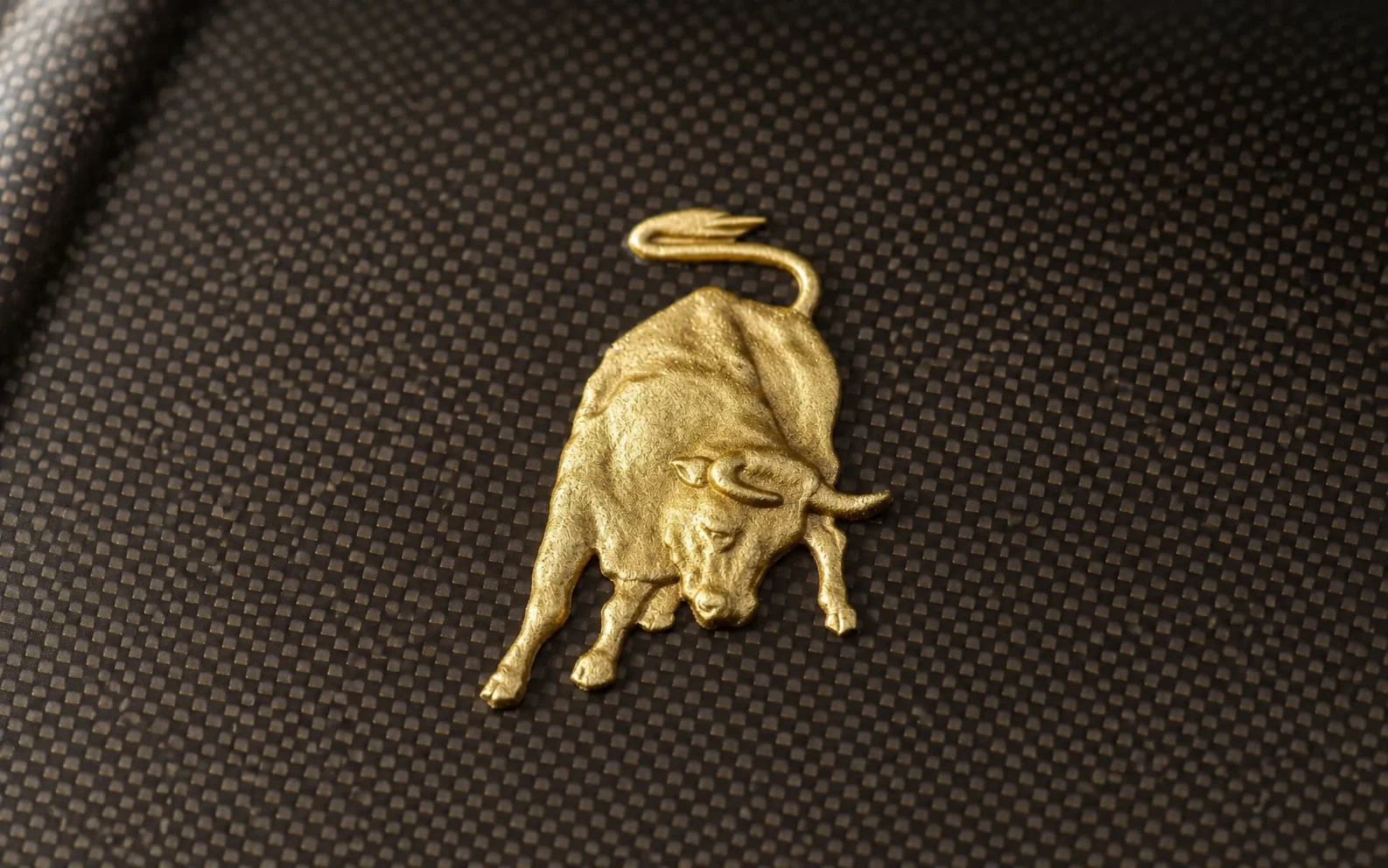
Nose panelThe bull moved from the front lid to the bumper face.
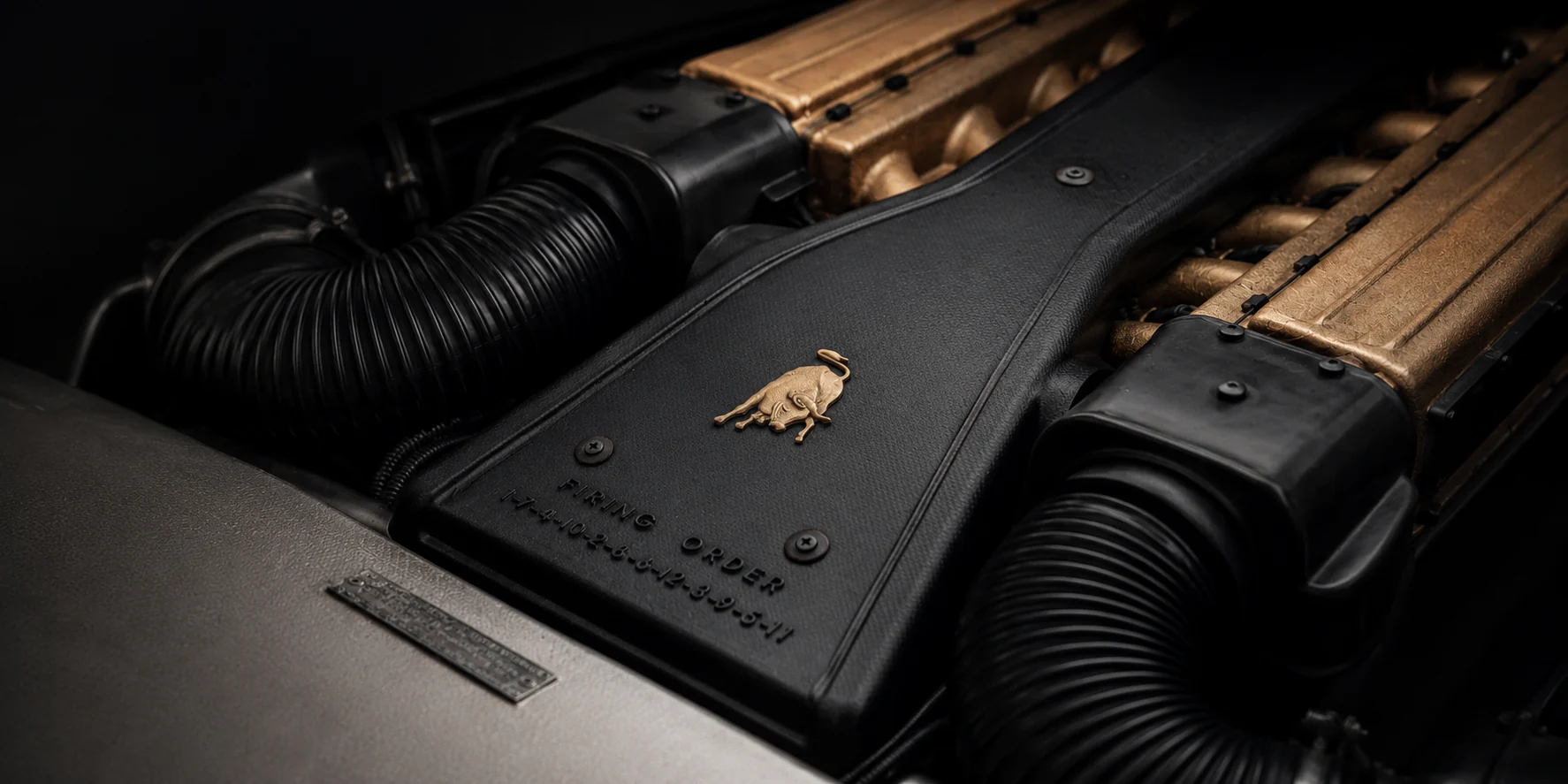
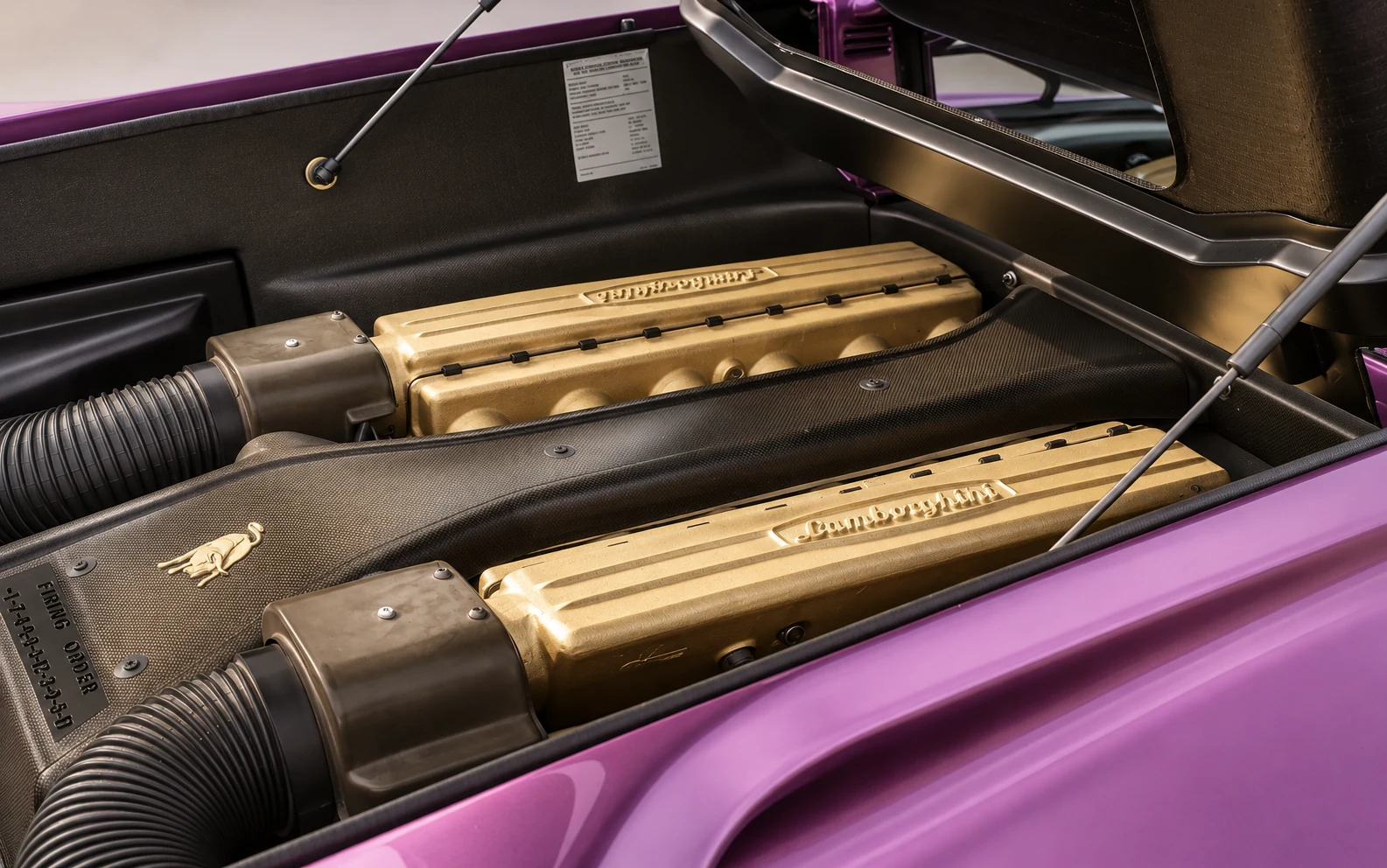
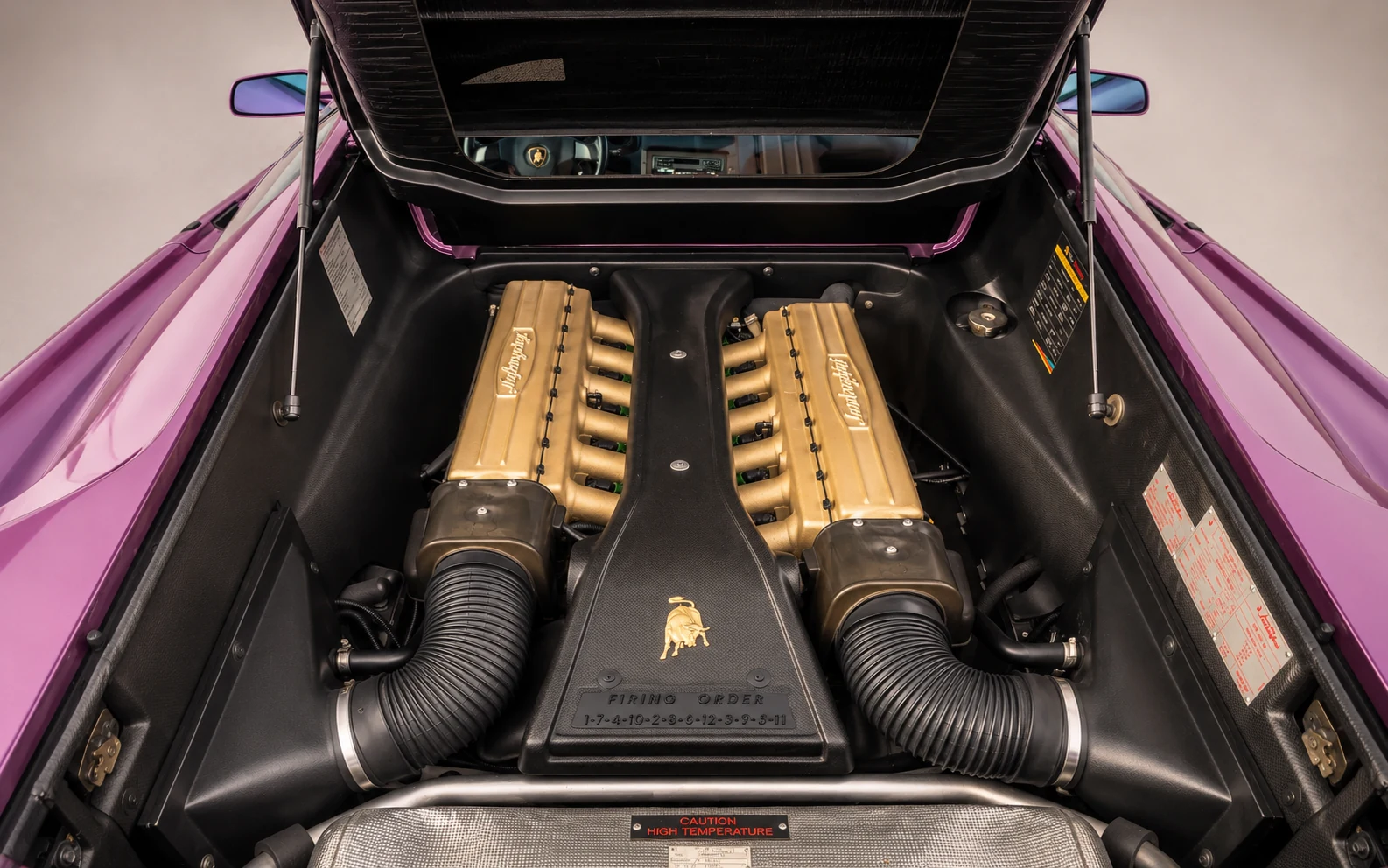
Thirty years of Lamborghini, and one family of V12 for all of them.
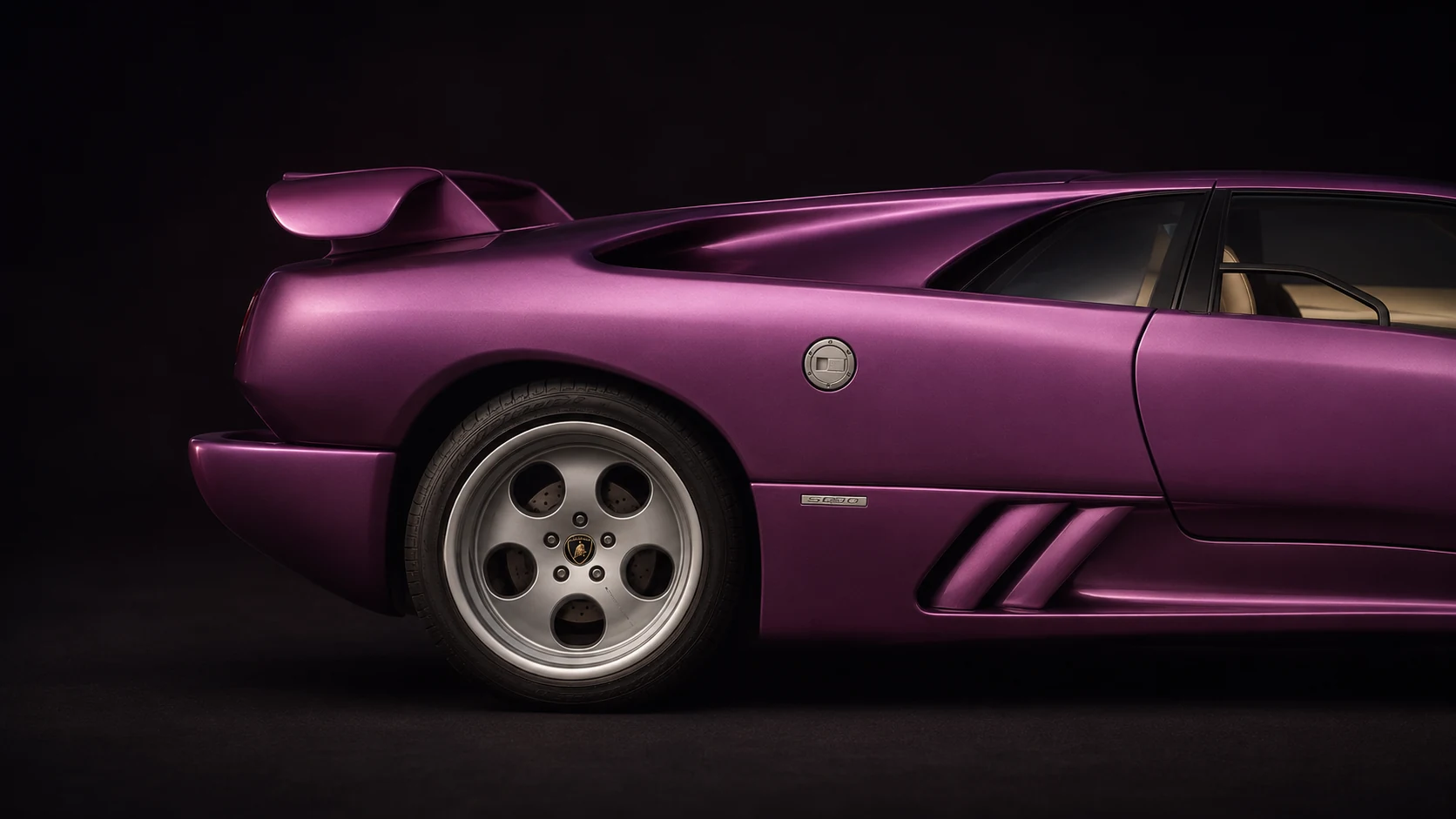
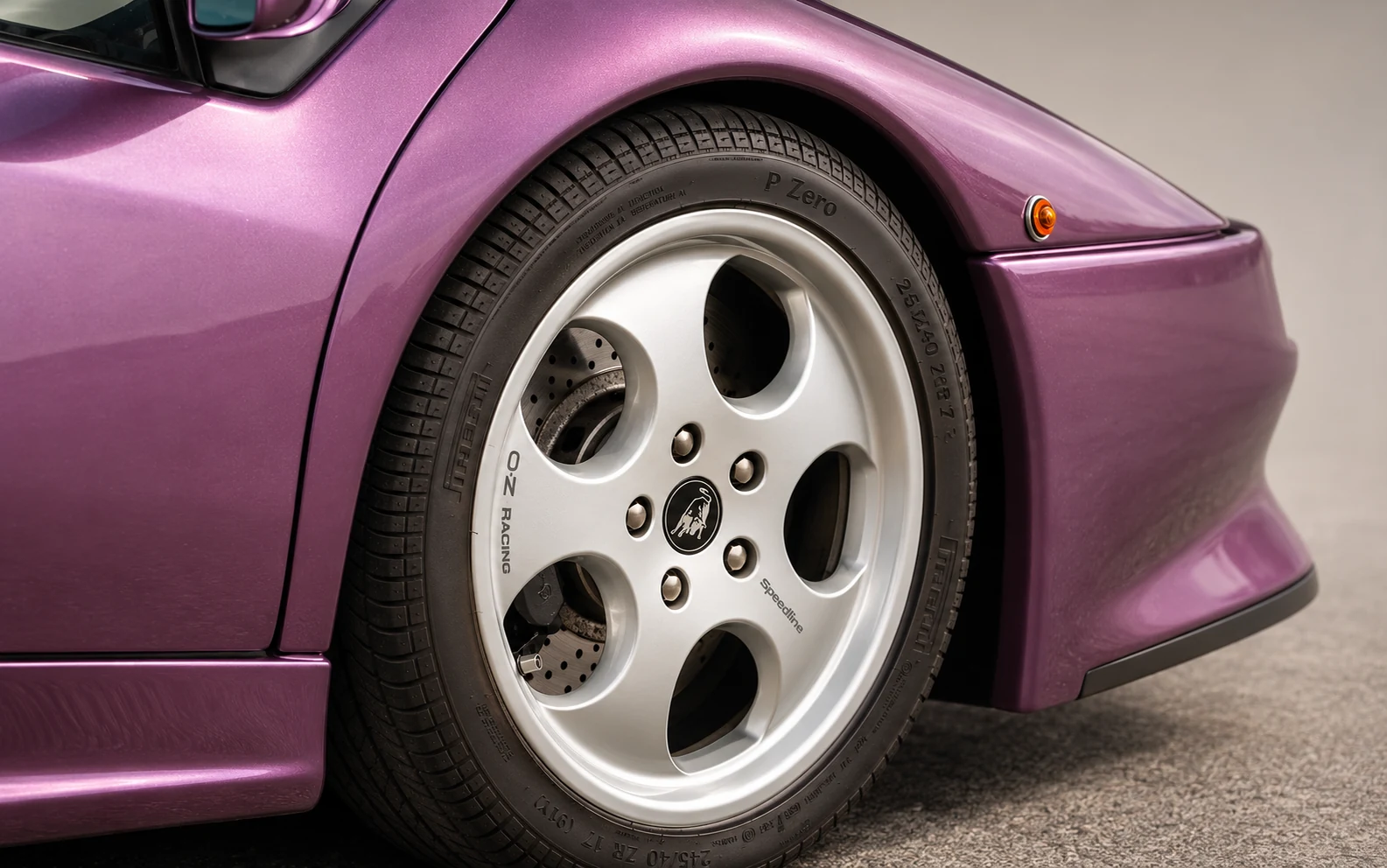
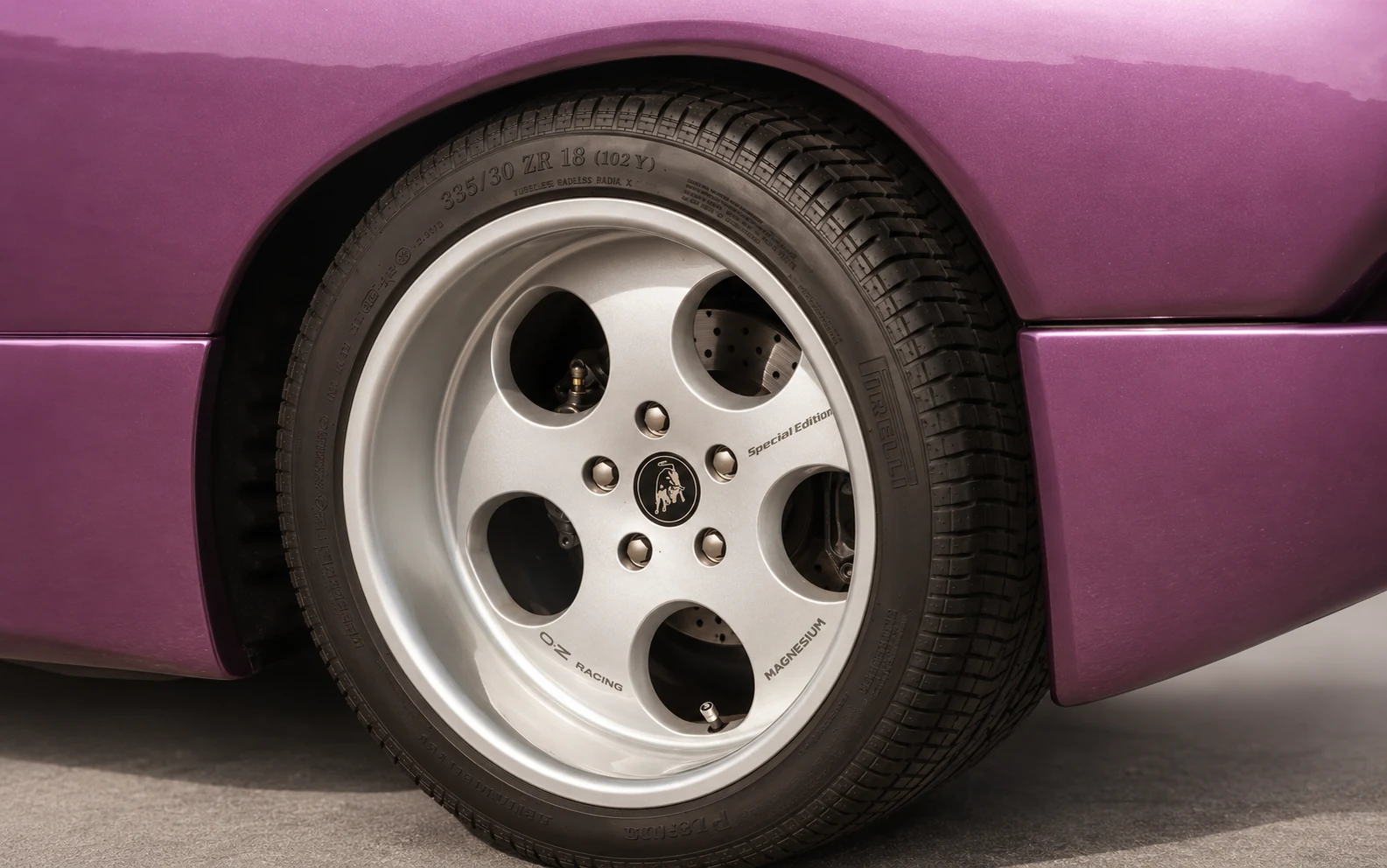
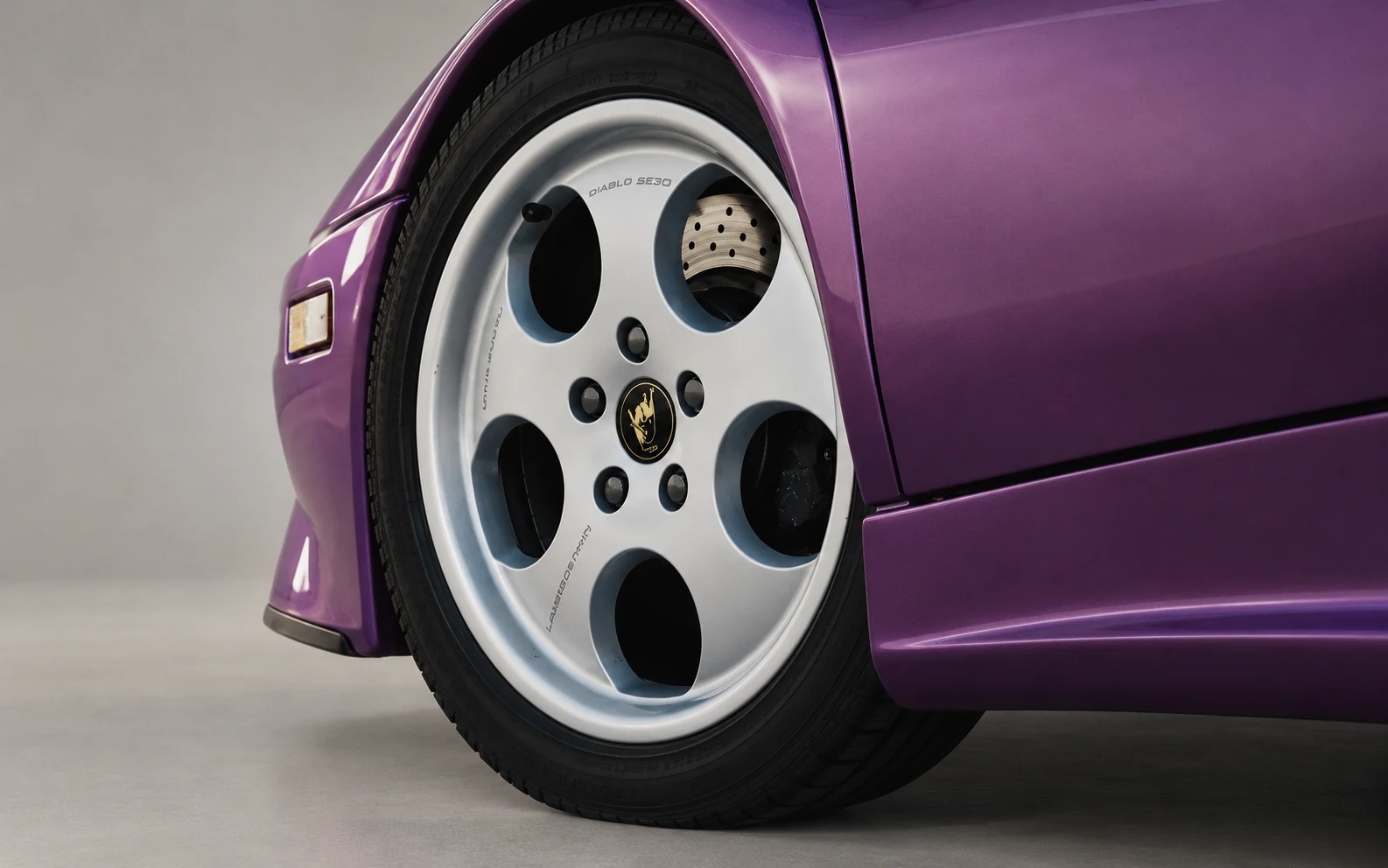
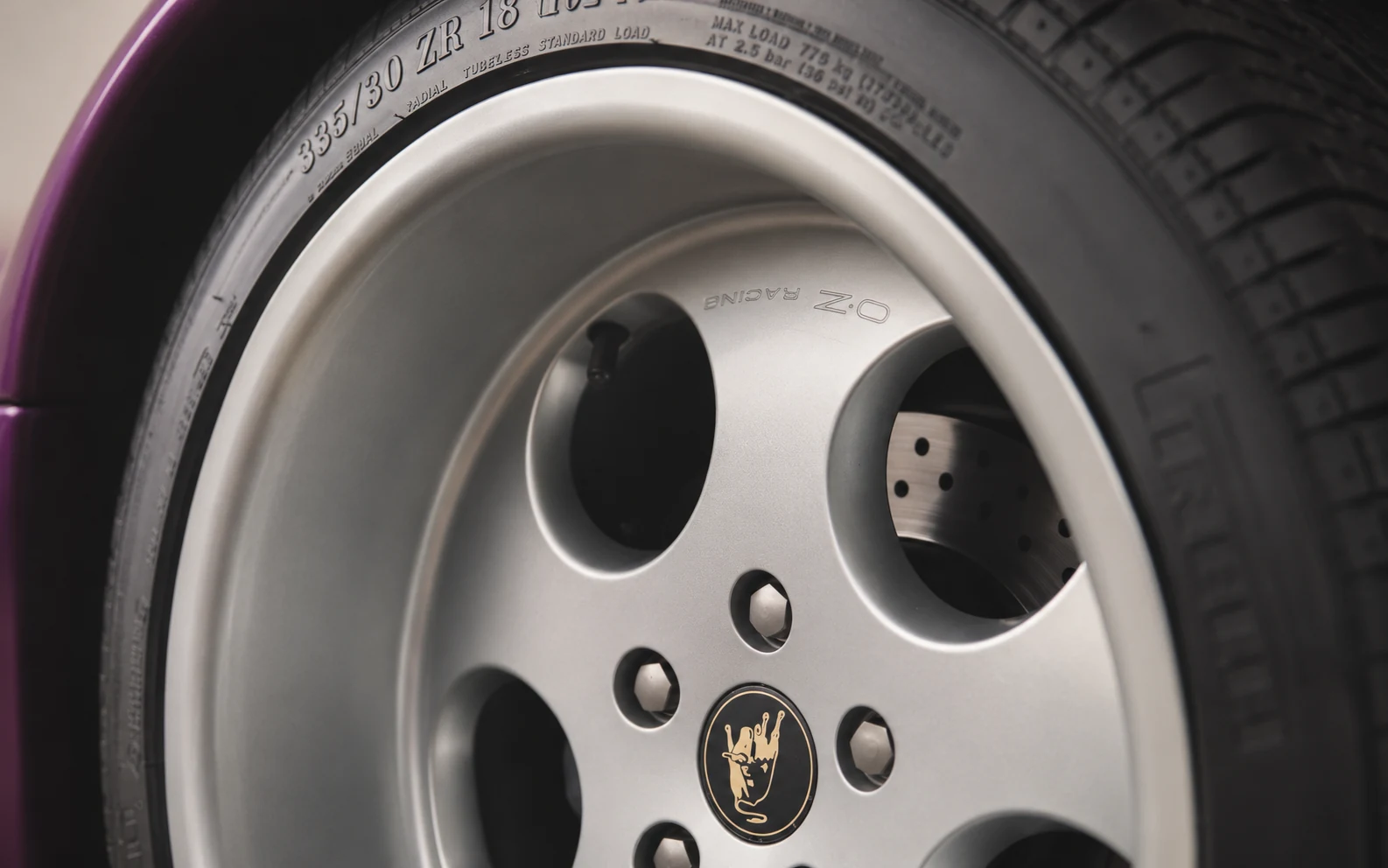
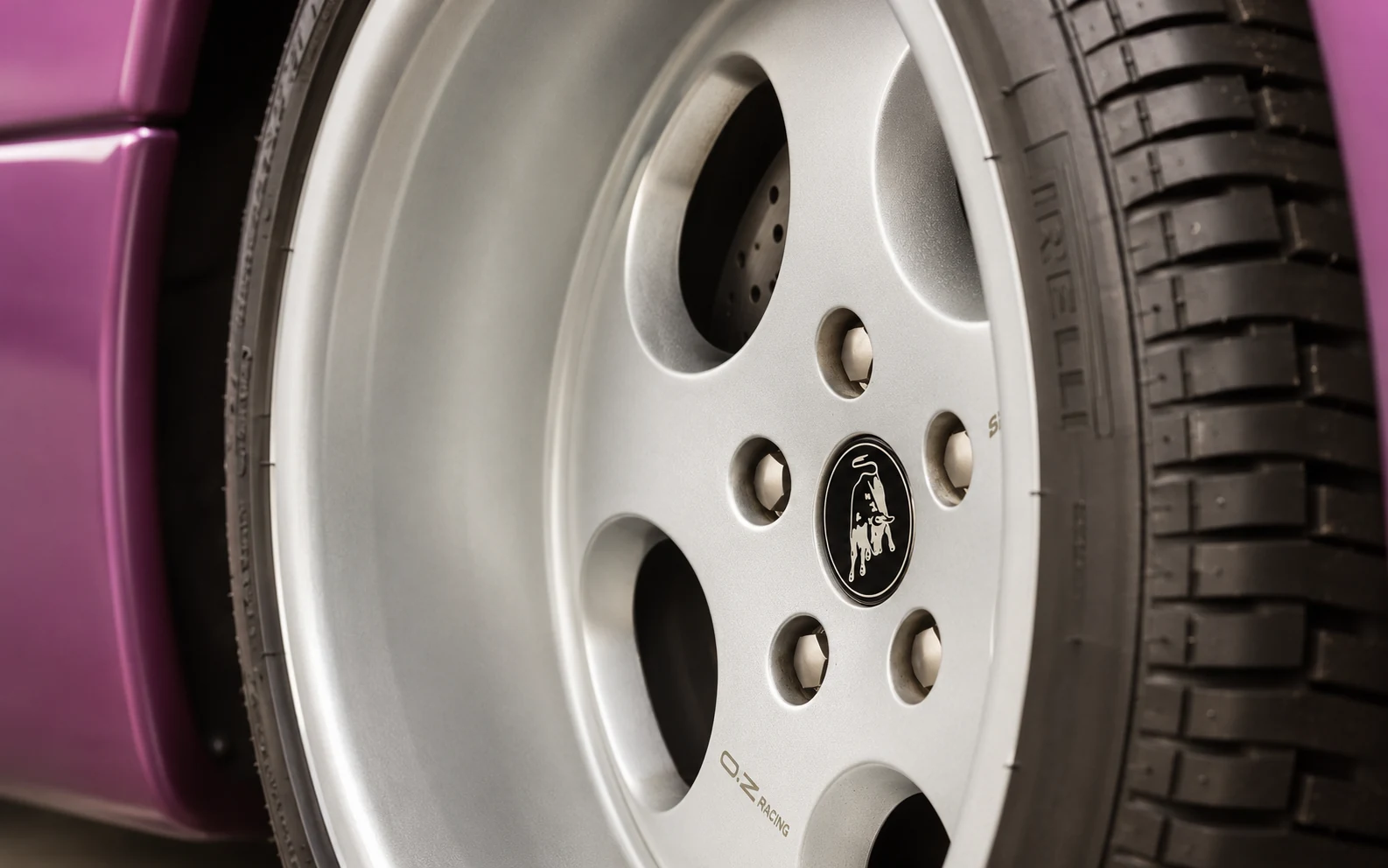
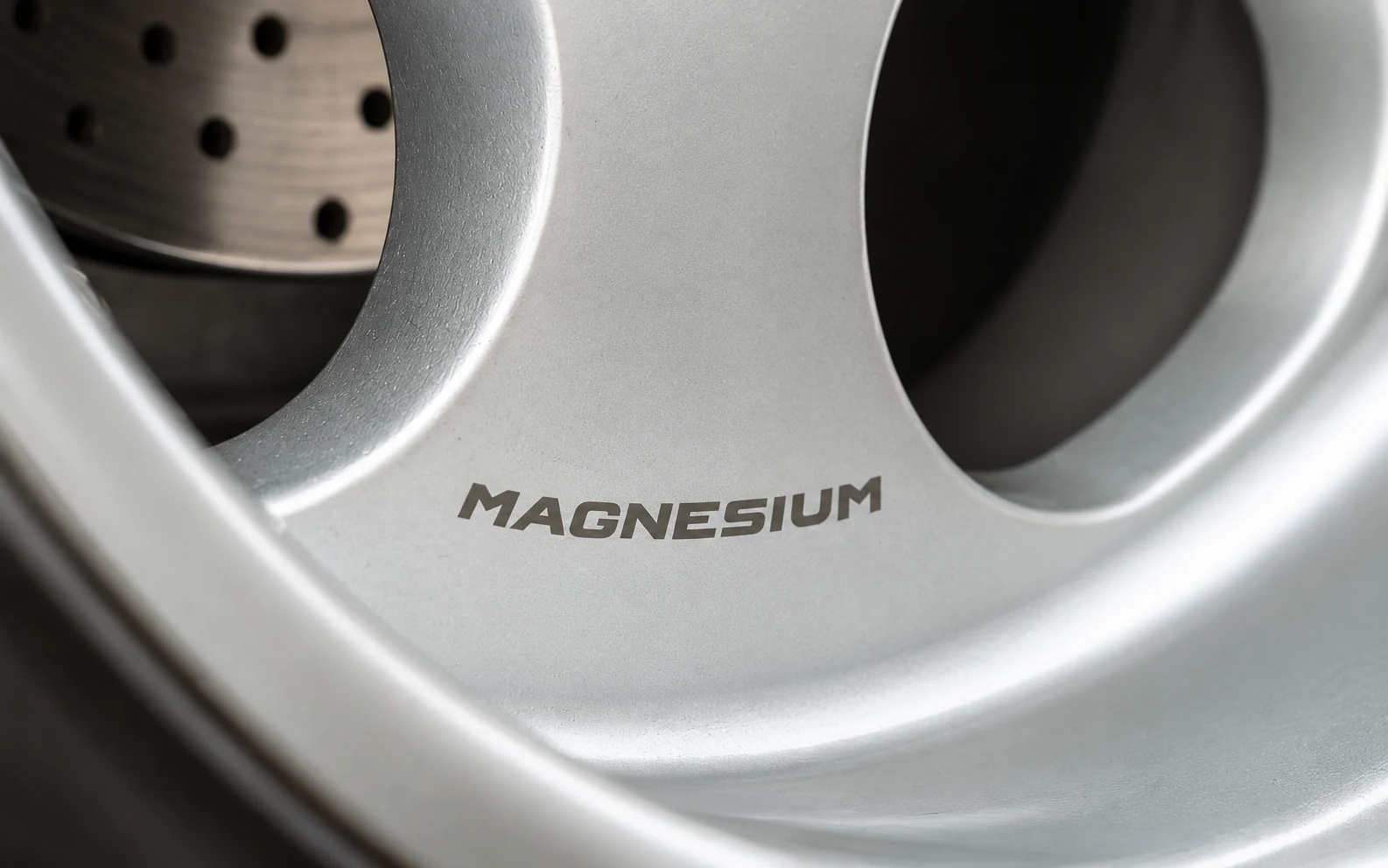
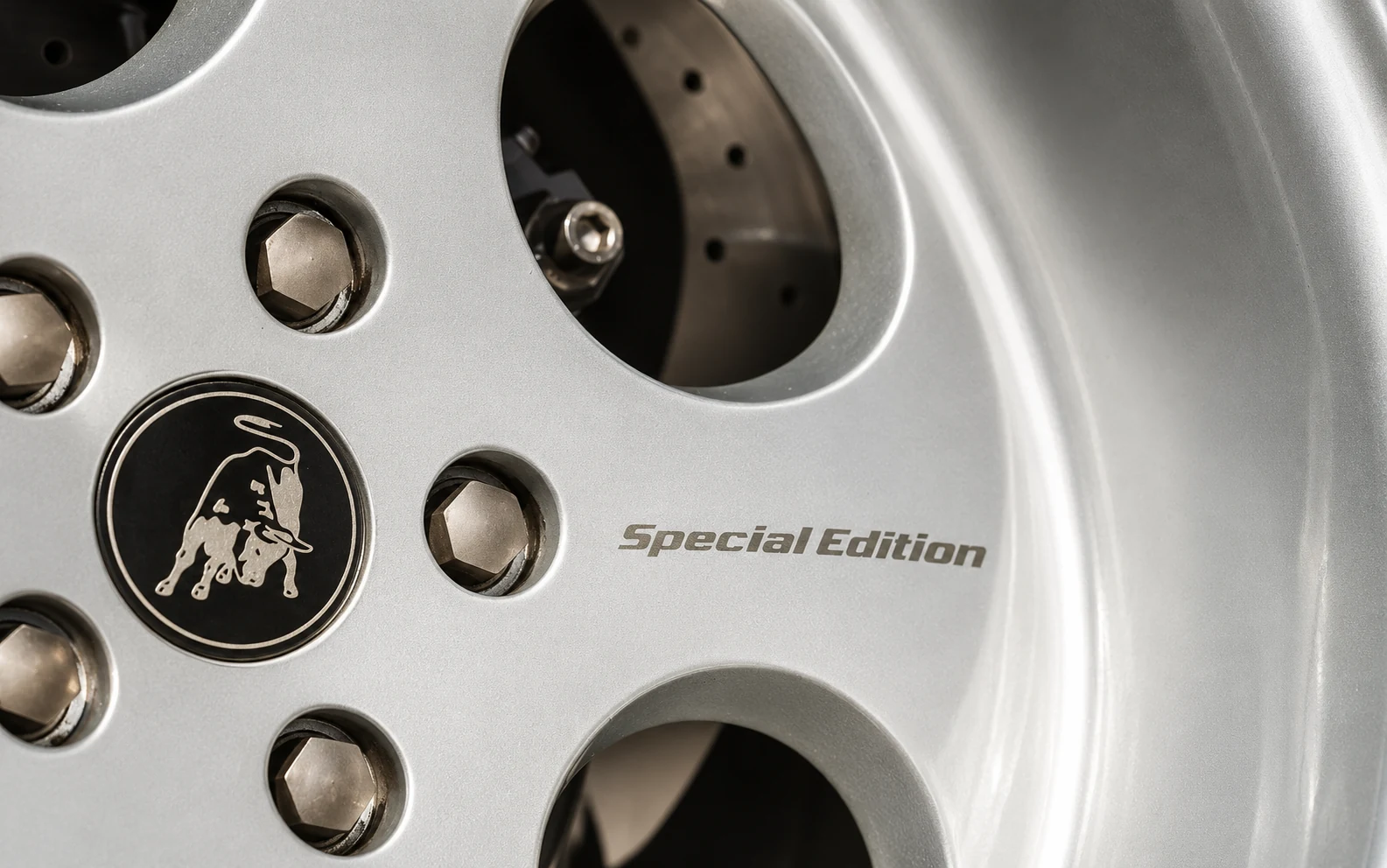
OZ magnesiumSingle-piece castings, 17 inches in front and 18 at the rear.
The Twelve
Magnesium, and Nothing to Spare
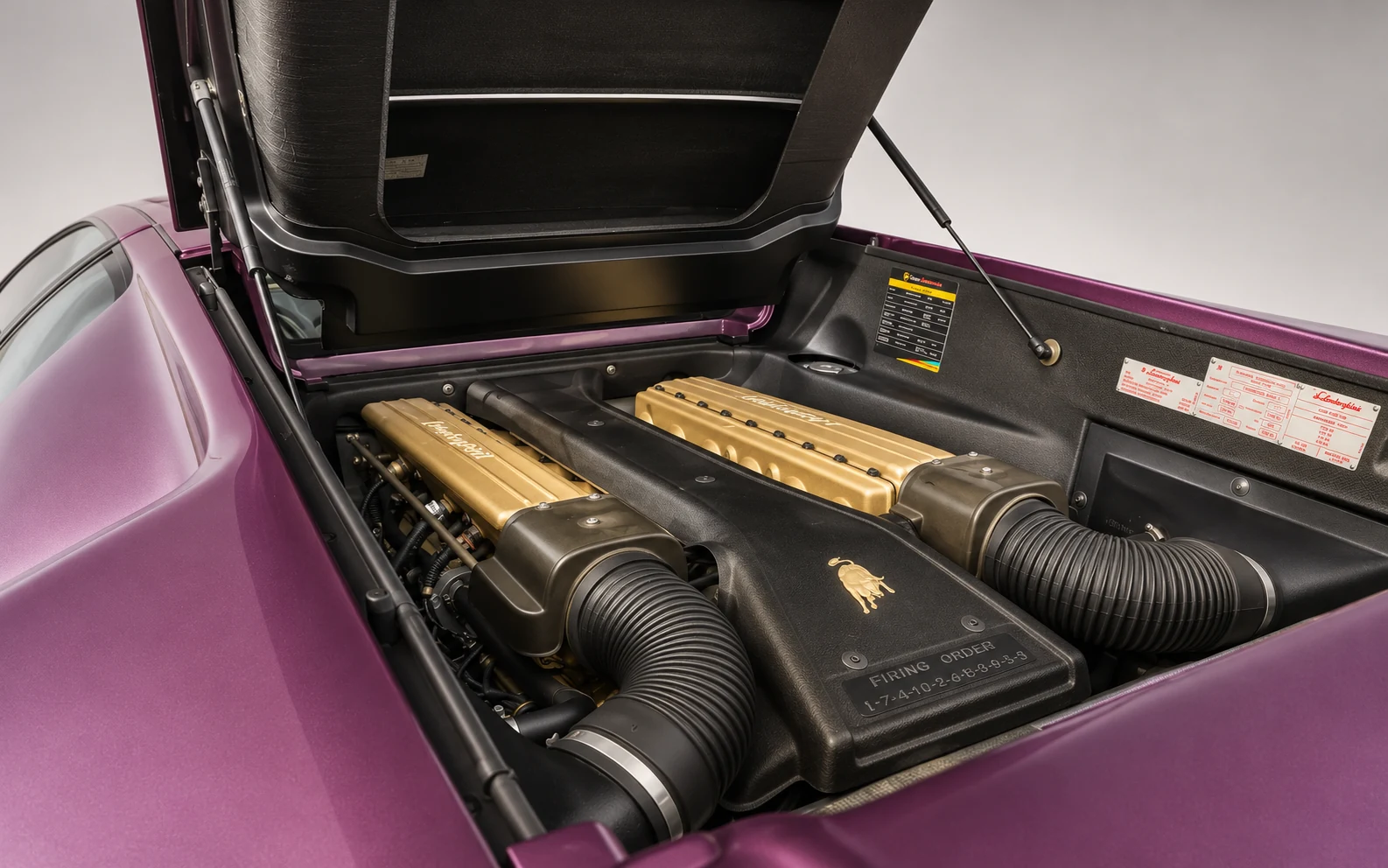
The V12 descends from Giotto Bizzarrini's 1963 design for the 350 GT. By 1993 it displaced 5.7 liters, with four valves per cylinder, dry-sump lubrication and an aluminum block and heads. For the SE30, the intake manifolds were cast in magnesium, the exhaust was opened up and the LIE fuel injection remapped. Output rose from 492 to 525 hp, with 428 lb-ft of torque.
It sits in the rear-drive Diablo chassis: a square-tube steel spaceframe with carbon fiber reinforcement around the cabin, double wishbones at each corner, one damper per side in front and two at the rear. The five-speed manual carries ratios revised for the model, and the Brembo discs are both ventilated and cross-drilled.
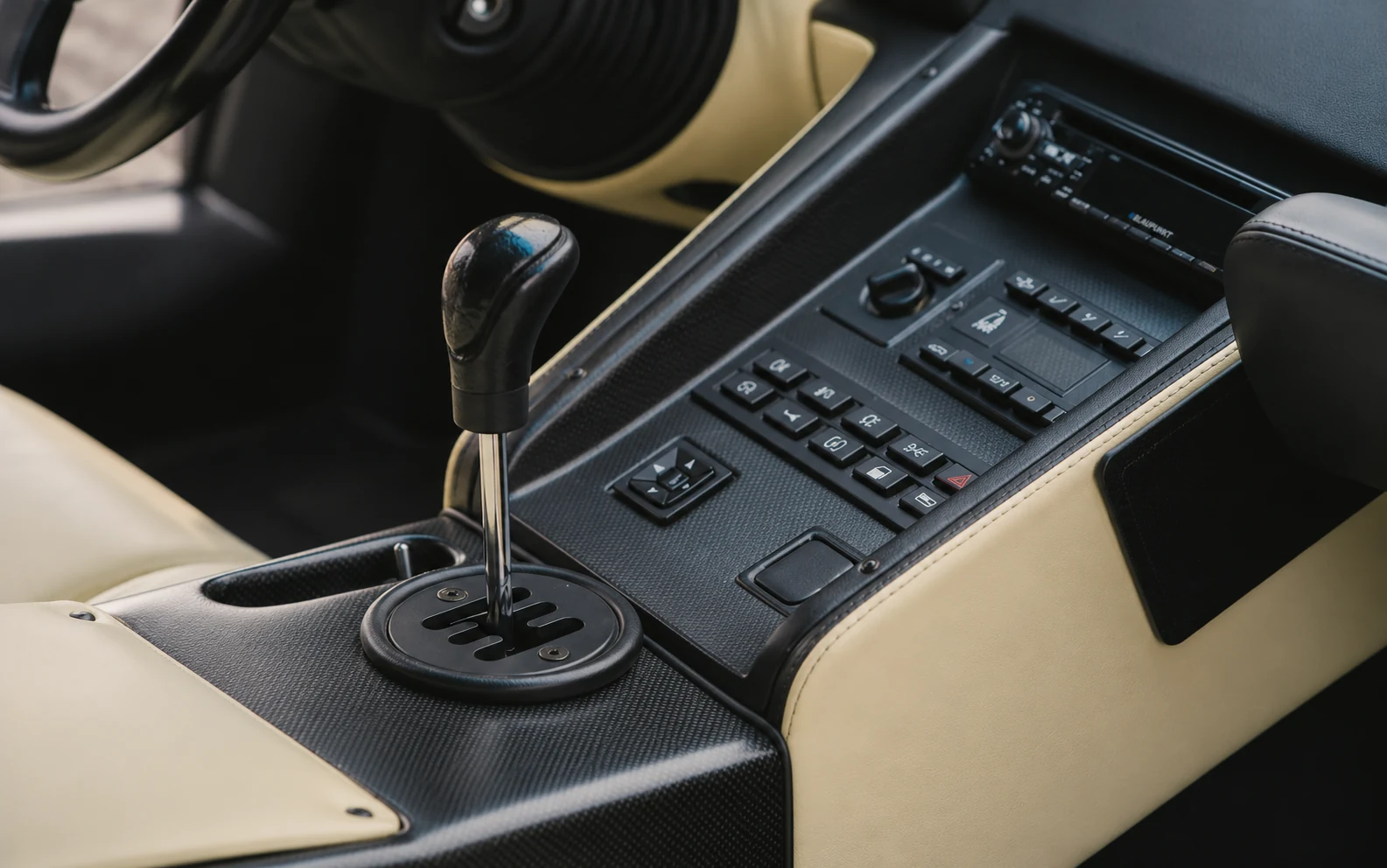
What was left out matters as much. No power steering, no anti-lock brakes, no electronically adjustable dampers. A switch in the cabin varies anti-roll bar stiffness front to rear on the move, and a switchable traction control is the only electronic aid.
Zero to 60 mph in about four seconds, and 207 mph flat out, five more than the car it was based on.
Most SE30s left Sant’Agata trimmed in Alcantara. Cars bound for America were usually ordered in leather.
Crema Leather and White Dials
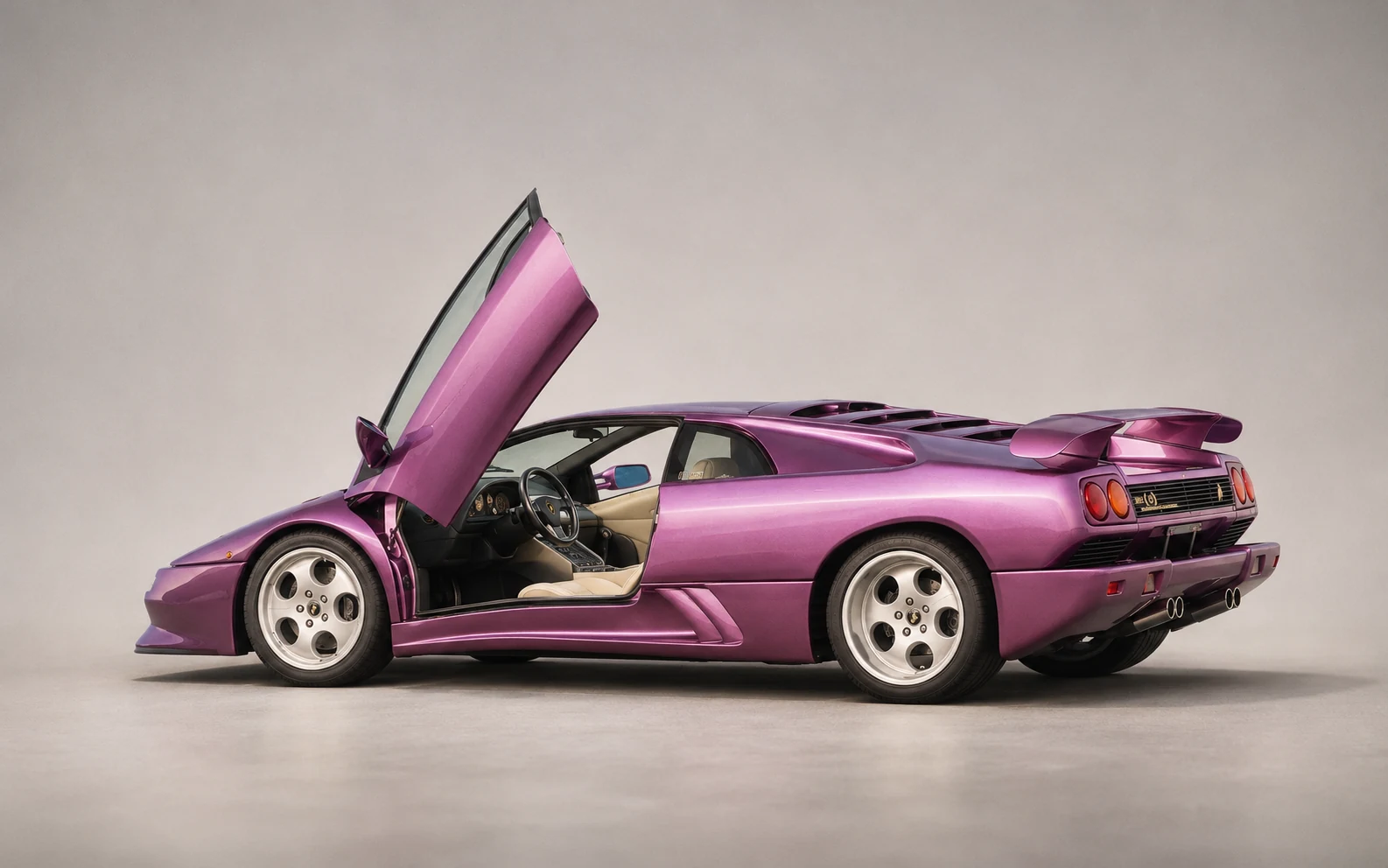
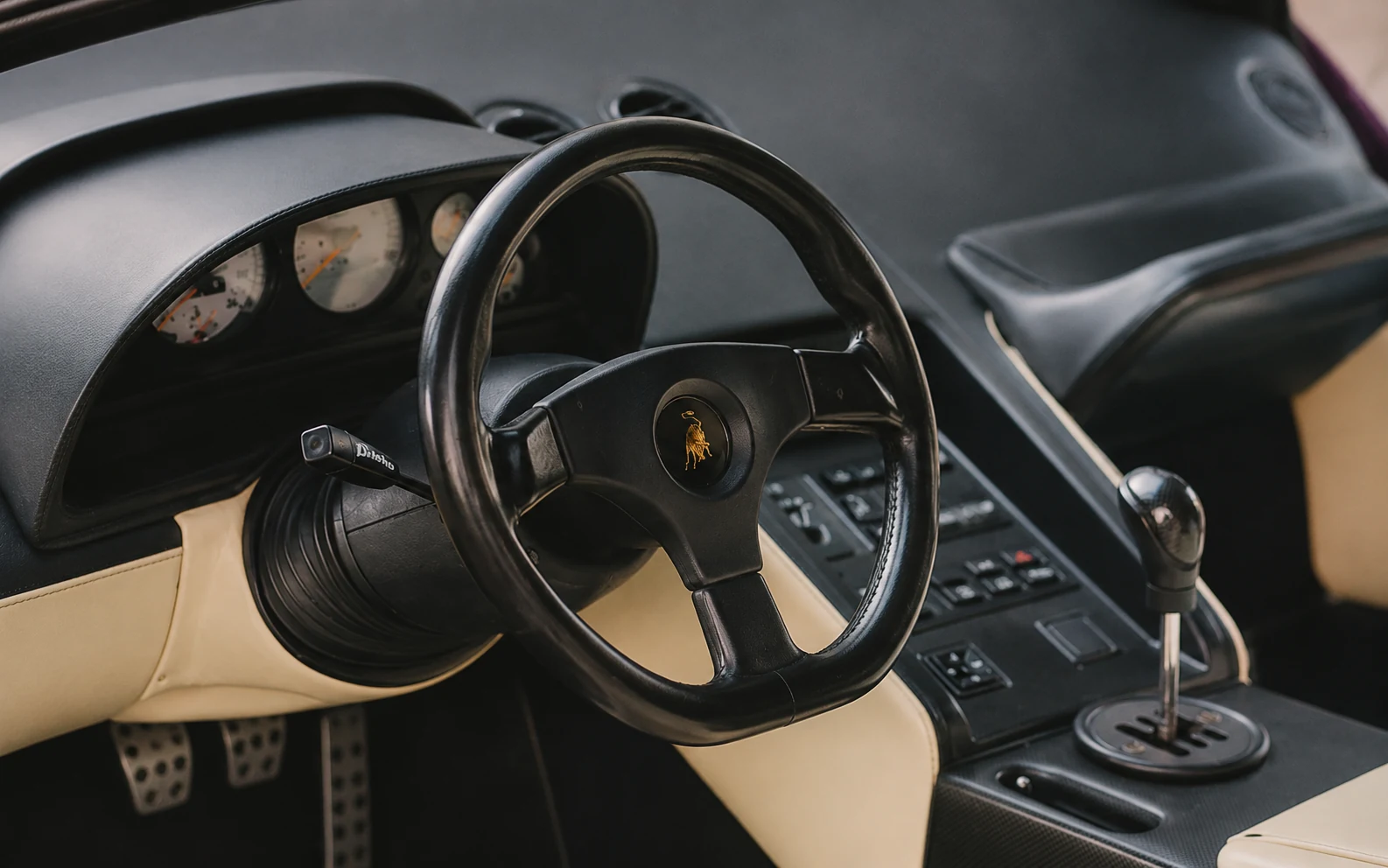
The seats and lower console are trimmed in Crema leather, set against black for the dashboard, wheel and carpets.
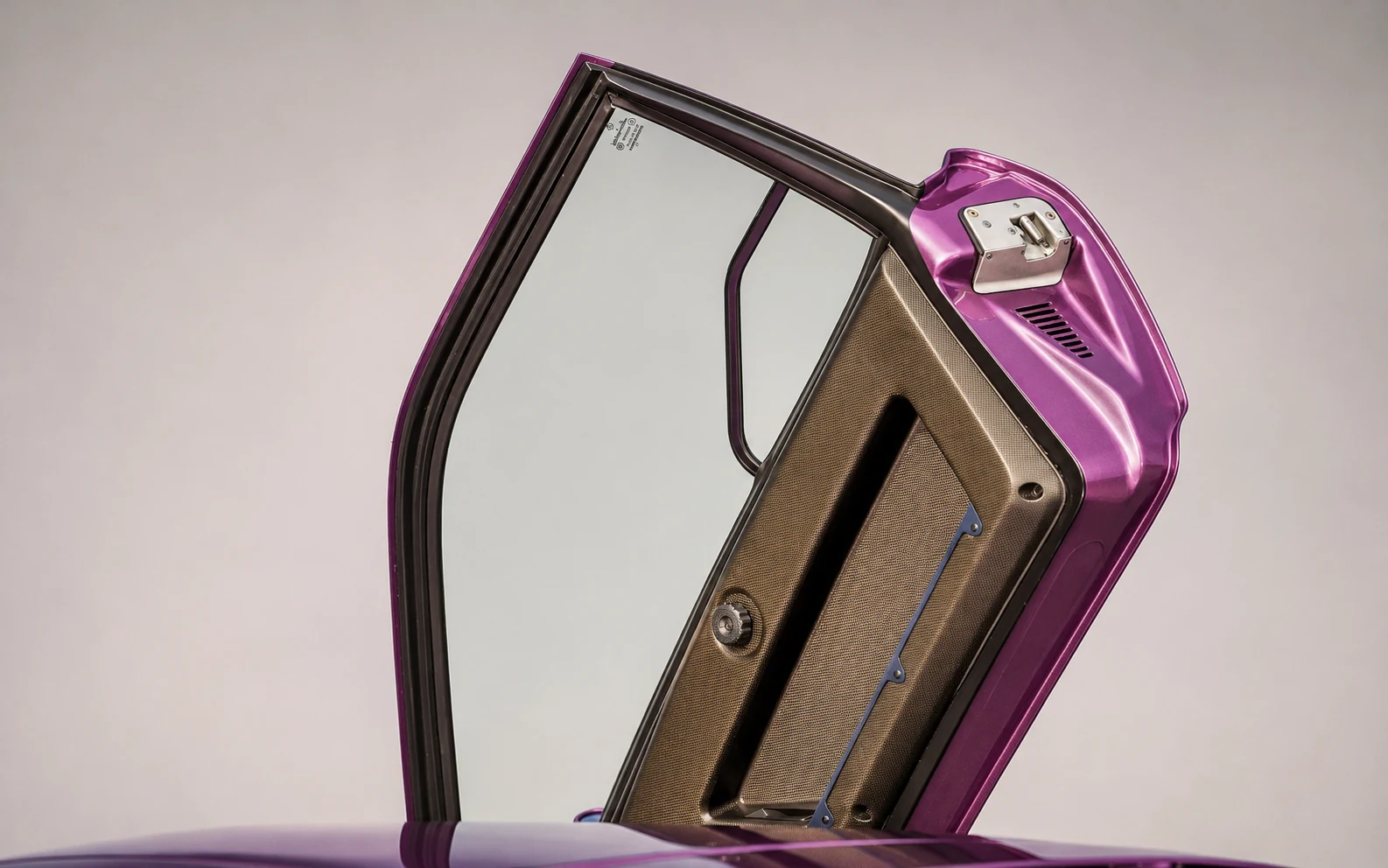
The side glass is fixed, with a small sliding pane in each window. Provision for a roll bar and four-point harnesses was built in from the factory.
The center console carries an audio unit, an item the lightweight specification otherwise deleted. [Air conditioning: fitted or not fitted, to be confirmed by seller.]
At the center of the small three-spoke wheel is a 350 GT horn badge, drawn from a stock of original parts made in 1963. It is the emblem Ferruccio Lamborghini fitted to the first car his company built.
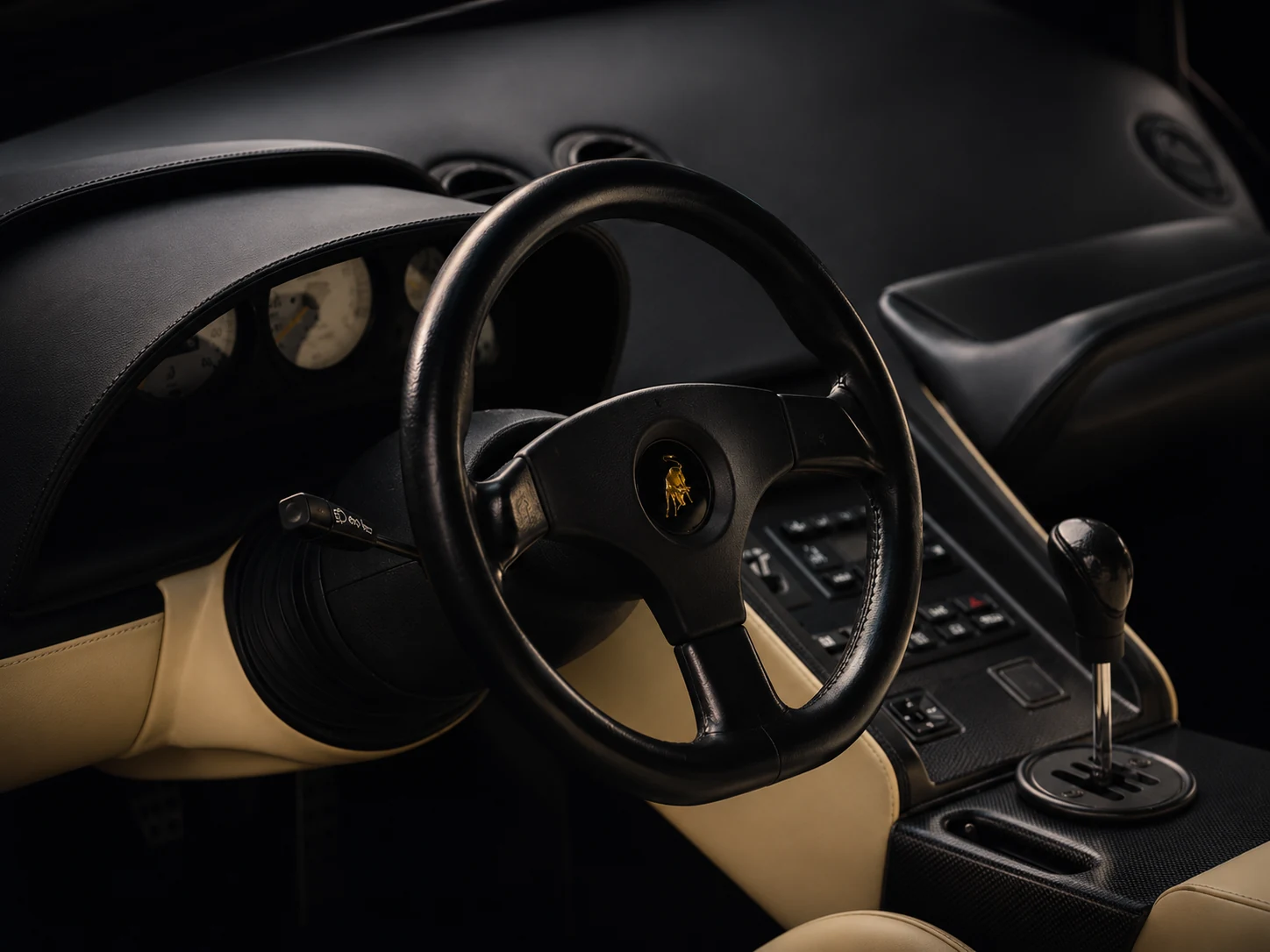
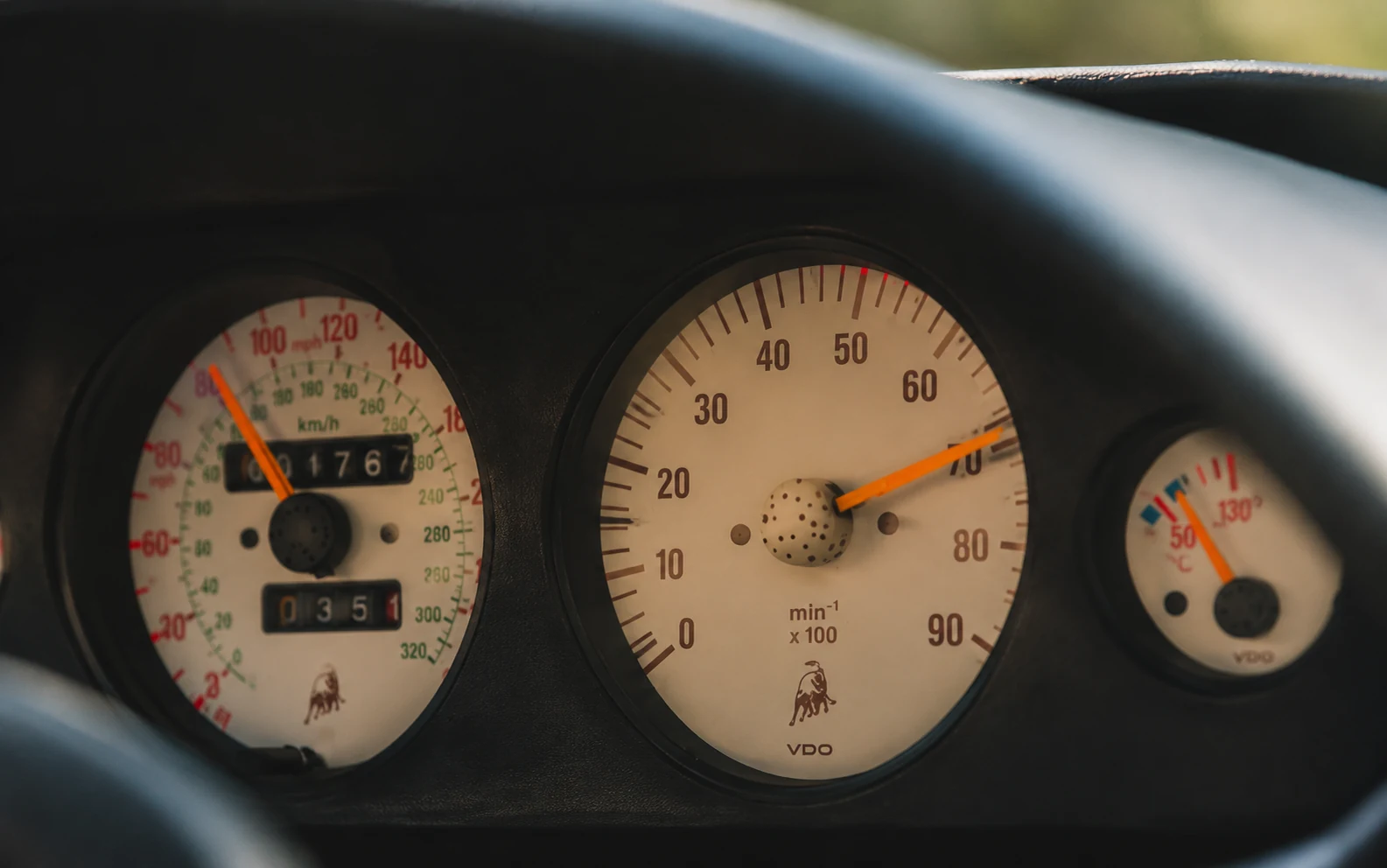
White instrumentsAn SE30 marking, calibrated here in miles per hour.
From here, one car only.

Numbered plaqueVettura No. 028 of 150, fixed to the rear side window.
This Example
Chassis 12028
Number 28 of 150, built to US specification and delivered new to the United States in October 1994. Around 25 SE30s were built for the American market.
Its first owner was the marine artist Christian Riese Lassen, who kept the car in Hawaii until 2004. It then passed to Steve and Lisa Lefferts of Maryland, both United Airlines pilots, for roughly fifteen years.
The history is known from new, with no accidents or incidents recorded. Servicing has been carried out by recognized specialists, Evans Automotive among them.
Approximately 20,800 miles are recorded. [Service records, manuals and tool kit: to be confirmed by seller.]
The numbered plaque in the rear side window reads 028/150. The history file is available on request.

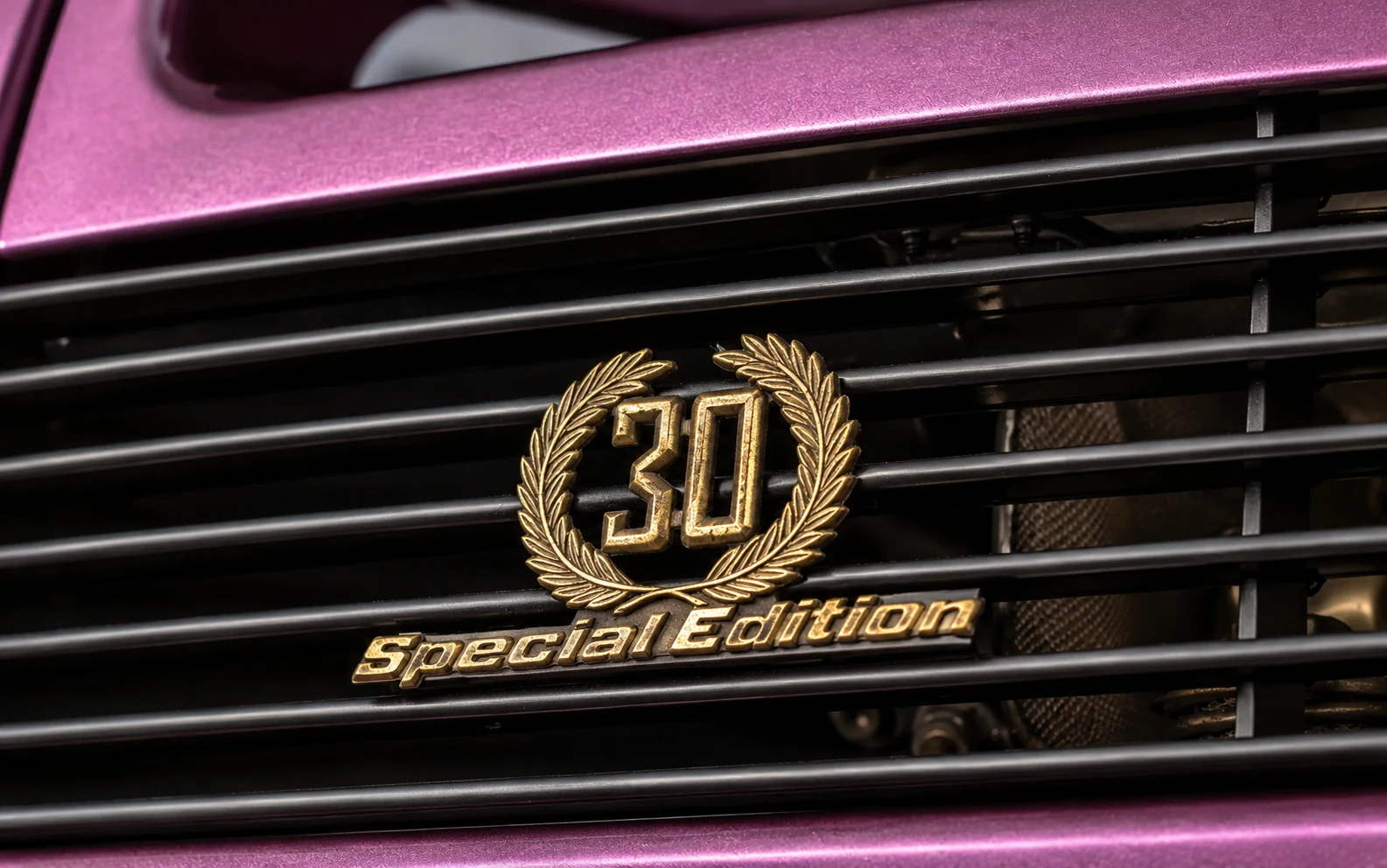
Anniversary badgeGold laurels on the engine grille, carried by all 150.
As the Factory Built It
Figures as published by Lamborghini for the model. Where period sources disagree, both are shown.
All details subject to buyer verification.
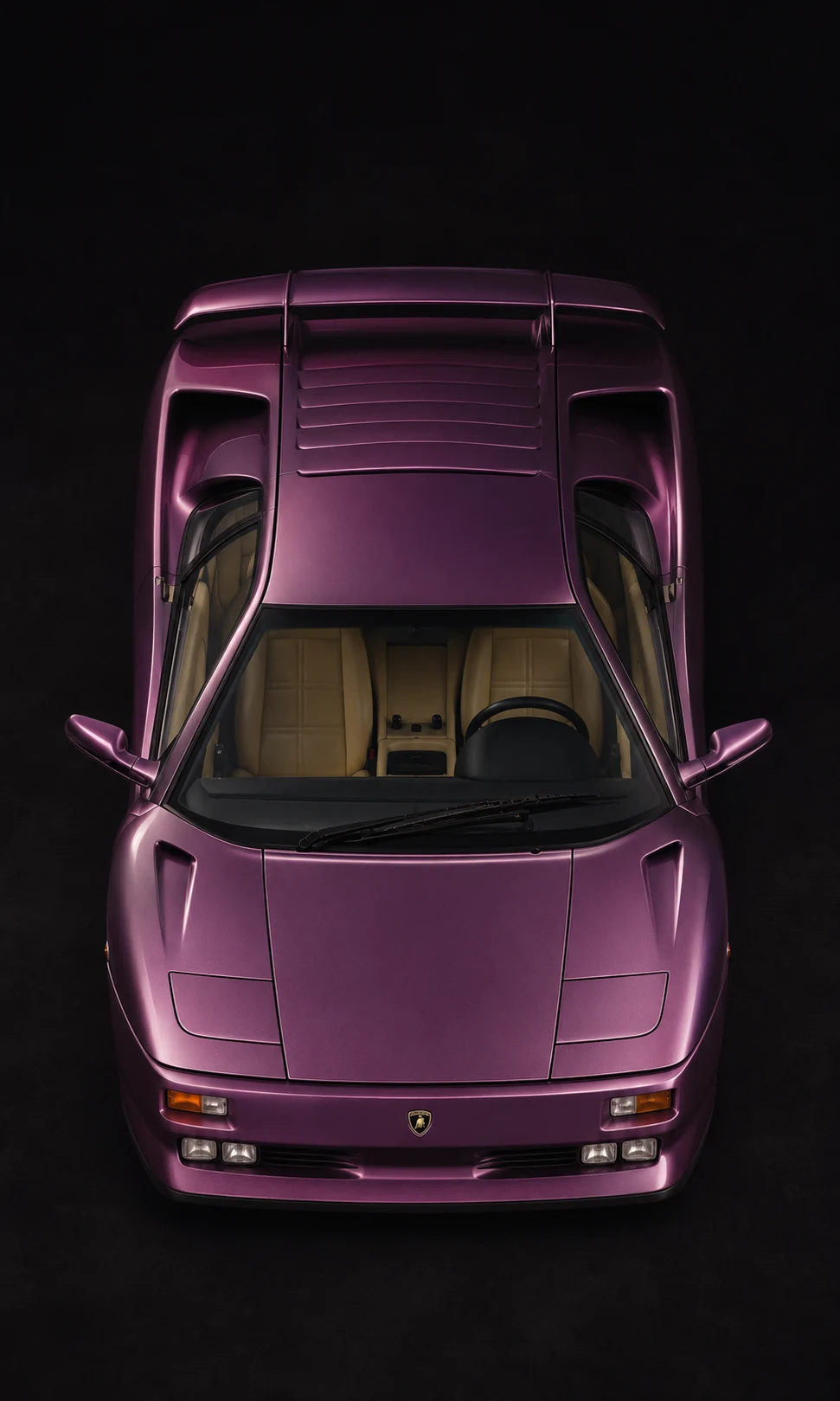
The Car in Full
Exterior, cabin and detail. The full set as the car stands today.


What the Specification Omits
Fixed Glass
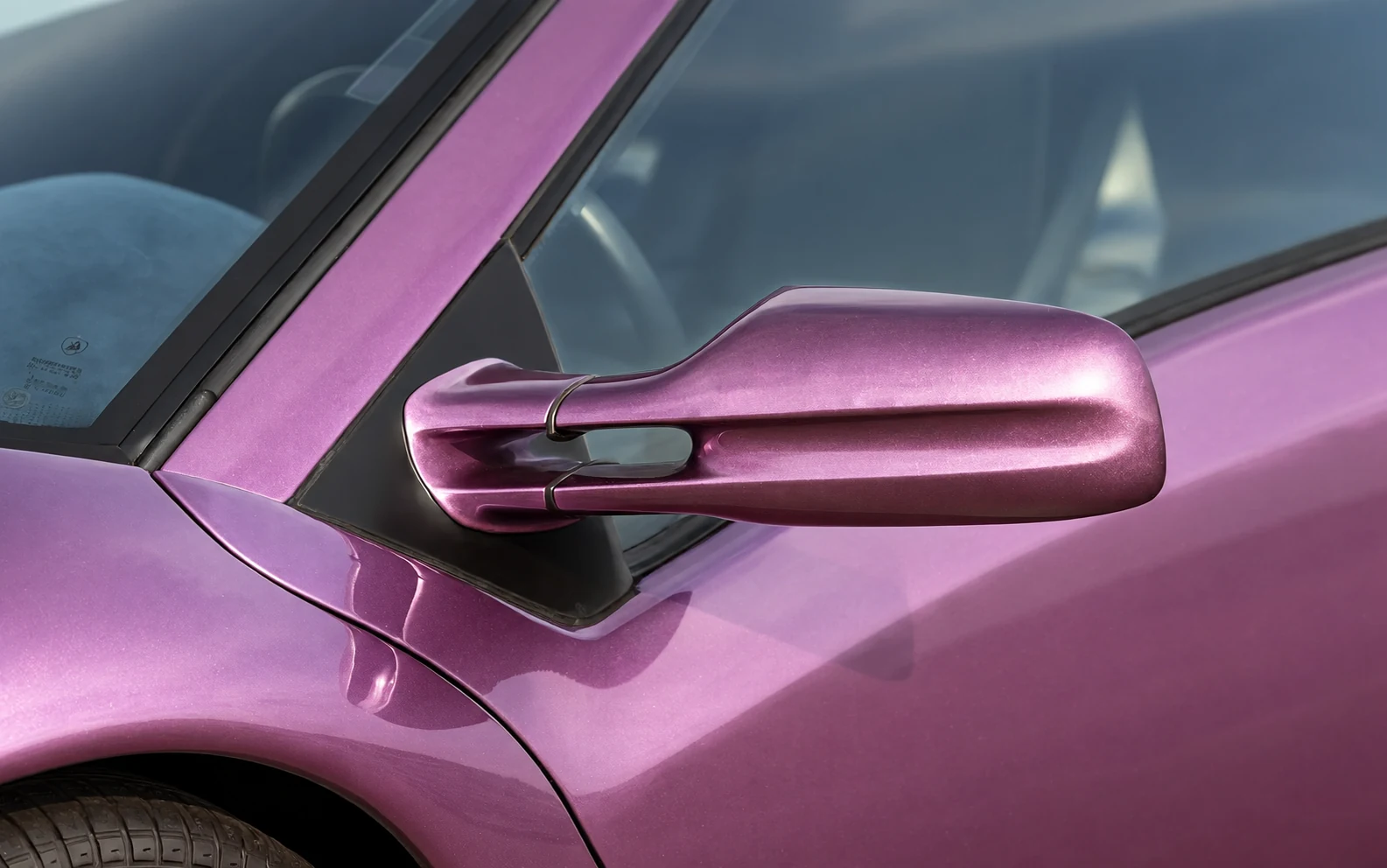
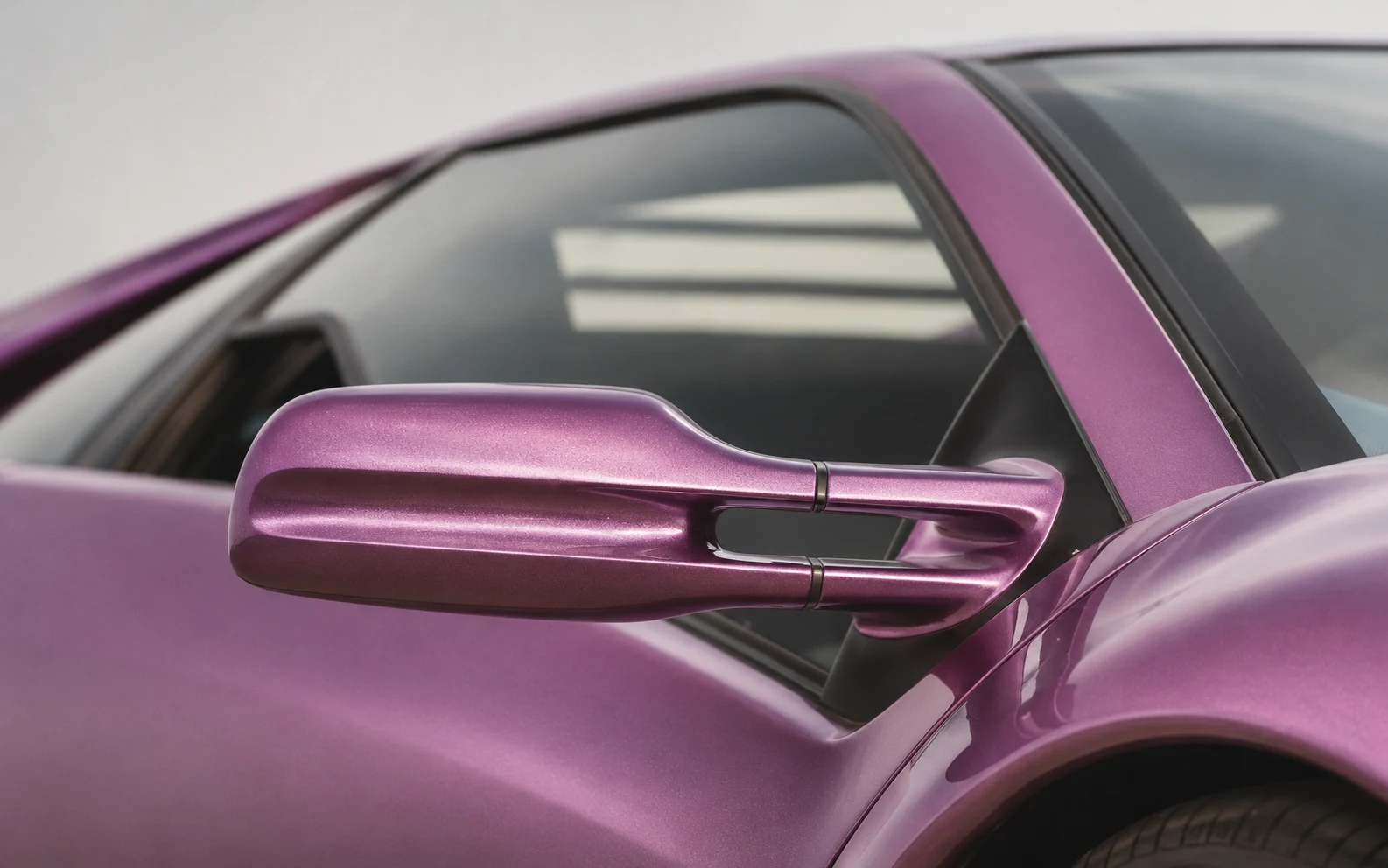
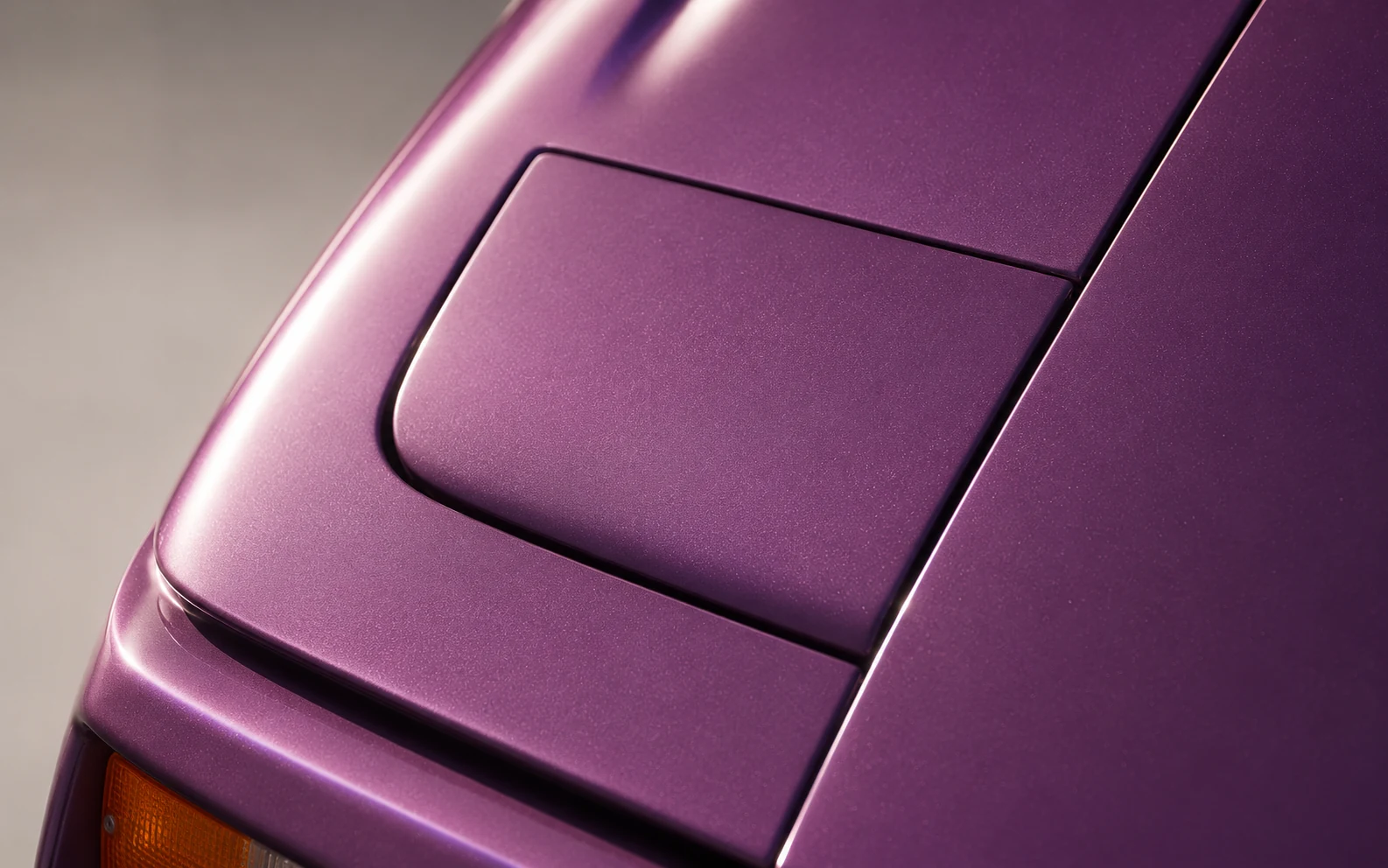
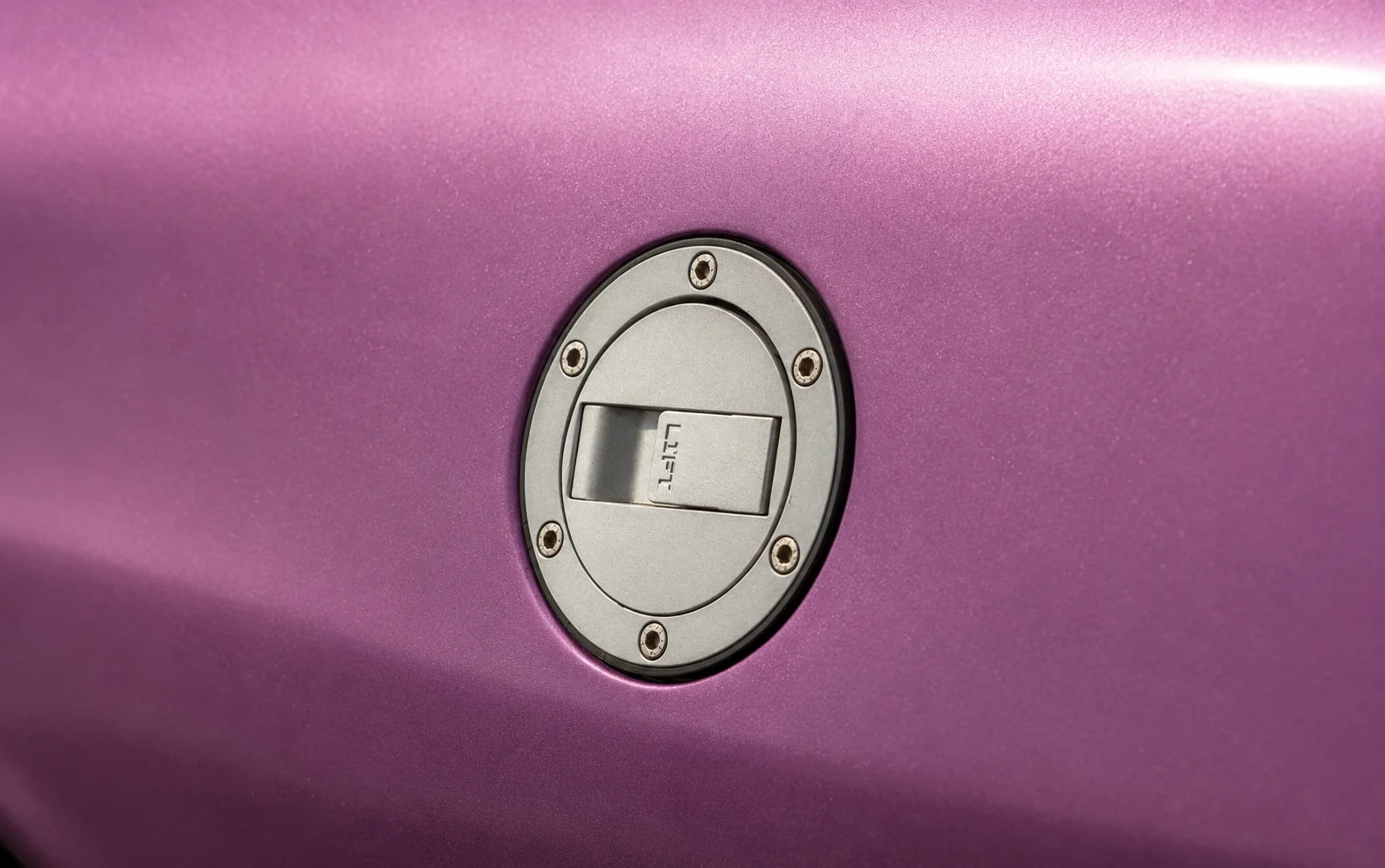
The one-piece side windows were another casualty of the weight program. In their place, each door carries a fixed panel of lightweight synthetic glass with a small sliding pane, as race cars had used for years. On the rear fender, a flush external filler cap replaced the concealed one.
A Wing of Its Own
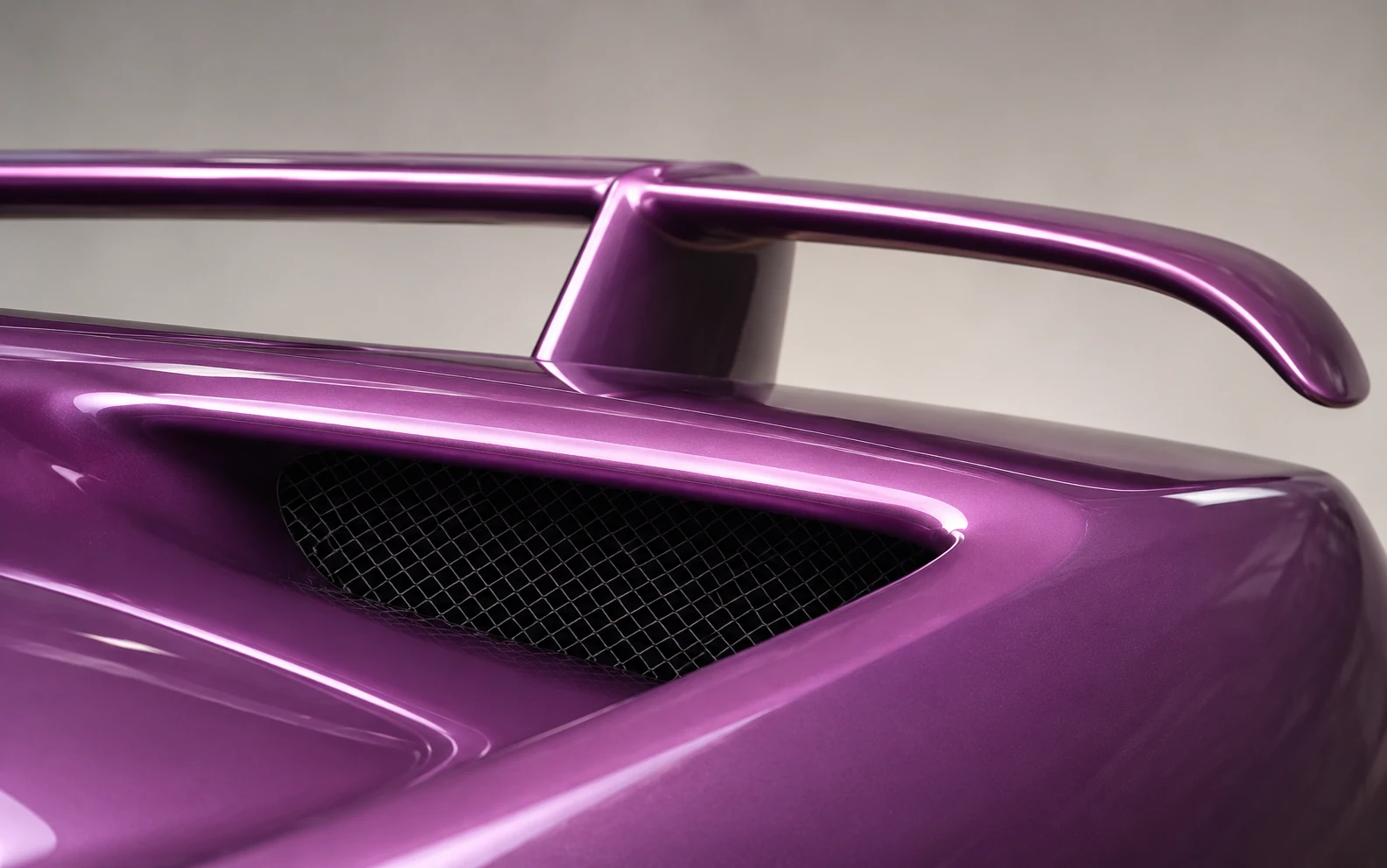
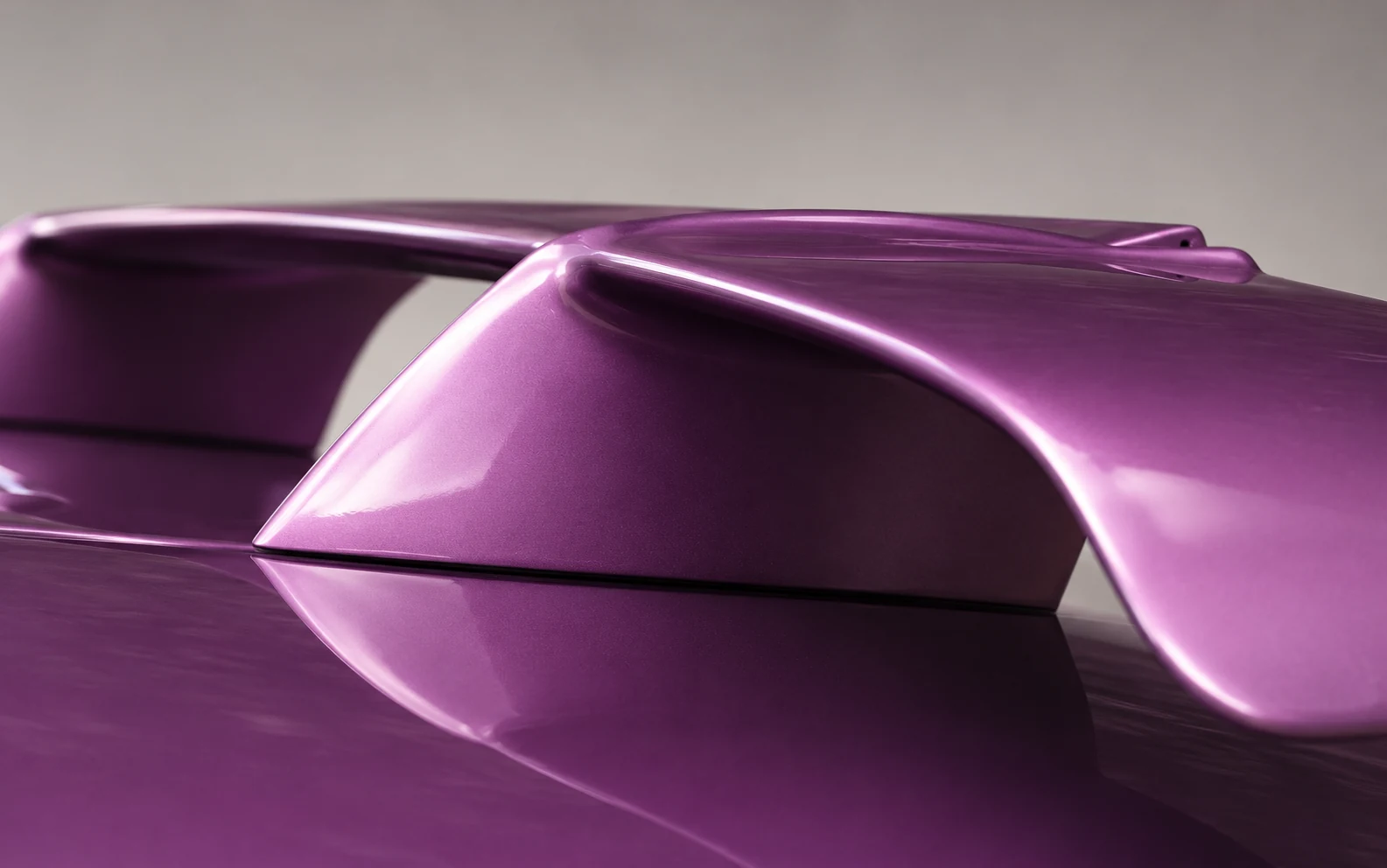
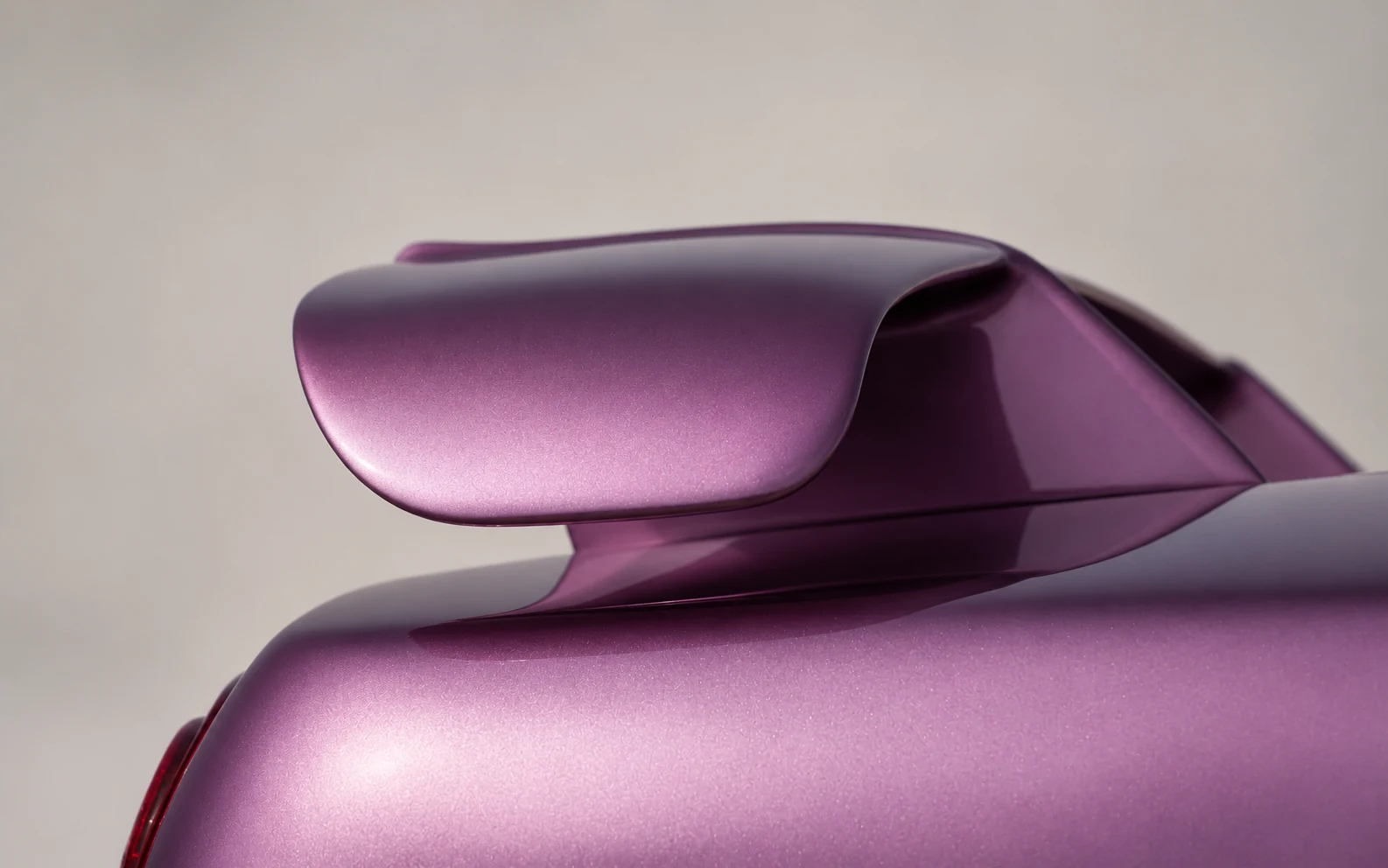
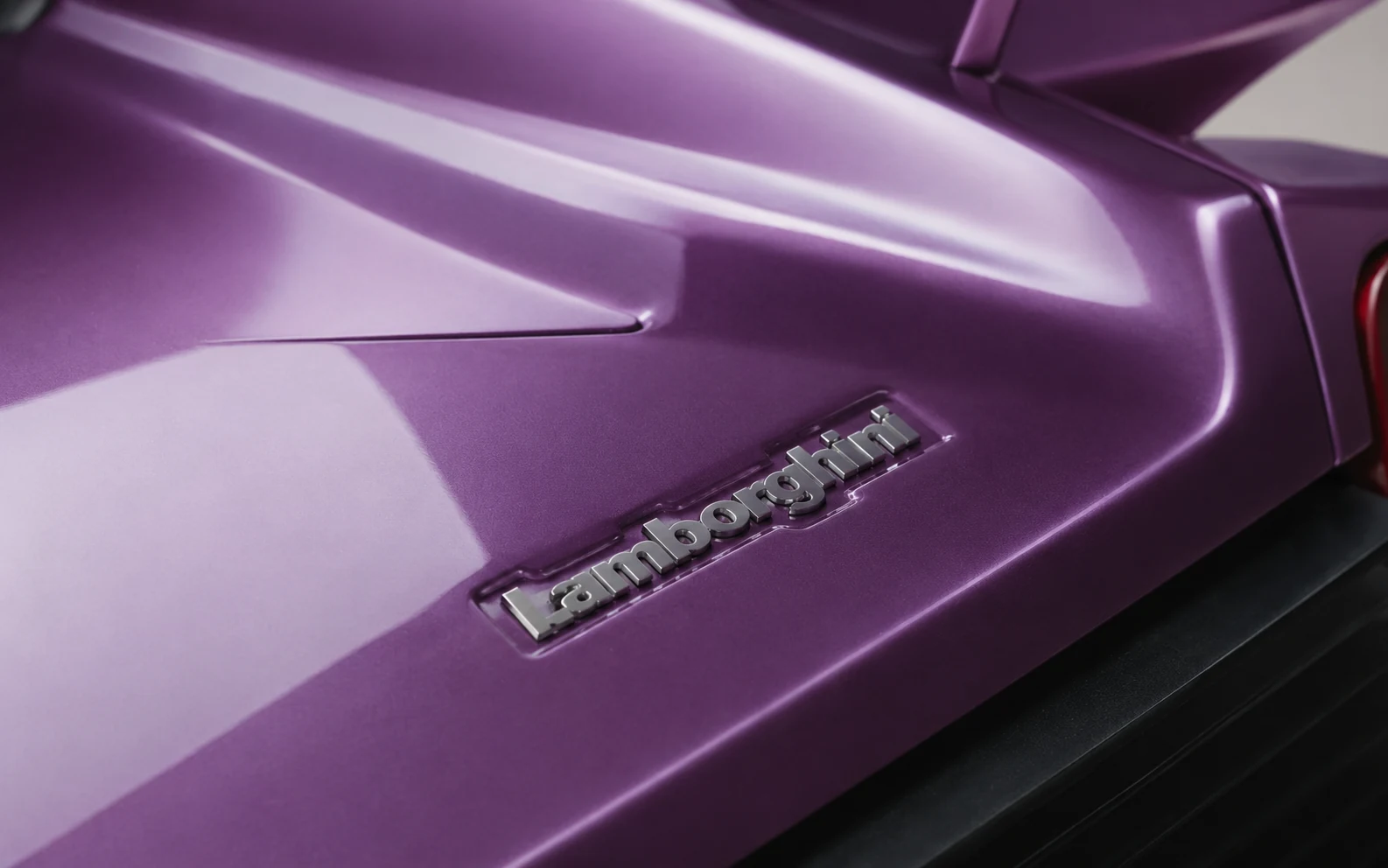
The rear spoiler was made for this model alone, with drooped ends and a Gurney flap set by hand. The manufacturing method developed for it carried over to later Lamborghinis.
The Jota Kit
Developed by Lamborghini Engineering, then running the company’s Formula One engine program, and named for the Miura-based experimental car of 1970. It brought 595 hp, a competition exhaust and a twin-scoop engine cover, and was not intended for road use. Twenty-eight kits were produced and around fifteen cars converted. Chassis 12028 was never one of them.
Built for America
US cars left Sant’Agata with amber side markers on the front fenders, instruments reading in miles per hour and federal certification, and were sold through Lamborghini’s American importer. Chassis 12028 still carries all three.
What Ownership Opens
Lamborghini Polo Storico, the factory’s heritage department, covers every model built at Sant’Agata from 1963 to 2001, the Diablo included. Certification of authenticity against the factory archive, research on an individual chassis and the supply of original parts are all handled there, on application.
A documented SE30 in its factory colors fits the modern classic classes now appearing at Pebble Beach, The Amelia and The Quail. Lamborghini runs its own calendar alongside them, with Giro tours and the annual gathering at Sant’Agata open to owners directly.
Entry is at the discretion of each organizer.
Viola, Crema, and a Known History
Chassis 12028, US specification, approximately 20,800 miles. History from new, ownership record and service file available to serious inquiries.